
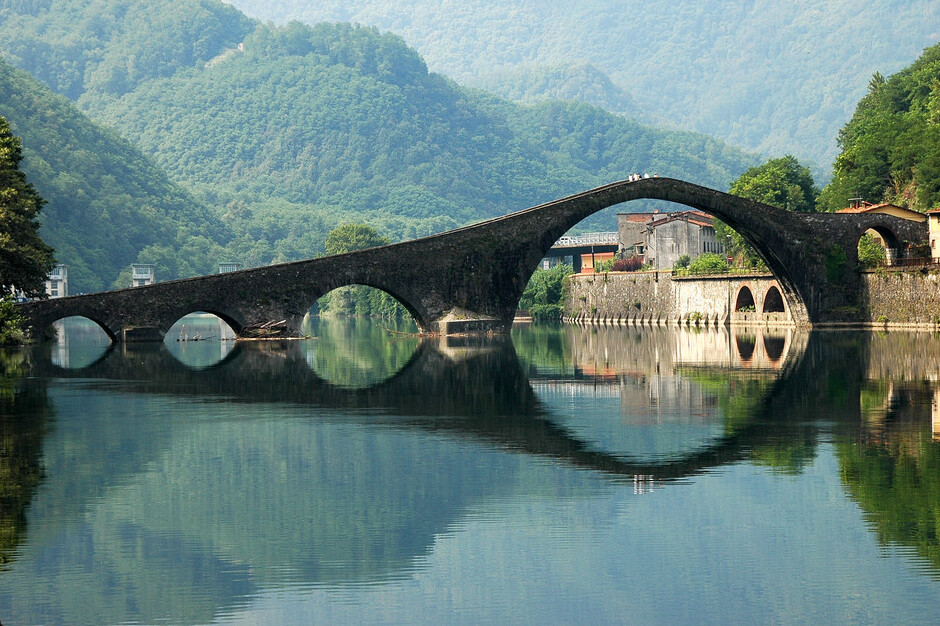

Nestled gracefully in the lush landscape of Tuscany, Ponte della Maddalena, or the Magdalene Bridge, arcs over the serene waters of the Serchio River like a medieval masterpiece frozen in time. This extraordinary structure, also known as the Devil's Bridge, embodies a blend of history, legend, and architectural brilliance that captivates all who visit.
The bridge's origins trace back to the early 14th century, commissioned by the powerful Countess Matilda of Tuscany. It served as a crucial crossing point for pilgrims traveling the Via Francigena, a major pilgrimage route leading to Rome. The bridge's unusual nickname, the Devil's Bridge, stems from a local legend. According to the tale, the builder struck a deal with the devil to complete the bridge swiftly, promising the soul of the first to cross it. Ingeniously, he sent a dog across, sparing human souls and outsmarting the devil.
Architecturally, the Ponte della Maddalena is a marvel of medieval ingenuity. The most striking feature is its asymmetrical arches, with the central span towering at a majestic height, creating a dramatic silhouette against the Tuscan sky. This design, rare for its time, showcases the builders' advanced understanding of balancing form and function. The bridge's enduring beauty has made it a subject of numerous artworks over the centuries, immortalizing its unique form in paintings and photographs.
The culture surrounding Borgo a Mozzano, the town that hosts this bridge, is steeped in tradition and festivity. One of the most vibrant local customs is the Halloween celebration, an event that has grown in popularity and now draws visitors from all over Italy. The town transforms into a realm of mystery and magic, with the bridge often illuminated in eerie lights, enhancing its mythical allure. This festival reflects the region's ability to blend ancient history with contemporary culture, offering a unique experience that enriches the visitor's understanding of local life.
No visit to Tuscany is complete without indulging in its gastronomic delights, and Borgo a Mozzano is no exception. The region is renowned for its rustic cuisine, featuring dishes like tordelli lucchese, a kind of meat-stuffed pasta, and the hearty zuppa alla frantoiana, a traditional vegetable soup. Pair these with a glass of Montecarlo DOC wine, and you have a culinary experience that speaks to the soul of Tuscany. For dessert, try the buccellato di Lucca, a sweet bread flavored with anise and raisins, which perfectly complements a stroll across the historic bridge.
While the Ponte della Maddalena is a sight to behold, it also holds secrets that many tourists overlook. One such curiosity is the small chapel of San Jacopo, nestled near the bridge's entrance. This unassuming sanctuary offers a quiet moment of reflection and a glimpse into the spiritual life that once thrived alongside the bustling pilgrimage route. Another hidden gem is the stone carvings along the bridge's base, often submerged, but visible during periods of low water, revealing ancient artisans' marks.
For those planning a visit, the best time to experience the bridge in all its glory is during the spring or early autumn. The mild weather and fewer crowds make for a pleasant exploration of the surrounding area. As you approach the bridge, take a moment to appreciate the play of light and shadow on its stone surfaces, a testament to the timeless interplay of nature and human endeavor. Consider visiting at sunrise or sunset when the bridge is bathed in golden hues, offering a photographer's paradise.
To fully appreciate the bridge, take a leisurely walk across and pause midway to soak in the panoramic views of the Serchio Valley. Listen to the gentle flow of the river below, and let your imagination wander to the countless feet that have trodden this path before you. And as you stand on this ancient edifice, bridging the past with the present, you'll find that the Ponte della Maddalena is more than just a bridge; it's a living tapestry of history, culture, and legend.


