
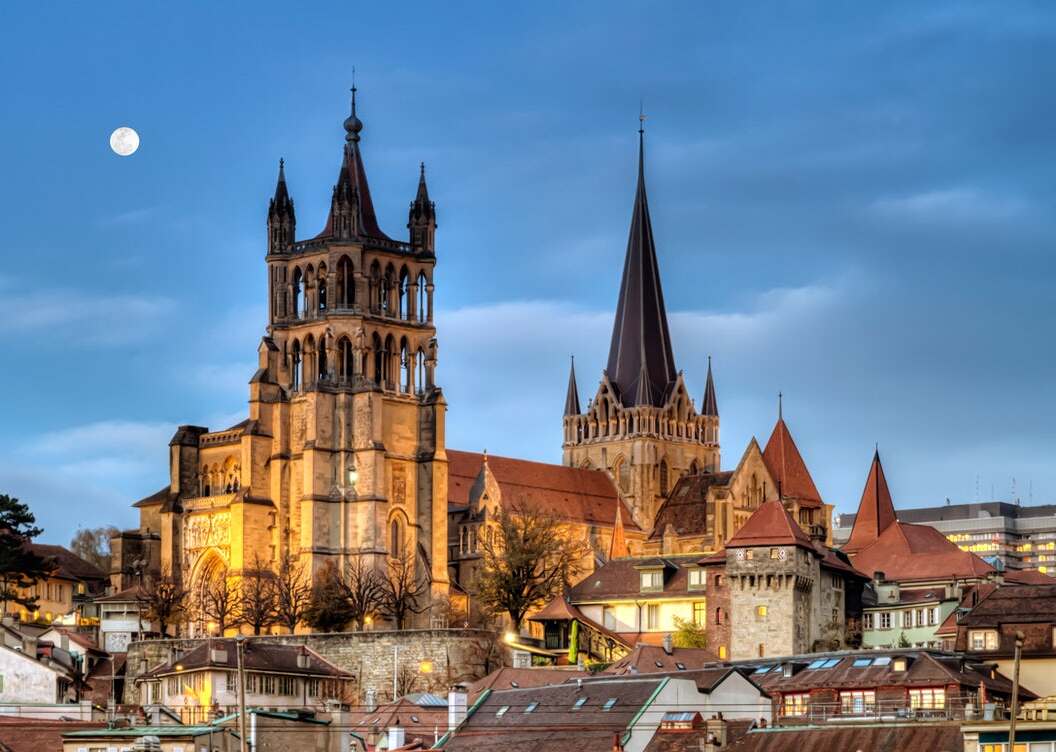

Perched majestically atop the hill of the Cité in Lausanne, the Notre-Dame Cathedral is more than just a religious structure; it is a testament to the city’s rich history and architectural prowess. Its gothic silhouette dominates the skyline, inviting visitors to explore its intricate details and storied past.

The origins of the cathedral date back to the late 12th century when construction began in 1160. It was built on the site of an earlier Romanesque church dedicated to Saint Lawrence. Over the centuries, the cathedral underwent several expansions and renovations, reflecting the evolution of architectural styles and the city's growth. The cathedral was completed in the 13th century, becoming a symbol of Lausanne and an important pilgrimage site. In 1536, during the Reformation, it was here that the Protestant reformer Jean Calvin preached, further solidifying the cathedral's historical significance.
Architecturally, the Notre-Dame Cathedral is a prime example of the Gothic style, characterized by its soaring arches, ribbed vaults, and flying buttresses. The main façade is adorned with a spectacular frescoed portal and crowned by a stunning large rose window composed of 105 multi-coloured stained glass windows that filter sunlight into a kaleidoscope of colors within. Visitors are often awed by the Apostles' Gate, also known as the "portail peint," which features beautifully preserved polychrome sculpture dating back to 1230. This gateway, with its intricate figures of saints and biblical scenes, offers a glimpse into medieval artistry.
Stepping inside, the cathedral’s three naves present a breathtaking vista of ogival arches and elaborately carved choir stalls. The atmosphere is imbued with a sense of reverence as one gazes at the remarkable stained-glass windows that narrate biblical stories. Particularly noteworthy is the rose window in the right transept, which depicts an imago mundi showcasing the seasons, months, the four elements, and zodiac signs, reflecting the medieval worldview.
The cultural tapestry of Lausanne is woven deeply with traditions and celebrations that honor the cathedral’s legacy. Each year, the Fête de la Musique fills the streets with music, echoing the spiritual ambiance of the cathedral. The Festival de la Cité, held in July, transforms the old town into a lively hub of theater, music, and dance, often featuring performances within the cathedral itself. These events not only celebrate local talent but also underscore the cathedral’s role as a cultural beacon in the community.
As you explore the local gastronomy, don’t miss out on tasting some of the region's specialties. Lausanne is renowned for its cheese, particularly L’Etivaz, a traditional Swiss cheese made in small mountain dairies. Pair this with a glass of Vaud wine, harvested from the Lavaux vineyards, which are a UNESCO World Heritage site. The combination of local cheese and wine creates a culinary experience that connects visitors to the land’s rich agricultural history.
Amidst the grandiosity of the cathedral, several lesser-known curiosities may intrigue the curious traveler. For instance, the cathedral houses the largest and oldest mechanized astronomical clock in Switzerland, constructed in 1530. This intricate timepiece not only tells time but also depicts the motion of celestial bodies, showcasing the medieval fascination with astronomy. Additionally, if you look closely at the Apostles' Gate, you might spot the tiny figures of mythical creatures hidden among the biblical scenes—an artistic touch that has sparked many local legends.
For those planning a visit to the Notre-Dame Cathedral, the best time to explore is during the early morning or late afternoon when the sunlight beautifully illuminates the stained glass. It’s advisable to check the cathedral’s schedule for any special events or services that may coincide with your visit. Don’t forget to climb the 152-meter bell tower—the panoramic views of Lake Geneva and the surrounding region are simply unforgettable.
In conclusion, the Notre-Dame Cathedral in Lausanne is not just a monument of faith but a vessel of history, art, and culture. Its intricate architecture, rich traditions, and mouth-watering gastronomy offer visitors a profound connection to the heart of this Swiss city. To truly appreciate all that Lausanne has to offer, consider using the Secret World app to plan a personalized AI itinerary.


