
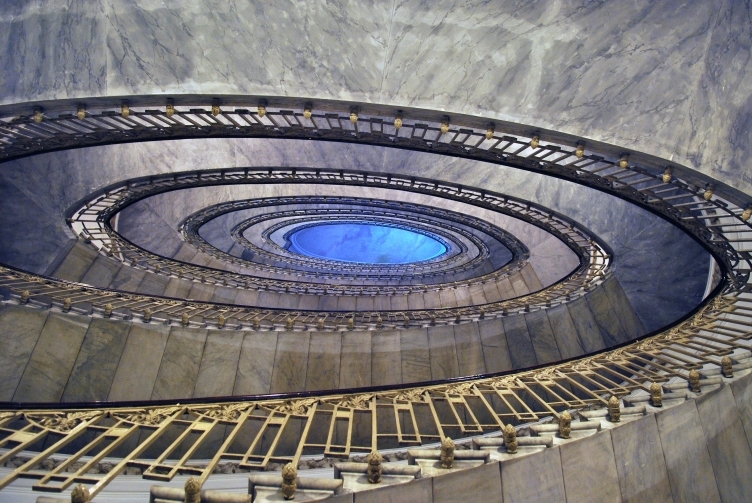

Nestled in the heart of Chiaia, Napoli, the Palazzo Mannajuolo stands as a beacon of Art Nouveau architecture, a testament to the city’s rich artistic heritage. Constructed between 1909 and 1911 by the visionary architect Giulio Ulisse Arata alongside engineers Gioacchino Luigi Mellucci and Giuseppe Mannajuolo, this architectural marvel captures the imagination of visitors with its enchanting design and historical significance. Its central feature, an ellipsoidal staircase, is a striking element that distinguishes it from other buildings in the area, inviting all who enter to explore its five floors, each housing exquisite dwellings and thriving commercial spaces. The facade, adorned with large glass panels, reflects the light beautifully, creating a magical ambiance that enchants passersby on Via dei Mille.

The history of Palazzo Mannajuolo is interwoven with the cultural fabric of Naples itself. As the city underwent significant transformation during the early 20th century, the palace emerged as a symbol of modernity, showcasing the artistic aspirations of its era. The Art Nouveau style, characterized by organic forms and intricate details, is not just seen in the grand staircase but is echoed throughout the building’s intricate ironwork and decorative motifs.
In addition to its architectural splendor, Palazzo Mannajuolo serves as a vibrant hub of local culture. Chiaia, known for its fashionable boutiques and lively streets, frequently hosts festivals and events that celebrate Neapolitan traditions. The Feast of San Gennaro, for instance, draws locals and tourists alike, filling the streets with processions, music, and the tantalizing aroma of street food. The palace’s proximity to such cultural events makes it an ideal starting point for an immersive experience in the city’s rich heritage.
When it comes to gastronomy, Naples is a culinary paradise, and Chiaia is no exception. Visitors to the area can indulge in traditional dishes such as pizza napoletana, famously characterized by its soft crust and fresh ingredients. Pairing this with a glass of Limoncello, a zesty lemon liqueur that originates from the region, offers a refreshing taste of local flavor. For those with a sweet tooth, sfogliatella, a flaky pastry filled with sweet ricotta, is a must-try, and can often be found in nearby bakeries.
While many tourists flock to the major attractions, some lesser-known curiosities about Palazzo Mannajuolo are often overlooked. For instance, the building’s unique blend of commercial and residential spaces reflects the social dynamics of early 20th-century Naples, where the lines between living and working were beautifully blurred. Additionally, the artistry of the building extends beyond its exterior; hidden details like the intricate tile work and the craftsmanship of the wrought iron balconies reveal the dedication to artistry that defined this period.
For those considering a visit, the best time to experience Palazzo Mannajuolo is during the spring and fall, when the weather in Napoli is pleasantly mild and ideal for walking tours. It’s advisable to explore not just the facade but also to venture inside, where the staircase awaits to transport you into a world of elegance and charm. When strolling along Via dei Mille, take a moment to appreciate the craftsmanship and artistry that have made this palace a cherished part of Neapolitan history.
In conclusion, the Palazzo Mannajuolo is more than just a building; it is a living piece of history, a showcase of artistic brilliance, and a vibrant part of the cultural landscape of Naples. To fully immerse yourself in the magic of this city, consider using the Secret World app to craft a personalized itinerary that leads you to discover all the hidden gems of Napoli.


