
← Back

The Mayans and the Yucatan

Yucatan Peninsula ★★★★☆ 345 views
Maya Tiger
🏆 AI Trip Planner 2026

Get the free app

Discover the best of {city} with Secret World — the AI trip planner with 1M+ destinations. Get personalized itineraries, hidden gems and local tips. Free on iOS & Android.

🧠 AI Itineraries 🎒 Trip Toolkit 🎮 KnowWhere Game 🎧 Audio Guides 📹 Videos
Scan to download iOS / Android
Scan for AppGallery Huawei users

About The Mayans and the Yucatan

The Mayans and the Yucatan | Secret World Trip Planner

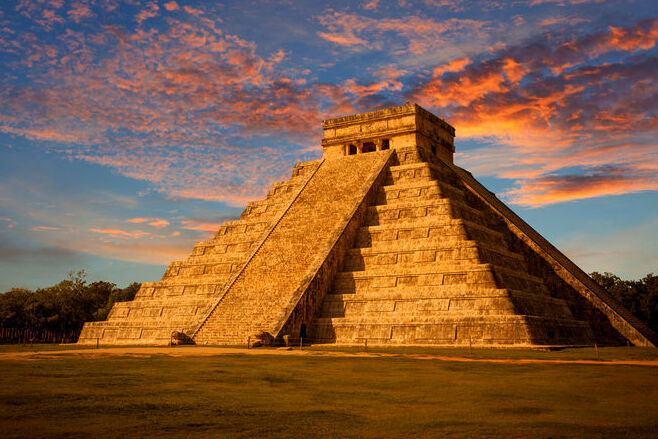
The ancient Maya were a population settled in Mesoamerica where they developed a civilization known for its art, architecture, refined mathematical and astronomical systems, and writing, the only known system of writing fully developed in the pre-Columbian Americas. The Mayan civilization developed in an area that includes present-day southeastern Mexico, Guatemala and Belize, as well as western parts of Honduras and El Salvador. This region consists of the northern plains, which include the Yucatán Peninsula, the Sierra Madre highlands, which extend from the Mexican state of Chiapas to all of southern Guatemala and then El Salvador, and the southern plains of the Pacific coast. The intense archaeological research and the deciphering of numerous hieroglyphic texts have made it possible to draw an extraordinarily detailed picture of the society and history of the Maya. These were once believed to be a peaceful people of farmers dispersed in the fields around large ceremonial centers and led by the religious elite, essentially devoted to worship and astronomical-mathematical speculation. It has been ascertained instead that the M. came to form real centralized States, ruled by hereditary sovereigns and in frequent conflict between them: the great part of the remaining inscriptions remind us of the dynastic events and the war exploits.
The Mayans and the Yucatan | Secret World Trip Planner

Similarly to the numerous high cultures of Mesoamerica, also the Maya one has its roots in the civilization of the so-called Olmecs, risen around the 13th century B.C. in the northern part of the Isthmus of Tehuantepec and extended in the following 8 centuries in the plateau of Mexico and along the Pacific coast up to Guerrero a N and Guatemala a S. It was precisely by the Olmecs that the first Maya people, already devoted to primitive agriculture and equipped with pottery from the 2nd millennium B.C., undoubtedly borrowed the basis of the calendar and hieroglyphic writing.
The Mayans and the Yucatan | Secret World Trip Planner

Buy Unique Travel Experiences

Powered by Viator

See more on Viator.com

Explore nearby

Frequently Asked Questions

The Mayan civilization developed across a large region including present-day southeastern Mexico, Guatemala, Belize, and western parts of Honduras and El Salvador. The most accessible areas for tourists are the Yucatán Peninsula in Mexico and the highlands of Guatemala, which offer some of the best-preserved archaeological sites and are well-connected by modern transportation.
The Maya were known for their exceptional achievements in art, architecture, mathematics, and astronomy, and they developed the only fully developed system of writing in pre-Columbian Americas. Their sophisticated hieroglyphic writing system and astronomical-mathematical knowledge were actually influenced by earlier Olmec civilization, which they built upon to create their own unique cultural achievements.
Modern archaeological research has revealed that the Maya were not simply peaceful farmers, but rather formed centralized states ruled by hereditary sovereigns who frequently engaged in conflicts with one another. Most of the remaining hieroglyphic inscriptions document dynastic events and war exploits, showing a much more complex and militaristic society than previously believed.
The Yucatán Peninsula is part of the northern plains region where the Maya civilization flourished and where you'll find major archaeological sites and ceremonial centers. The region's intense archaeological research has made it possible to piece together detailed information about Maya society and history, making it an ideal destination for understanding their culture.
The Mayan civilization has its roots in the earlier Olmec civilization, which rose around the 13th century B.C. in the Isthmus of Tehuantepec and spread across Mesoamerica. The Maya people, who were already practicing primitive agriculture by the 2nd millennium B.C., borrowed fundamental elements like their calendar system and hieroglyphic writing from the Olmecs, then developed these into their own sophisticated form.