



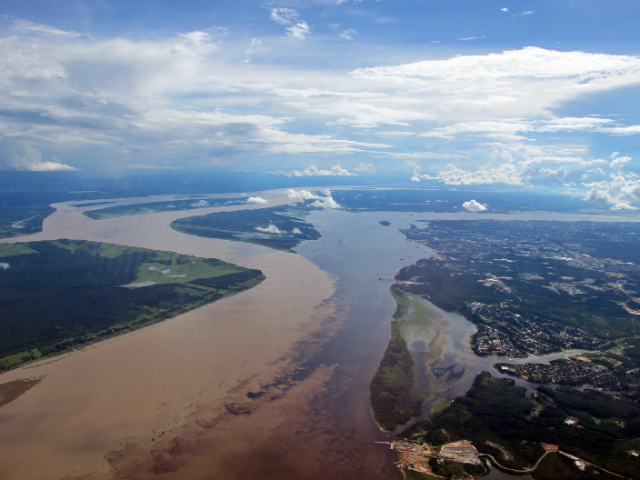
In the heart of the Brazilian Amazon, where the vast and enigmatic rainforest sprawls to every horizon, lies a breathtaking natural spectacle known as the Meeting of the Waters. Here, the dark waters of the Rio Negro converge with the sandy-hued currents of the Rio Solimões, creating a striking visual contrast that captivates both the mind and the eye. This natural phenomenon, stretching over four miles, occurs due to differences in temperature, speed, and water density, allowing the two rivers to run side by side without mixing.
The origins of this extraordinary confluence are deeply rooted in the ancient history of the Amazon basin. The Rio Negro, with its dark, tea-colored waters, derives its hue from the decaying vegetation of the surrounding rainforest, a process that has taken place over millennia. Meanwhile, the Rio Solimões carries nutrient-rich sediments from the Andes, giving it a muddy appearance. Historically, this region has been the cradle of numerous indigenous cultures, each with its own myths and legends about the rivers' origins. The area surrounding the Meeting of the Waters has been inhabited for thousands of years, with archaeological evidence suggesting complex societies thrived here long before European contact.
While the Meeting of the Waters itself is a natural wonder, the city of Manaus, located nearby, offers a rich tapestry of art and architecture that reflects its storied past. During the late 19th century, Manaus became a booming center of the rubber trade, attracting wealth and leading to the construction of the opulent Teatro Amazonas opera house. This architectural gem, completed in 1896, showcases a blend of European styles with its grand neoclassical facade and an interior adorned with Italian marble and French glass. Visitors to Manaus can also explore the vibrant street art scene, which often depicts the lush biodiversity and cultural heritage of the Amazon.
The cultural fabric of the region is as diverse as its natural environment. The indigenous peoples of the Amazon have a profound connection to the rivers, viewing them as sacred entities. Traditional festivals, such as the Festival of Parintins, celebrate this bond through music, dance, and storytelling, showcasing the rich folklore of the Amazonian tribes. This festival, held annually in June, is a riot of color and emotion, drawing visitors from across Brazil and beyond.
Gastronomy in this part of the Amazon is a delightful adventure for the senses, with flavors as bold and varied as the landscape itself. Local dishes often feature tambaqui, a freshwater fish native to the Amazon, prepared in traditional ways that highlight its unique taste. Another must-try is Tacacá, a tangy soup made from tucupi broth, jambu leaves, and shrimp, offering a taste that's both exotic and comforting. The region's rich biodiversity also means that fruits like açaí and cupuaçu are staples, providing a fresh and invigorating contrast to the hearty meals.
For those seeking lesser-known curiosities, the Meeting of the Waters offers plenty. One fascinating aspect is the presence of pink river dolphins, or botos, which are often spotted navigating the confluence. These creatures hold a special place in local folklore, believed by some to transform into handsome young men at night. Another intriguing detail is the thermal difference between the two rivers: the Rio Negro is significantly warmer than the Rio Solimões, a factor that contributes to their prolonged separation.
When planning a visit to the Meeting of the Waters, timing is crucial. The best period is during the dry season, from June to November, when the rivers are most pronounced, and the weather is relatively cooler. Guided boat tours are available, providing a closer look at this natural marvel while offering insights into the ecological and cultural significance of the area. It's wise to bring sunscreen, insect repellent, and a good camera to capture the breathtaking scenery.
The Meeting of the Waters is not just a geographical phenomenon but a testament to the enduring power and mystery of nature. Its unique interplay of elements, enriched by the cultural tapestry of the Amazon, makes it a destination that resonates with history, beauty, and wonder.
