



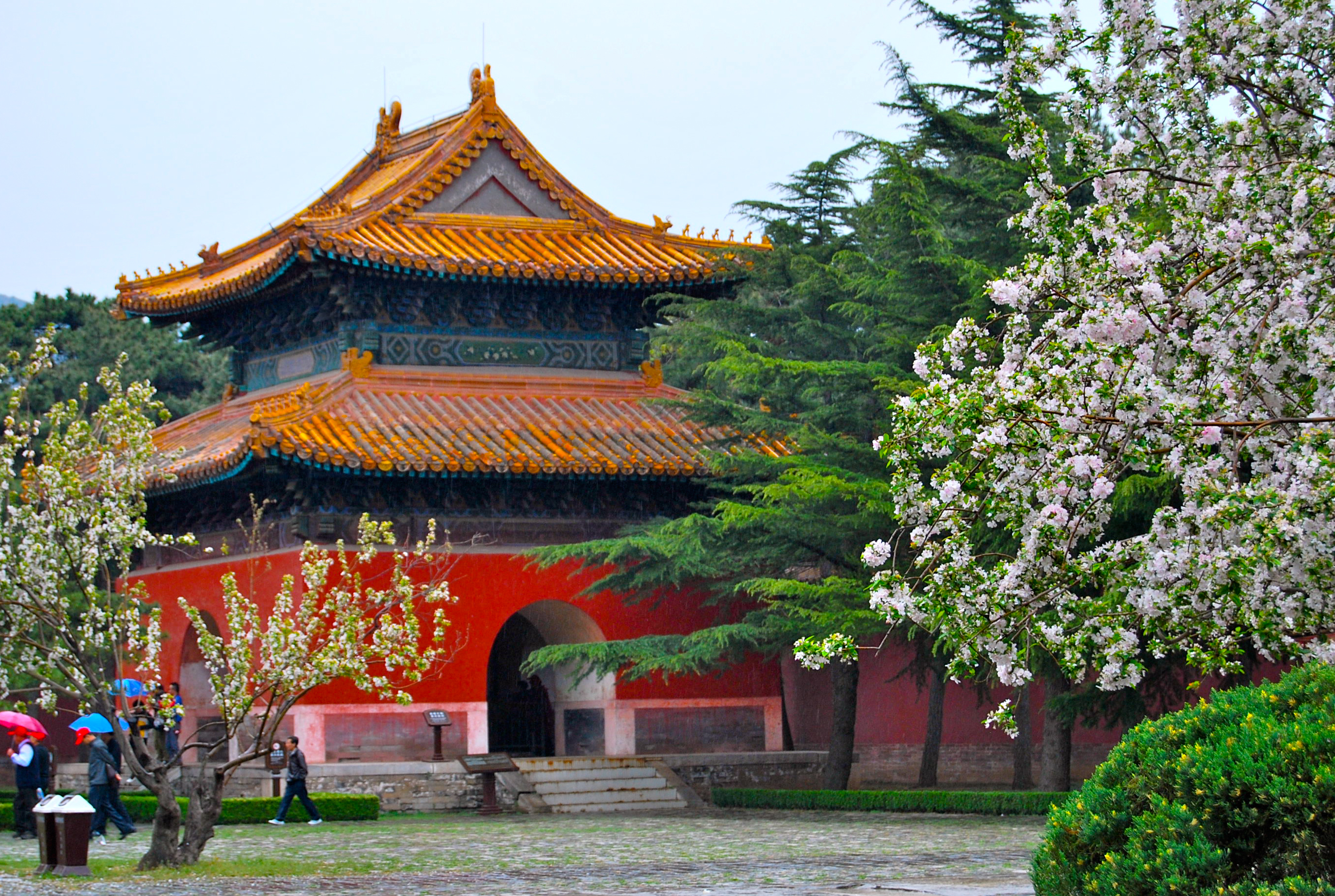
Nestled in the foothills of the Yanshan Mountains, the Ming Tombs stand as a monumental testament to the grandeur of the Ming Dynasty, where the souls of 13 emperors rest in eternal peace. This ancient imperial cemetery, located just 50 kilometers northwest of Beijing, serves as a poignant reminder of China's feudal past, a place where history, art, and culture converge.
The origins of the Ming Tombs date back to the early 15th century, specifically to 1409 AD when the third emperor, Zhu Di, also known as the Yongle Emperor, initiated the construction of his own tomb, Changling. The site was meticulously selected based on feng-shui principles, which dictate that the dead should be buried in harmony with the natural landscape. Surrounded by mountains on three sides and a flowing river nearby, the location embodies the belief that the spirits of the deceased would be protected and nurtured by the earth's energies. Over the course of the dynasty, which lasted from 1368 to 1644, a total of 13 emperors—along with their wives and concubines—were interred here, solidifying the Ming Tombs as a vital chapter in China's rich historical narrative.
Architecturally, the Ming Tombs are a stunning reflection of traditional Chinese design, characterized by symmetry, geometric layouts, and the use of vibrant colors. The tomb complex spans over 40 square kilometers, with structures built from stone, brick, and wood. Changling, the largest and most well-preserved tomb, showcases a grand entrance flanked by stone statues known as the Spirit Way, leading to a ceremonial path that includes impressive stone carvings of animals and officials. The tombs themselves are adorned with intricate murals and carvings, illustrating the celestial beliefs of the time and showcasing the artistic prowess of the Ming artisans. The architecture embodies the imperial grandeur, with each tomb designed to reflect the status and power of its occupant.
Beyond its architectural significance, the Ming Tombs are steeped in local culture and traditions. The site is a focal point during the Qingming Festival, a time when families honor their ancestors by visiting their graves, offering food, incense, and paper money. This blend of respect and remembrance highlights the deep-rooted beliefs in filial piety that permeate Chinese culture. Visitors may witness traditional rituals performed by locals, offering a unique insight into how ancient customs continue to thrive in modern-day China.
As you wander through the Ming Tombs, don’t miss the chance to indulge in local gastronomy. The region is known for its Peking duck, a delicacy that has become synonymous with Beijing but finds its roots in the imperial kitchens of the Ming Dynasty. The dish is often served with thin pancakes, hoisin sauce, and sliced vegetables, creating a culinary experience that reflects the opulence of the era. Additionally, Bai Jiu, a traditional Chinese liquor, is commonly enjoyed by visitors as they toast to the spirits of the emperors. Sampling these local dishes will not only satisfy your palate but will also connect you to the historical narrative of the region.
While the Ming Tombs are often celebrated for their historical significance, there are lesser-known curiosities that add depth to your visit. For instance, many tourists overlook the Dingling Tomb, the only tomb that has been fully excavated. Inside, a wealth of artifacts was discovered, including ceremonial items and treasures that provide insight into the burial practices of the Ming emperors. Additionally, the impressive Ceremonial Gate at the entrance, adorned with dragon motifs, is a nod to the emperor's divine status, symbolizing power and protection.
To make the most of your visit, consider timing your trip during the spring or autumn months when the weather is mild and the landscape comes alive with vibrant colors. Weekdays can be less crowded than weekends, allowing for a more serene exploration of the tombs. Be sure to wear comfortable shoes, as the pathways are extensive and best enjoyed on foot. Take your time to absorb the atmosphere and reflect on the lives of the emperors who once ruled with absolute power.
In conclusion, the Ming Tombs are not merely a collection of ancient burial sites; they are a celebration of China's imperial heritage, art, and culture. Each tomb tells a story, and every corner holds a lesson from the past. For a more personalized exploration of this historic site and beyond, consider using the Secret World app to plan your itinerary.
