
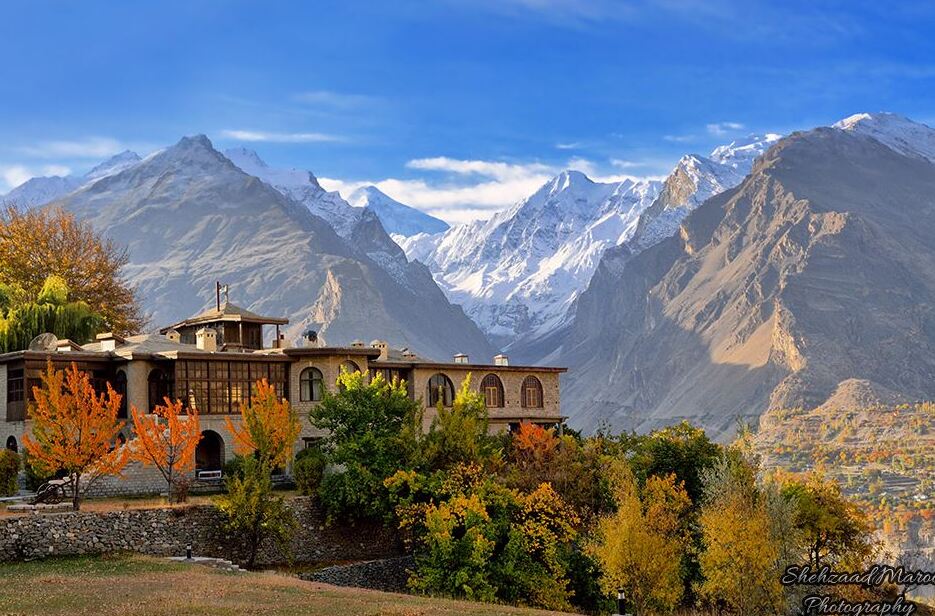

Nestled in the stunning landscape of Hunza Nagar, the Mir's Palace stands as a testament to the rich history and culture of the region. This majestic structure, currently under restoration, was once the residence of the Mir of Hunza, who held court here for three months each year until the early 1970s. The palace served as a hub for local durbars (councils), where community matters were discussed, and decisions affecting the region were made.
The origins of the Mir's Palace date back to the time when Hunza was an independent principality. The Mirs, or rulers, of Hunza were pivotal figures in the region, influencing not only local governance but also the socio-economic fabric of the area. The palace itself, with its intricate architecture, reflects a blend of Central Asian and Indo-Persian influences, characterized by wooden balconies, ornate woodwork, and panoramic views of the surrounding mountains, including the majestic Rakaposhi.
As you wander through the grounds, the cluster of houses to the left of the palace reveals the original village of Gulmit. Among them, the tallest house claims the title of the oldest in Gulmit, possibly dating back 200 years. Before the palace's construction, it is said that the Mir would stay in this house during his visits, adding to the rich tapestry of local history.
Adjacent to the palace, the remnants of an old Shiite mosque with beautifully carved lintels provide insight into the region's religious evolution. In the early 19th century, the Gojalis community transitioned from Shiism to Ismailism, marking a significant shift in local culture. The mosque stands as a silent witness to this transformation, a place where generations have gathered for prayer and community.
The cultural significance of the Mir's Palace extends beyond its walls. Local customs are deeply intertwined with the palace's legacy, and festivals in the area often reflect the historical and spiritual narratives of the Hunza Valley. Events such as the Shandur Polo Festival and local harvest festivals bring together community members, showcasing traditional music, dance, and polo matches that celebrate the region’s vibrant heritage.
When it comes to gastronomy, the culinary delights of Hunza are as rich as its history. Traditional dishes like chapshuro, a meat-filled pastry, and hunza pulao, a fragrant rice dish made with local spices and nuts, are staples. The region is also known for its unique apricots, which are celebrated during the summer months when they are harvested and dried for winter use. Visitors can enjoy these delicacies in local eateries, often prepared using age-old recipes passed down through generations.
For those who venture off the beaten path, lesser-known curiosities await. One surprising detail is the ongoing restoration of the Mir's Palace, which not only aims to preserve its architectural beauty but also to revive local craftsmanship and traditions. Additionally, nearby, local women can be seen dyeing and weaving traditional cloth, a practice that connects the community to their ancestry and promotes sustainable livelihoods.
To truly appreciate the Mir's Palace, the best time to visit is during the spring and summer months, from April to September, when the weather is pleasant, and the surrounding landscape is in full bloom. The warm hospitality of the locals, coupled with the breathtaking views of the Himalayas, makes for an unforgettable experience. Visitors are encouraged to take guided tours to gain deeper insights into the palace's history and the cultural practices of the region.
As you explore this historical gem, keep an eye out for the small details—the intricate carvings, the vibrant colors of local textiles, and the stories shared by the elders of Gulmit. Each element contributes to the rich narrative of the Mir's Palace, making it a must-visit destination for those seeking to understand the soul of Hunza Nagar.
For a tailored expedition that captures the essence of this remarkable place, consider using the Secret World app to plan a personalized AI itinerary to visit Hunza Nagar.


