
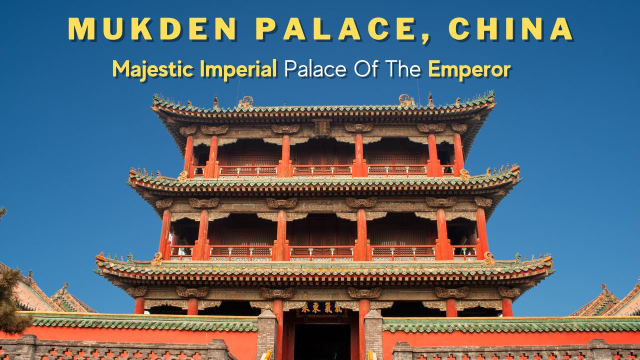

The Mukden Palace, situated in Shenyang, Liaoning Province, stands as a magnificent testament to China's imperial history. Constructed in 1625 by the Manchu leader Nurhaci, shortly after his conquest of the city, it served as the living quarters for the Qing emperors until the capital was moved to Beijing. Despite this transition, the Qing emperors would return annually to indulge in leisure activities at the palace, emphasizing its significance as a cherished retreat.
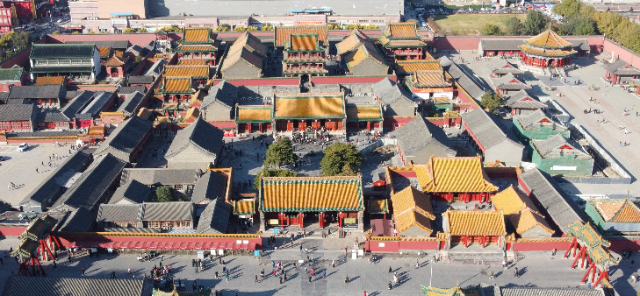
Today, the palace has been transformed into the Shenyang Imperial Palace Museum, recognized as a UNESCO World Heritage Site since 2004. With its sprawling complex covering over 60,000 square meters and incorporating more than 300 lavishly decorated rooms and 20 vibrant gardens, the palace exudes grandeur at every turn.
Architecturally, the Mukden Palace is a blend of styles, drawing inspiration from the Forbidden City while also showcasing distinct Manchurian and Tibetan influences. Divided into three sections along a north-south axis, each area offers unique insights into imperial life. The oldest eastern section features prominently Manchurian buildings, while the western section houses the theater and palace library. In the central section, the main residences for the Emperor, Empress, and imperial concubines can be found, each surrounded by high walls to ensure privacy.
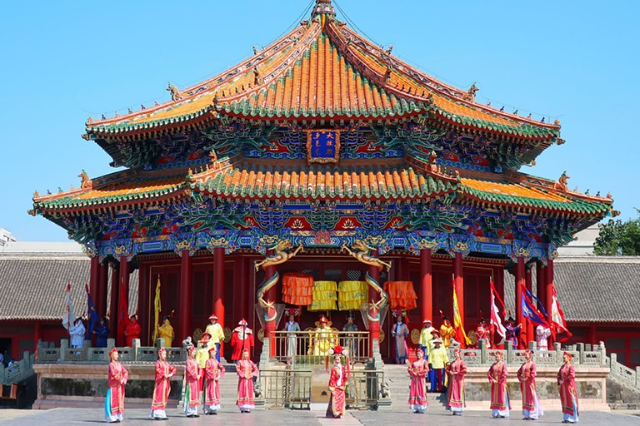
Notable structures within the palace include the Dazheng Hall, where the Emperor's high throne is situated, and the Shiwang Pavilions, flanking the hall and serving as official offices. Qingning Palace, the residence of the Emperor and Empress, and Chongzheng Hall, where political affairs were conducted, are also significant landmarks.
The Wensu Pavilion, located in the western section, stands out with its black roof, symbolizing protection from fire as it houses the palace library. Throughout the palace, over 10,000 relics from the Qing Dynasty are on display, including weapons, paintings, and imperial seals, offering visitors a captivating glimpse into China's regal past.
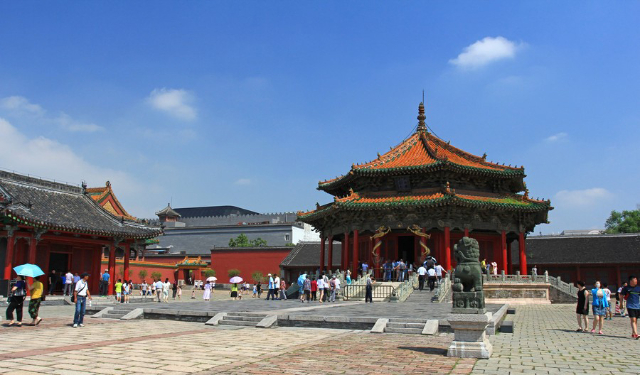
As visitors wander through the halls and gardens of the Mukden Palace, they are transported back in time, immersing themselves in the opulence and grandeur of China's imperial era. Each artifact and architectural detail tells a story of a bygone era, where emperors reigned supreme within the majestic walls of their palace retreats.


