
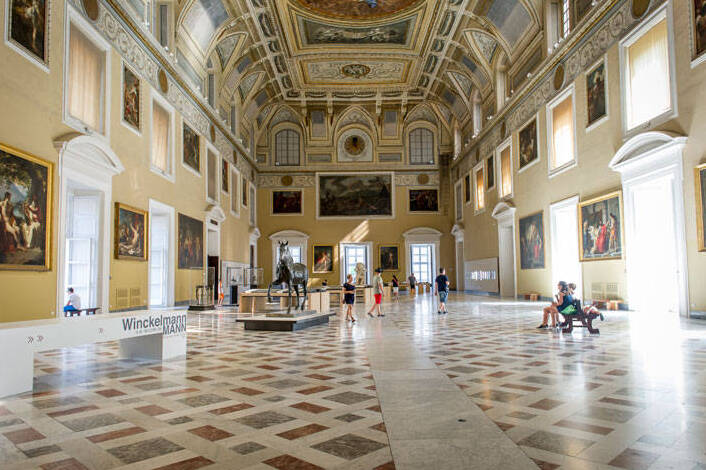

The National Museum of Archaeology in Naples, or Museo Archeologico Nazionale di Napoli, stands as a beacon of ancient history and artistry. Established in 1826, this museum is one of the world’s foremost repositories of Roman art, housing a stunning collection that narrates the stories of civilizations long past. Its foundation traces back to a collection of antiquities amassed by the Bourbon kings of Naples, who sought to create a cultural hub that would rival those of other European capitals.
The museum is located in the historic Palazzo degli Studi, which was originally designed in the late 16th century. Its architectural style reflects the Renaissance and Baroque influences that permeate Naples. Visitors are greeted by grand staircases, soaring ceilings, and vast halls that echo with the whispers of history. Notably, the museum boasts the Farnese Collection, which features the Farnese Bull, the largest intact marble sculpture from antiquity. Carved from a single block of marble, this astonishing work measures over three meters in height and is a testament to the skill of Roman artisans.
The museum’s collection is further enriched by the remarkable artifacts unearthed during the excavations of the Vesuvian towns of Pompeii and Herculaneum. The vivid mosaics and frescoes found here transport visitors back to a time when these towns thrived before the catastrophic eruption of Mount Vesuvius in 79 AD. Among these treasures, the Alexander Mosaic, depicting the battle between Alexander the Great and Darius III, stands out for its intricate detail and vibrant colors.
A unique highlight of the museum is the Secret Room (Gabinetto Segreto), which houses an impressive collection of erotic art from the Roman period. This area offers a glimpse into the more intimate aspects of Roman life and serves as a fascinating contrast to the more formal and public displays of art found elsewhere in the museum.
Beyond its archaeological treasures, the museum plays a significant role in the local culture of Naples. The city is known for its rich traditions, often celebrated through vibrant festivals such as the Feast of San Gennaro, where locals pay homage to the patron saint of Naples. The museum itself occasionally hosts events that celebrate Neapolitan culture, such as art exhibits and workshops that connect the ancient with the contemporary.
Gastronomy in Naples is an essential aspect of its cultural identity. Renowned as the birthplace of pizza, visitors should not miss the opportunity to savor a traditional Margherita pizza, made with simple, high-quality ingredients like San Marzano tomatoes and fresh mozzarella. Pair your meal with a glass of Limoncello, a sweet lemon liqueur that embodies the region’s citrus groves, or sample local pastries like sfogliatella, a delightful shell-shaped pastry filled with sweet ricotta.
For those curious about lesser-known facts, the museum’s vast collection includes one of the largest Egyptian collections in Italy, featuring artifacts that reveal the profound connections between ancient Egypt and the Mediterranean world. Additionally, the museum’s underground chambers hold secrets of its own; once used as shelters during World War II, these spaces now offer a glimpse into the resilience of Neapolitan culture.
When planning your visit, the best time to explore the Museo Archeologico Nazionale di Napoli is during the off-peak seasons of spring (April to June) and early autumn (September to October). These months not only provide a more comfortable climate but also less crowded galleries. To make the most of your experience, consider joining a guided tour that delves into the stories behind the artifacts, or download the Secret World app to create a personalized AI itinerary for your visit to Napoli.
With its breathtaking art, rich history, and vibrant local culture, a trip to the National Museum of Archaeology in Naples is sure to leave an indelible mark on your journey through Italy.


