
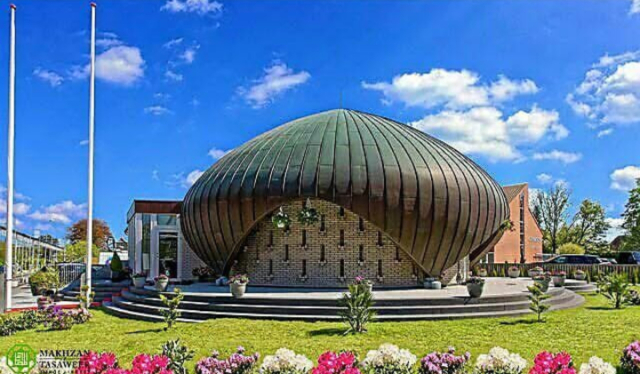

The Nusrat Djahan Mosque in Denmark holds a special place in the nation’s religious landscape as its first mosque, constructed in 1967. Located on the outskirts of Copenhagen, this mosque serves the Ahmadiyya Muslim community and is notable not only for its architectural uniqueness but also for its historical significance in the Danish context.
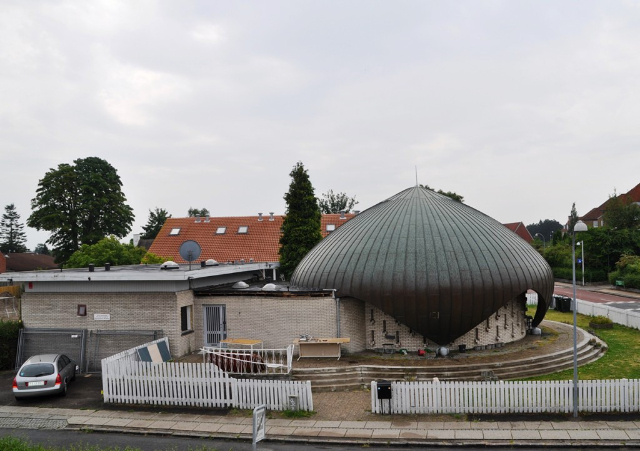
What sets the Nusrat Djahan Mosque apart from traditional Islamic architecture is its design; it features no towers or minarets, which are typically prominent in mosque structures. Instead, the building is circular, constructed from white bricks, which gives it a modern and distinct appearance. The narrow windows of the mosque are adorned with glass mosaics in various colors, adding a vibrant touch to the serene white exterior.
The roof of the mosque is another architectural highlight, featuring a low, sweeping dome that almost touches the ground at its edges. This design element not only contributes to the mosque's aesthetic appeal but also symbolizes a blend of cultural integration and architectural innovation.
An inspiring aspect of the Nusrat Djahan Mosque is its funding; the construction was entirely financed by the women of the Ahmadiyya community in Denmark. This fact underscores the active participation and significant role of women within the community, reflecting their dedication and commitment to their faith and social identity.
Today, the Nusrat Djahan Mosque is more than just a place of worship; it is a cultural beacon for the Ahmadiyya Muslim community in Denmark, promoting peace, understanding, and dialogue both within and outside the Muslim community.


