



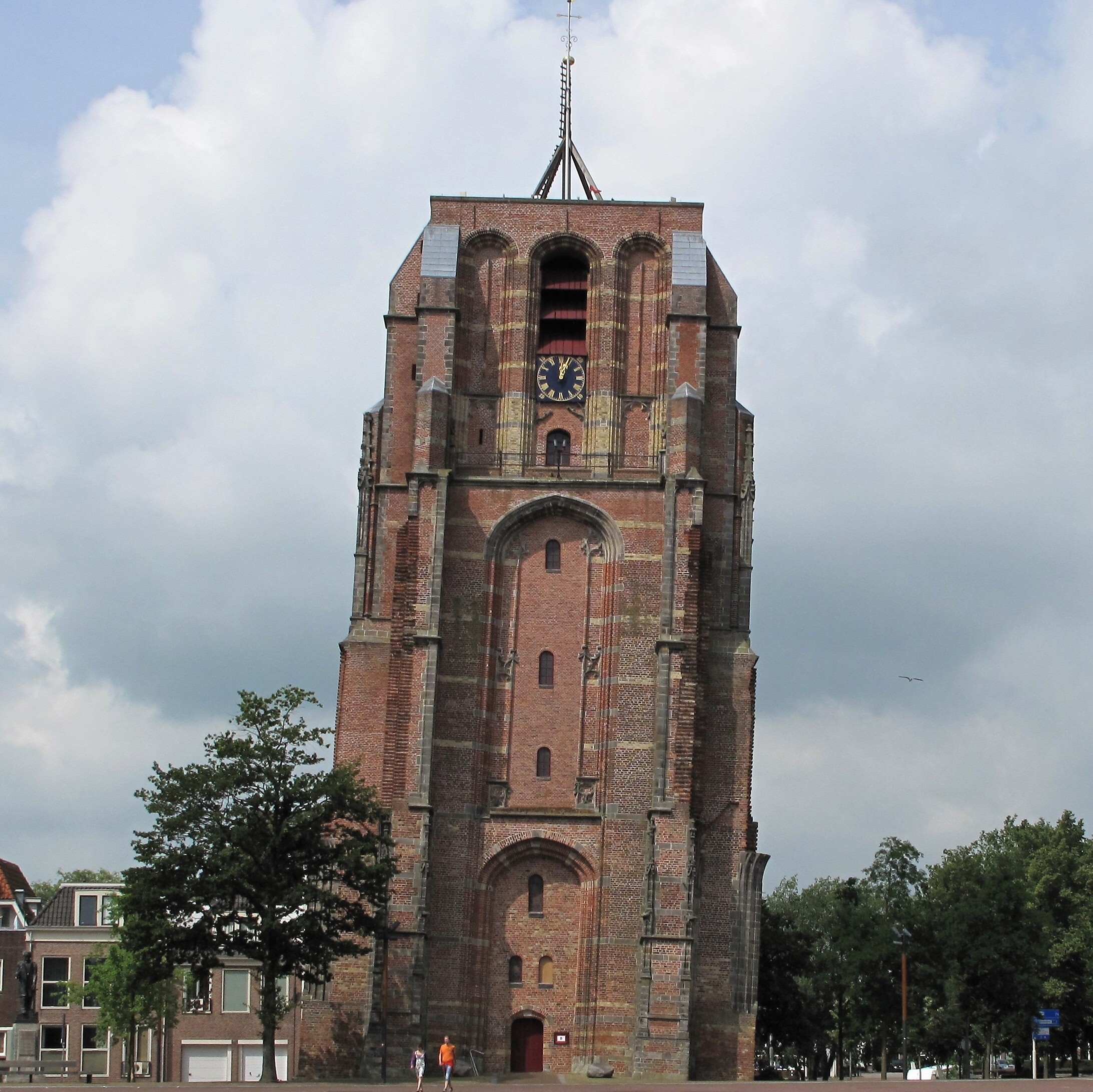
In the heart of Leeuwarden, the capital of the Friesland province in the Netherlands, stands the iconic Oldehove—a leaning and unfinished church tower that tells a captivating tale of ambition, artistry, and architectural misadventure. This striking structure, with its unique tilt, has become a symbol of the city and a testament to the historical aspirations of its citizens.

The origins of the Oldehove date back to the late 9th century, when an artificial mound known as a terp was constructed to protect inhabitants from flooding. On this mound, a Catholic church dedicated to Saint Vitus was built. The ambition of Leeuwarden's citizens took a grand turn in 1529 when they sought to construct a tower that would surpass the Martinitoren in Groningen. Commissioned to oversee the project were Jacob van Aken and, following his untimely death, Cornelis Frederiksz. However, as construction progressed, the tower began to lean, prompting desperate attempts to correct its tilt. Despite these efforts, the project was halted around 1532, leaving the tower incomplete.
The Oldehove's architecture is a blend of Late Gothic and more local styles, characterized by its use of brick and Bentheim sandstone. Standing at a height of 39 meters (127.95 feet), the tower has a notable horizontal displacement of 2 meters (6 ft 7 in) from its center due to its tilt. Visitors can ascend the 183 steps, providing a rewarding view of Leeuwarden and its surroundings. The tower houses two historic bells: one cast in 1633 by Hans Falck and another in 1637 by Jacob Noteman, weighing a hefty 2,100 kg (4,630 lb). As a Rijksmonument (national monument), the Oldehove is not just an architectural wonder; it is a piece of the city’s cultural heritage.

Local culture in Leeuwarden thrives on its historical narratives and vibrant traditions. The city hosts several festivals throughout the year, with the Ljouwerter Sunder being particularly significant. This festival celebrates the city’s history and culture with events that include traditional music, art exhibitions, and local cuisine. The Oldehove often serves as a backdrop for cultural events, connecting the past with the present and drawing locals and tourists alike to its historic charm.
Speaking of local cuisine, Leeuwarden is known for several delightful gastronomic offerings. Among them, Fryske sûkerbrood, a sweet bread with a rich history, is a must-try. This traditional loaf is often served during special occasions and is made with ingredients that symbolize the region's agricultural heritage. For those looking to quench their thirst, a visit to a local café for a glass of Friesian beer or a shot of beerenburg, a herbal bitters, provides a true taste of Friesland.
While the Oldehove is a well-known landmark, it harbors lesser-known curiosities that often go unnoticed by tourists. For instance, the tower's tilt was not only a structural failure but also sparked local legends. One such story suggests that the devil himself was involved in the construction, purposely causing the tower to lean out of spite. Additionally, the Oldehove’s bells are said to echo with a unique sound, attributed to the specific mix of materials used in their casting, making them a point of interest for music enthusiasts.
For those planning a visit, the best time to explore the Oldehove and the surrounding area is during the warmer months, particularly from late spring through early autumn. This period offers mild weather, ideal for climbing the tower and enjoying the outdoor spaces nearby. It’s advisable to check the local calendar for any special events or festivals that may coincide with your visit, as these provide a deeper insight into Leeuwarden's vibrant culture.
In summary, the Oldehove stands not only as an architectural marvel but as a living narrative of Leeuwarden's rich history and culture. Visitors are encouraged to explore this leaning tower, indulge in local delicacies, and immerse themselves in the traditions of Friesland. For a personalized experience that captures the essence of Leeuwarden, consider using the Secret World app to plan your itinerary.
