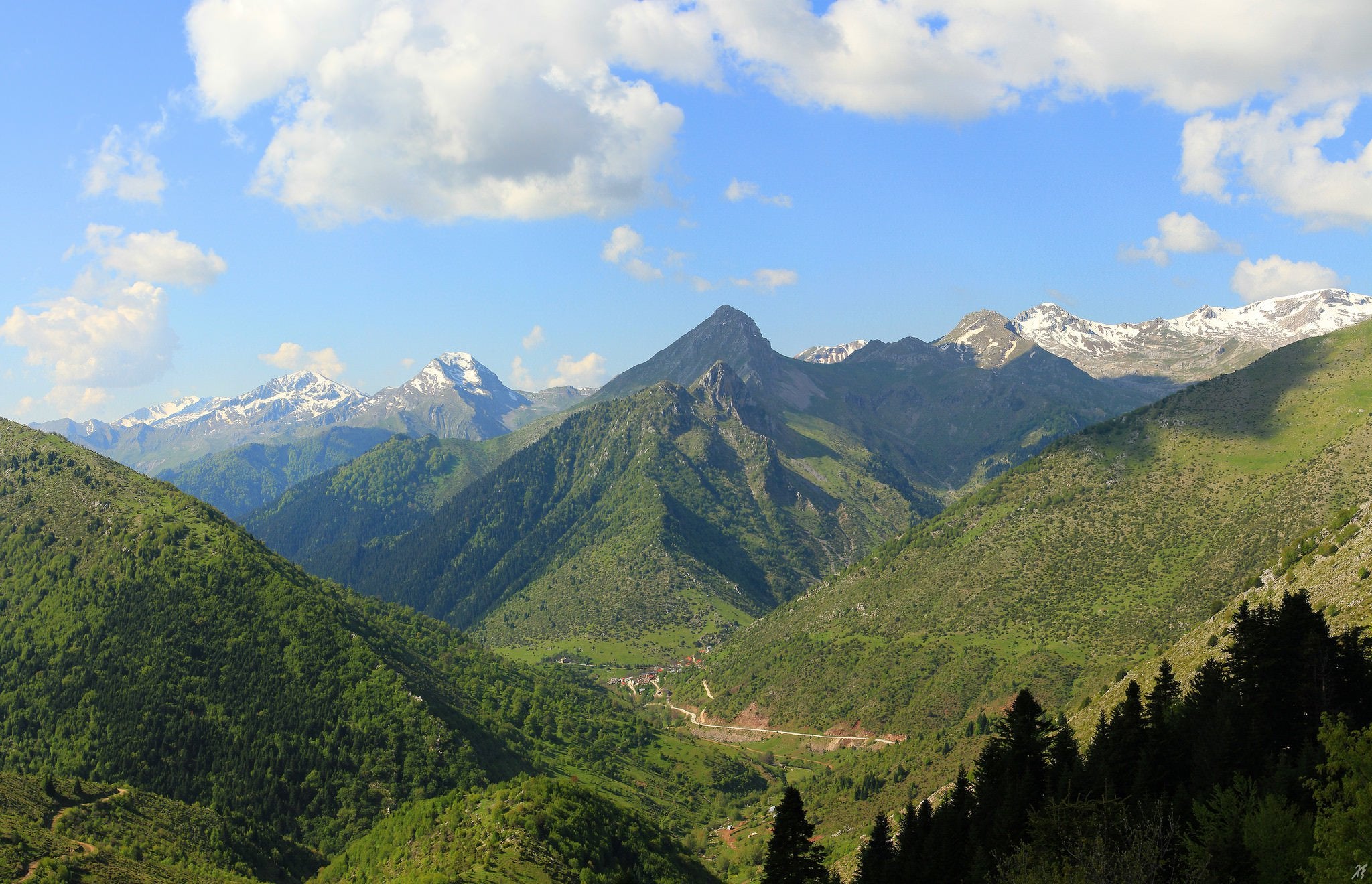


The Pindus Mountains, often referred to as the "Switzerland of Greece," rise majestically in the northern part of the country, offering breathtaking vistas and a rich tapestry of history, culture, and gastronomy. Stretching from the borders of Albania to central Greece, this mountain range is not only the backbone of mainland Greece but also a vital part of its natural heritage.
### History and Origins
The history of the Pindus Mountains is steeped in ancient lore and significance. In antiquity, the name Pindus referred to various ranges that were crucial to the Greek civilization. According to legend, the mountains were associated with the hero Hercules, who was believed to have traversed these rugged terrains during his legendary labors. The region has witnessed many historical events, including the Greek Revolution of the 1820s, where the mountains provided shelter and strategic advantage to Greek fighters against Ottoman rule.
The highest peak, Smólikas, soaring to 8,651 feet (2,637 meters), is not only a natural wonder but also a historical landmark. It is believed to have been a sanctuary for ancient tribes, who revered the mountain as a divine setting. The complex geological history of the Pindus, characterized by metamorphic and volcanic rocks, reflects millennia of natural events that have shaped the landscape.
### Art and Architecture
The architectural style in the Pindus region is predominantly marked by traditional stone-built villages, known as “zagoria”. These villages, such as Metsovo and Papingo, showcase a blend of Byzantine and Ottoman influences, with their charming stone houses, arched bridges, and ornate churches. The Monastery of Agios Nikolaos in Metsovo is particularly noteworthy, featuring stunning frescoes and intricate woodwork that reflect the artistic heritage of the area.
Additionally, the Pindus Mountains are home to numerous iconography and religious artworks that date back centuries, serving as vital links to the spiritual history of the region. The artistry here is not just confined to buildings; local artisans continue to create intricate textiles and handicrafts, preserving the artistic legacy of their ancestors.
### Local Culture and Traditions
The culture of the Pindus Mountains is rich with traditions that have been passed down through generations. The locals celebrate a variety of festivals, such as the Metsovo Wine Festival, held every September, where visitors can taste local wines, partake in folk dances, and enjoy traditional music. The Feast of St. George is another prominent celebration, featuring vibrant processions and communal feasts that highlight the importance of community in this mountainous region.
Local customs also include unique practices related to shepherding and agriculture, which remain integral to the livelihoods of many residents. The rhythmic sound of shepherds calling their flocks echoes through the valleys, a testament to a way of life that has endured amidst the ever-changing modern world.
### Gastronomy
Gastronomy in the Pindus Mountains is a delightful experience that showcases the region's natural bounty. Metsovone, a local cheese smoked over an open flame, is a must-try, as is the hearty moussaka, which combines layers of eggplant, minced meat, and béchamel sauce. The region is also known for its wild game, including venison and rabbit, often prepared in rustic taverns that offer stunning views of the mountains.
Don't miss the opportunity to taste local wines, particularly those produced from the indigenous Debina grape, which thrive in the region's unique microclimate. Pairing these wines with traditional dishes provides a true taste of the Pindus' culinary heritage.
### Lesser-Known Curiosities
Many tourists overlook the hidden gems within the Pindus Mountains. For instance, the Voidomatis River, known for its crystal-clear waters, is considered one of the cleanest rivers in Europe. This river is not just a natural wonder; it also offers exceptional opportunities for hiking and rafting, revealing stunning landscapes that are often missed by the casual traveler.
Another intriguing aspect is the Vikos Gorge, reputed to be the deepest gorge in the world relative to its width. The breathtaking views and diverse flora and fauna make it a UNESCO Geopark, yet it remains relatively undiscovered compared to more famous destinations.
### Practical Visitor Information
The best time to visit the Pindus Mountains is between May and October, when the weather is mild, and the landscapes are lush and vibrant. Hiking enthusiasts should prepare for varying terrain, and it's advisable to wear sturdy shoes and carry sufficient water. For those interested in culture, visiting during local festivals can provide a unique insight into the traditions and communal spirit of the area.
When exploring, keep an eye out for the traditional stone bridges and ancient monasteries that dot the landscape, each with its own story to tell. Engaging with local residents can also enrich your experience, as they often share tales and insights that are not found in guidebooks.
To fully immerse yourself in the Pindus Mountains, consider using the Secret World app to customize your itinerary according to your interests and preferences.
