
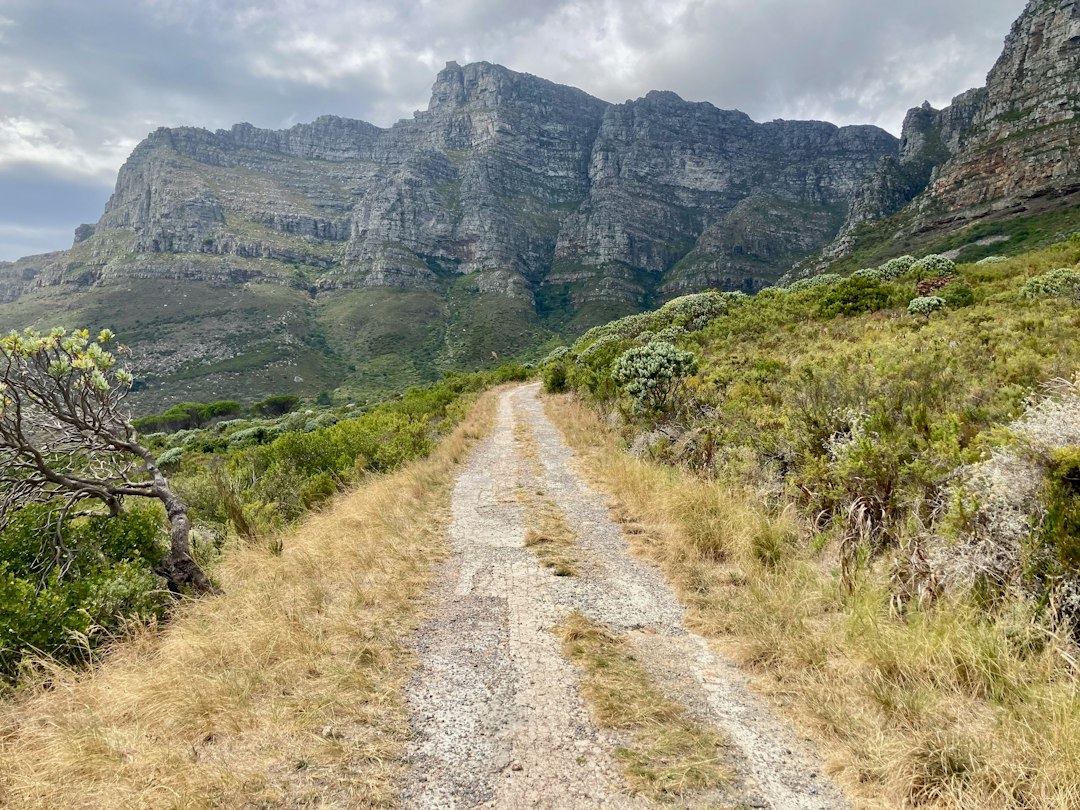

The flat profile of Table Mountain looms above Cape Town like a huge table made of sandstone, and even from a distance, it is clear that walking along its flanks means entering an extraordinary landscape. The Pipe Track is one of the most frequented routes of this iconic mountain: a path that follows the route of ancient water pipes along the western slope, offering continuous views of the Atlantic Ocean and the neighborhood of Camps Bay.
Table Mountain hosts over 300 kilometers of hiking trails, which traverse different ecosystems and cater to every level of experience. The Pipe Track, in particular, is appreciated for its relatively modest elevation gain and manageable length — about 9 kilometers round trip — making it accessible even to those who are not experienced hikers. Yet, despite the relative ease, the trail never ceases to amaze.
The trail: where to walk and what to see
The path starts from the Kloof Nek parking lot, the pass that separates Table Mountain from Lion's Head, and winds south along the mountainside. The name "Pipe Track" literally comes from the water pipes that run parallel to the path for a good part of the route: rusty metal structures and raw concrete that emerge from the vegetation as testimonies of a water engineering dating back to the colonial era, when Cape Town had to source water from the natural reservoirs of the mountain.
As you walk, the terrain alternates between stretches of compact gravel and rockier sections, where the roots of the fynbos — the endemic shrub vegetation of the Cape — emerge among the stones. The fynbos is one of the most characteristic elements of this landscape: proteas, heaths, and restios form a low and fragrant carpet that changes color with the seasons. In the southern spring, between August and October, the blooming is particularly intense.
The points of interest along the route
About halfway, the trail reaches the Kasteelspoort pools, where some natural pools form among the rocks. Further on, the so-called Corridor Ravines open up, vertical gorges that cut into the mountainside and represent the most spectacular viewpoints of the entire route. From here, on clear days, you can clearly see the beaches of Camps Bay and Clifton below, with their blue-green waters and rows of colorful umbrellas.
Those who choose to continue to the end of the main trail can reach the Hout Bay Lookout area, from which the view extends south along the Cape Peninsula. It is one of those points where you inevitably stop, not out of fatigue, but due to the visual impact of having the ocean on one side and the vertical rock on the other.
The fauna and flora: close encounters
It is not uncommon to encounter baboons along the trails of Table Mountain, and The Pipe Track is no exception. The Cape Baboon lives in large troops on the slopes of the mountain and approaches hikers in search of food. Park authorities explicitly recommend not feeding them and keeping backpacks closed: an adult baboon can weigh up to 30 kilograms and is strong enough to open a backpack in a matter of seconds.
Among the vegetation, it is possible to spot the meerkat, the Cape mongoose, and numerous species of birds typical of the region, including the Cape Sugarbird, with its disproportionately long tail, which feeds on the nectar of proteas. The Table Mountain National Park, of which the trail is a part, is classified as a protected natural heritage site and is home to over 2,200 different species of plants.
Practical tips for visiting The Pipe Track
The best time to walk The Pipe Track is early in the morning, preferably before 9:00 AM. At that time, the light is ideal for photography, the heat is still bearable — in summer, temperatures on the exposed side can exceed 30°C — and the trail is less crowded. Bringing at least one and a half liters of water per person is essential, as there are no supply points along the route.
The Kloof Nek parking lot is accessible by car or by the City Sightseeing bus, which stops nearby. Access to the trail is free, unlike the Table Mountain cable car, whose ticket exceeds 300 South African rand for adults. Be careful of the so-called "tablecloth": when clouds rapidly descend on the mountain top, visibility can drop in a matter of minutes and the wind increases significantly. In that case, it is wise to turn back without hesitation.


