



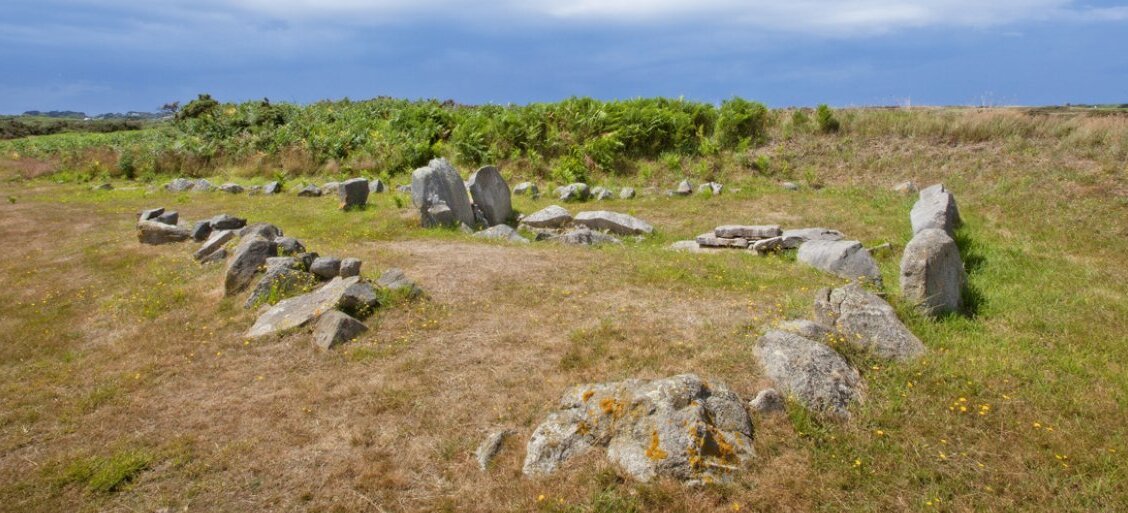
Nestled in the lush landscape of Guernsey, the ruins of Les Fouaillages stand as a testament to the island's rich prehistoric heritage. Dating back to around 4500 BCE, these ancient structures are among the oldest stone monuments in Europe, revealing a fascinating narrative of human activity that stretches back thousands of years. The site was first utilized around 6000 BCE by ancient hunters who roamed the region, as indicated by the discovery of flint tools. Over time, the dense forest that once covered the area was cleared, giving way to a significant burial ground that reflects the spiritual beliefs of our ancestors.
The ruins were brought to light in 1976 after a fire in the nearby area exposed granite slabs arranged in a distinct pattern atop a mound. This accidental unveiling initiated a series of archaeological excavations, leading to the recovery of over 60,000 artifacts, many of which are now displayed at the Guernsey Museum. These findings provide invaluable insights into the lives and practices of the island's early inhabitants, making Les Fouaillages a significant archaeological site.
Architecturally, the structures at Les Fouaillages exhibit a unique megalithic style, characterized by their massive stone slabs and intricate arrangements. The site’s layout suggests a communal space for rituals or gatherings, underscoring the importance of social cohesion in prehistoric communities. The artistry of the stones, shaped by both natural processes and human intervention, lends a sense of reverence to the landscape, inviting visitors to ponder the lives led by those who walked these grounds millennia ago.
In addition to its historical significance, Les Fouaillages sits within a vibrant local culture that celebrates its heritage. The people of Guernsey take pride in their customs and traditions, often marked by festivals that echo their storied past. Events such as the Guernsey International Food Festival showcase local produce and recipes, celebrating the island's culinary heritage. Local delicacies such as Gâche, a traditional fruit loaf, and Guernsey butter are must-tries for any visitor, offering a taste of the island's agricultural history.
One of the lesser-known curiosities about Les Fouaillages is the enduring mystery surrounding its purpose. While many believe it served as a burial site, theories abound regarding its potential role as a ceremonial location. Some scholars suggest that the alignment of the stones may have had astronomical significance, possibly linked to ancient rituals tied to the changing seasons. This enigmatic aspect of the site adds a layer of intrigue for those who visit, as they ponder the motivations and beliefs of the people who constructed these monumental structures.
For those planning a visit, the best time to explore Les Fouaillages is during the spring and summer months when the weather is milder, and the surrounding flora is in full bloom. Guided tours are often available, which can provide deeper insights into the archaeological findings and the site's historical context. Visitors should not miss the chance to explore the nearby Guernsey Museum, where many of the excavated artifacts are displayed, offering a richer understanding of the island's prehistoric narrative.
As you wander the serene landscape of Les Fouaillages, take a moment to reflect on the lives of those who came before, their stories etched into the very stones beneath your feet. Each step you take is a journey back in time, connecting you to a world that is both ancient and remarkably vibrant. To enhance your experience, consider using the Secret World app to craft a personalized itinerary that captures all the wonders Guernsey has to offer.
