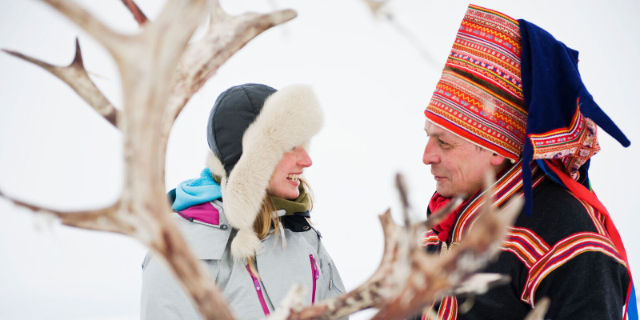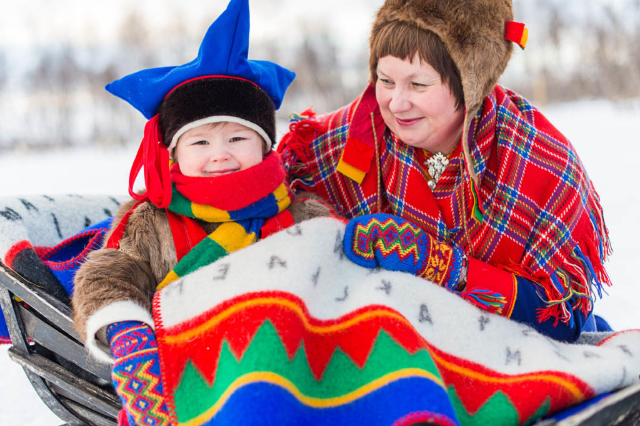

The Sami people are the indigenous people of northern Norway, Sweden, Finland and the Kola Peninsula in Russia. The Sami people number about 100,000, of whom about 20,000 live in Norway.Sami culture is based on the tradition of nomadic and pastoral life, with a strong connection to nature and the land. The Sami language belongs to the Finno-Ugric language family and is spoken in different variants in Norway, Sweden, Finland and Russia.Sami culture has a rich tradition of handicrafts, music, song and dance, as well as a traditional cuisine based on reindeer meat and other local products. Sami cultural attractions include traditional dwellings, called "lavvu" or "goahti," and traditional clothing, with cone-shaped hats, jewelry, and clothing made of colorful fabrics.The history of the Sami people has been marked by the heavy impact of industrialization and modernization, which have led to significant losses of land and natural resources, and the spread of Norwegian language and culture. In recent decades, there have been efforts to preserve Sami culture and language, recognizing the rights of Sami communities and promoting the preservation of cultural traditions.Today, Sami culture is an important part of northern Norway, with a rich history and cultural traditions that attract visitors from all over the world. Tourists can visit Sami villages and participate in cultural activities such as reindeer racing, handicrafts and traditional music.