



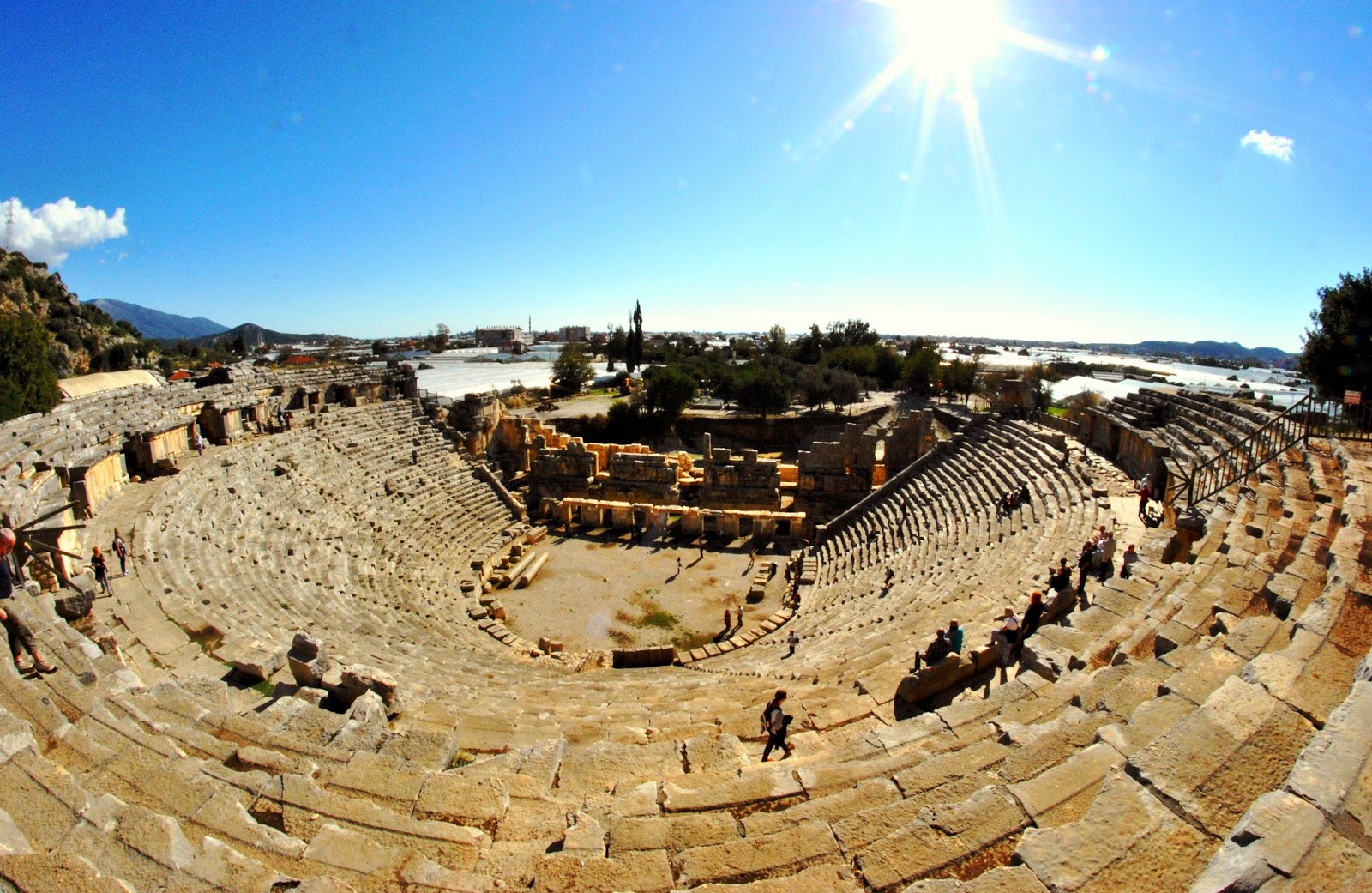
Nestled in the heart of present-day Demre, Turkey, the Theatre of Myra stands as a testament to the grandeur of ancient Lycian civilization. This archaeological jewel, once capable of accommodating an audience of 13,000, echoes the whispers of a bygone era where art and community converged in a vibrant tapestry of life.
The origins of Myra date back to the 5th century BCE, flourishing as a significant city within the Lycian League. This federation of cities is noted for its early form of democratic governance, a precursor to modern democratic systems. Myra's strategic location near the Myros River allowed it to thrive as a hub of trade and culture. Over the centuries, Myra fell under the influence of the Greeks and later the Romans, each leaving indelible marks on the city’s architectural and cultural landscape.
The theatre itself is a marvel of Roman engineering, constructed between the 2nd and 3rd centuries CE. It epitomizes the grandeur of Roman architecture with its semicircular design and impressive acoustics that allowed even the faintest whisper to reach the uppermost seats. The theatre boasts a richly ornamented façade with decorative reliefs that offer a glimpse into the artistic sensibilities of the time. Notable among these is the depiction of mythological scenes, a common theme that served both educational and entertainment purposes.
Beyond its architectural allure, the Theatre of Myra is entwined with local customs and traditions. The site once hosted lively festivals and theatrical performances that were central to community life. These gatherings were not mere entertainment but were imbued with religious and cultural significance, often held in honor of Dionysus, the god of wine and theatre. This tradition of vibrant local festivals continues in modern Demre, with events celebrating the region's rich history and the legacy of Saint Nicholas, who served as the bishop of Myra in the 4th century CE.
A visit to Myra is incomplete without indulging in the local gastronomy, a delightful fusion of Mediterranean flavors. The region's fertile lands produce an abundance of fresh produce, influencing dishes such as hünkar beğendi, a creamy eggplant puree topped with lamb stew, and piyaz, a refreshing salad made from local beans, onions, and herbs. For dessert, baklava made with local honey is a must-try, paired perfectly with a glass of aromatic Turkish tea.
While exploring the Theatre of Myra, one might discover lesser-known curiosities, such as the intricate water supply system that once supported the city. Ingeniously designed aqueducts and cisterns reflect the advanced engineering skills of the ancients. Hidden among the ruins are inscriptions and carvings that provide insights into the daily lives and societal structures of ancient Myra, often overlooked by the casual visitor.
Practical information is key to maximizing your visit. The best time to explore the Theatre of Myra is during the spring or autumn months when the climate is pleasant and the landscape is lush. Arriving early in the day allows you to enjoy the site with fewer crowds and in the gentle morning light that enhances the beauty of the stonework. While there, take a moment to climb to the top tiers of the theatre for a panoramic view that stretches over the ancient city and the rugged Lycian countryside beyond.
In a world where history often fades into the background, the Theatre of Myra stands as a vibrant portal into the past. Its enduring presence invites us to walk the paths of history, to sit where ancient audiences once gathered, and to imagine the stories that unfolded on its stage. Each stone and carving tells a story of a civilization that cherished art, community, and culture, a legacy that continues to inspire and captivate visitors from around the globe.
