
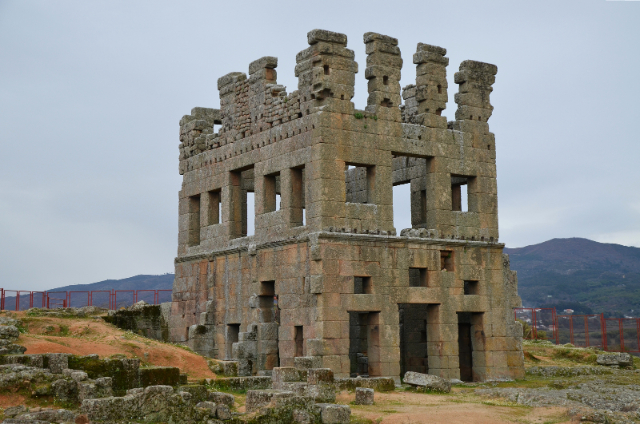

In the heart of Portugal, nestled in the scenic landscape of Belmonte, lies one of the country's most mysterious remnants of the Roman Empire: the Tower of Centum Cellas. This ancient structure, also referred to as the "Tower of St. Cornelius," continues to intrigue historians and travelers alike with its enigmatic past and striking architectural presence.

The origins of the Tower of Centum Cellas date back to the 1st century AD, constructed during the Roman occupation of the Iberian Peninsula. It is widely believed that the tower was originally part of a larger Roman villa complex owned by the wealthy Lusitanian citizen, Lucius Caecilius. Positioned strategically along the Roman road connecting Bracara Augusta (modern-day Braga) to Emerita Augusta (modern-day Mérida), the tower served potentially as a residential and administrative hub.
The architectural style of the tower is unique, featuring an imposing three-story structure made from granite blocks, a testament to the engineering prowess of the Roman Empire. The building’s name, "Centum Cellas," which translates to "hundred chambers," may refer to the numerous rooms or storage spaces believed to have been part of the original complex. Despite its monolithic appearance, the tower is characterized by its precise masonry and the use of dry stone construction—a technique that has allowed it to withstand the ravages of time.

Culturally, the Tower of Centum Cellas is a symbol of the rich tapestry of influences that have shaped the region over the centuries. The area surrounding the tower is steeped in local traditions, with Belmonte itself being a hub of cultural heritage. Known for its Jewish community, which dates back to the 13th century, the town celebrates its history with festivals such as the Jewish Passover Festival, where locals and visitors can experience traditional music, food, and ceremonies that echo centuries-old customs.
Visiting the Tower of Centum Cellas provides an opportunity to immerse oneself in the local gastronomy that is as rich and storied as the tower itself. The Beira Interior region, where the tower is located, is renowned for its robust culinary offerings. Indulge in hearty dishes like Borrego Estufado (stewed lamb) and savor the flavors of Queijo da Serra, a creamy cheese made from sheep’s milk. Complement these meals with a glass of Dão wine, a testament to the region's vinicultural prowess, which pairs perfectly with the rustic flavors of the area.
Beyond its historical and cultural significance, the Tower of Centum Cellas harbors lesser-known curiosities that intrigue those who delve deeper. Some scholars speculate that the tower might have served as a Roman prison or military outpost, given its fortified appearance. Local legend also whispers that the site was once a pilgrimage stop, dedicated to St. Cornelius, a saint revered for his miraculous healing powers. These stories add layers of mystique, inviting visitors to imagine the myriad lives and events that have intersected here.
For those planning a visit, the best time to explore the Tower of Centum Cellas is during the spring or early autumn months when the weather is mild, and the surrounding landscape is at its most vibrant. To fully appreciate the site, take a guided tour, which can provide insights into the archaeological findings and the various theories surrounding the tower’s original use. Look for the intricate carvings on the stone blocks, which might reveal more about the craftsmanship and purpose of this enduring landmark.
In essence, the Tower of Centum Cellas is more than just a relic of the Roman era; it is a gateway into the layered history and culture of the Beira Interior region. Whether you are a history aficionado, a cultural enthusiast, or simply a traveler eager to uncover hidden gems, a visit to this enigmatic monument promises an enriching journey through time.


