



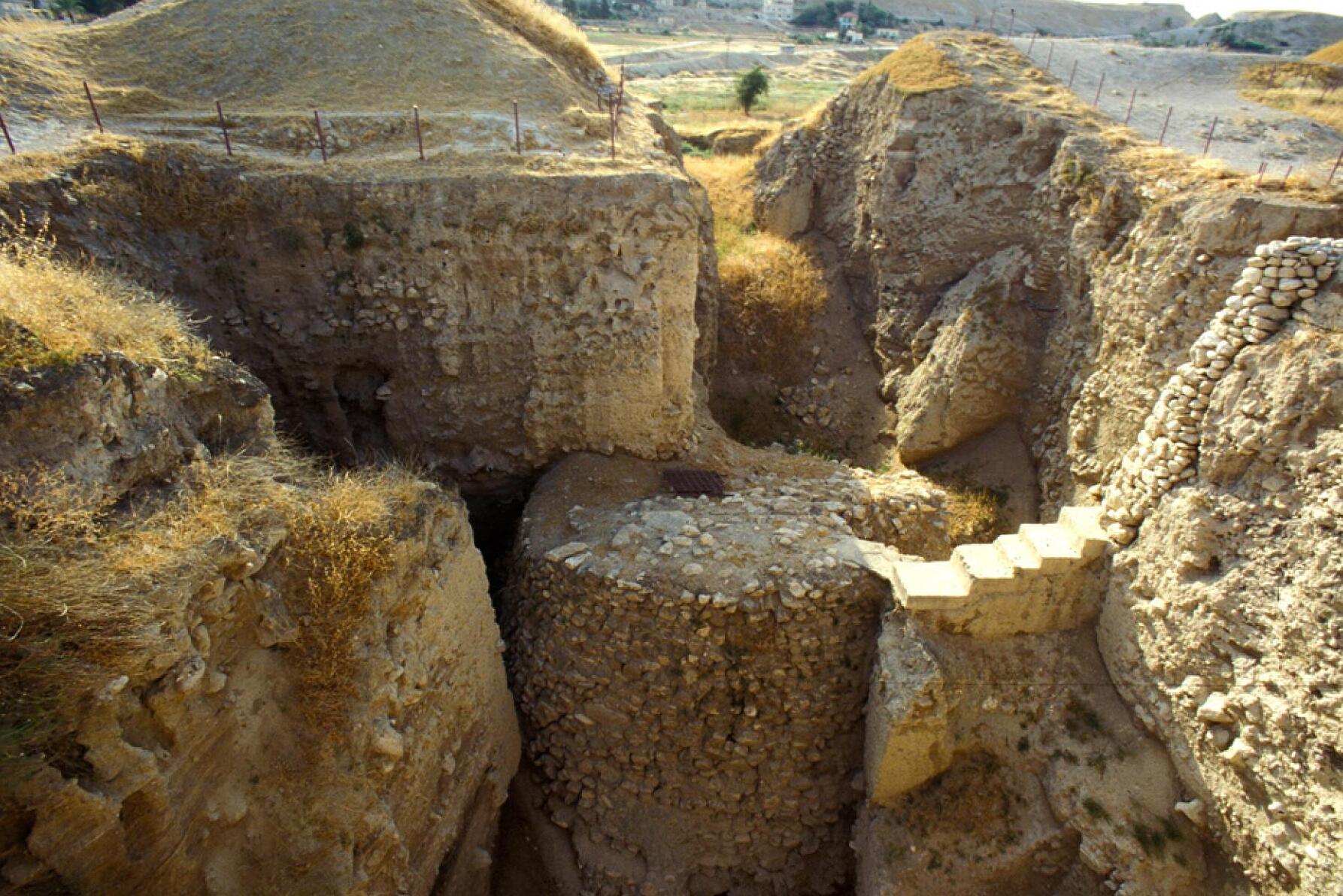
Nestled in the heart of Jericho, the Tower of Jericho stands as one of the oldest architectural wonders known to humanity, dating back to around 8000 BCE. This impressive structure, discovered in 1952 by the pioneering archaeologist Kathleen Kenyon, offers a glimpse into the complexities of early human civilization. While the Wall of Jericho was unearthed earlier in 1907, the tower’s later discovery revealed an even deeper narrative about the people who once thrived in this ancient city.
The Tower of Jericho, reaching approximately 8.5 meters in height, is constructed from locally sourced limestone. Its circular design, complete with a wide base tapering to a narrower top, showcases an architectural ingenuity that has puzzled historians and archaeologists alike. The tower’s walls are remarkably thick, suggesting it may have had multiple purposes beyond mere defense. Theories abound: some suggest it served as a ritual center, while others propose it was a communal symbol of power or a mechanism to prevent flooding. Recent research from Tel Aviv University in 2011 highlighted its potential role as a monument to ward off darkness, emphasizing its significance in the community’s belief system.
In terms of local culture, Jericho is steeped in traditions that reflect its rich history. The city is often celebrated for its Palm Sunday celebrations, which attract pilgrims and tourists alike, commemorating the biblical entry of Jesus into Jerusalem. Additionally, the local population engages in the ancient practice of date farming, a tradition that has sustained them for millennia, with the Medjool dates from this region being particularly famous. Jericho’s proximity to the Jordan River also highlights its historical and spiritual importance, as this river is a vital site for many religious ceremonies.
Gastronomy in Jericho is an exploration of flavors that tell the story of its people. The local cuisine predominantly features Middle Eastern staples such as hummus, falafel, and tabbouleh. However, what sets Jericho apart are its Medjool dates, often enjoyed fresh or used in various dishes. Visitors should not miss out on trying maqluba, a traditional upside-down rice dish, or enjoying a refreshing glass of pomegranate juice, a local specialty known for its sweet and tangy flavor. Zaatar, a blend of herbs, is also a common accompaniment that elevates the local dishes.
Among the many lesser-known curiosities, one fascinating aspect of the Tower of Jericho is its alignment with the sun. Archaeological studies suggest that during the summer solstice, sunlight illuminates the interior of the tower, indicating the ancient inhabitants’ advanced understanding of astronomy. Furthermore, the layers of civilization built upon each other in Jericho create a rich tapestry of history that includes periods of conquest, trade, and cultural exchange.
For those planning a visit, the best time to explore Jericho is during the spring (March to May) or fall (September to November) when temperatures are mild and the natural beauty of the region comes to life. When visiting the Tower, take time to explore the nearby archaeological sites, including Tell es-Sultan, which showcases the remnants of ancient settlements. Be sure to wear comfortable shoes, as the terrain can be uneven, and carry plenty of water to stay hydrated.
A visit to the Tower of Jericho is more than just an exploration of an ancient structure; it is a journey into the heart of human history, a testament to resilience, faith, and communal strength. As you step into this ancient city, prepare to be captivated by the stories etched into its stones.
To enhance your visit, consider using the Secret World app to create a personalized itinerary that guides you through Jericho’s rich tapestry of history and culture.
