
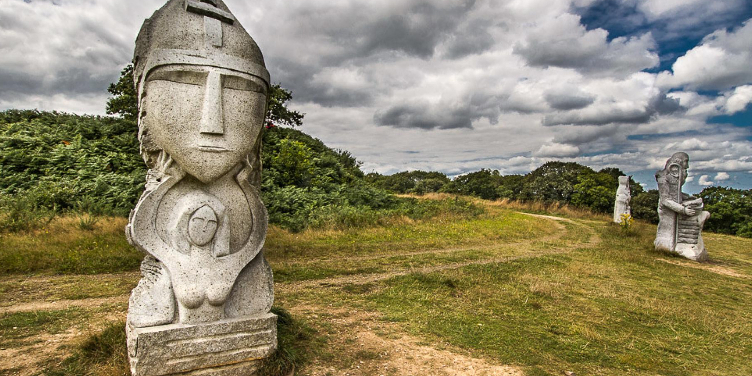

Nestled in the enchanting Carnoët, the Valley of the Saints stands as a testament to Brittany's rich spiritual and artistic heritage. This unique site, set against the backdrop of the undulating Poher landscape, is home to a growing collection of monumental sculptures that pay homage to the region's patron saints and their legendary past.
History and Origins The Valley of the Saints is not just a modern artistic endeavor; it is steeped in deep historical significance. The site originally served as a feudal moat and has been a spiritual center since the arrival of Celtic monks from Ireland, Wales, and Cornwall in the early medieval period. These monks were instrumental in introducing Christianity to Brittany, establishing a legacy that would shape the region's cultural landscape. The first monumental statues were erected in 2011, with the vision to create a thousand over the span of 50 years, each representing a different saint. This ambitious project honors figures like St Tugdual, the founder of the Diocese of Tréguier, and St Gildas, who is known as a prominent writer and missionary in Brittany.
Art and Architecture Visitors to the Valley will be captivated by the sculptural artistry that defines this site. Each of the approximately 50 statues currently gracing the valley has been crafted by different sculptors, showcasing a variety of artistic styles and techniques. The monumental figures are carved from local stone, standing proudly on the verdant grass, each telling the story of the saint it commemorates. The architectural elements of the site include a quaint 16th-century chapel, adding to the historical ambiance. The juxtaposition of ancient buildings and contemporary art creates a unique experience for art lovers and history buffs alike.
Local Culture and Traditions The Valley of the Saints is not just an artistic site; it is also a vibrant hub of local culture. The region’s deep-rooted Celtic traditions are evident in the celebrations held throughout the year. Festivals such as La Fête de la Saint-Yves in May draw crowds who celebrate with traditional music, dance, and food, honoring St Yves, the patron saint of Brittany. Visitors can also witness local customs, such as the pardon, a pilgrimage to the valley that combines spirituality with community bonding.
Gastronomy No visit to the Valley of the Saints would be complete without indulging in the culinary delights of Brittany. The region is renowned for its crêpes, which can be enjoyed sweet or savory, and galettes, made from buckwheat flour. Pair your meal with a glass of Kérisac Cidre, a local cider that perfectly complements the flavors of the region. Don't miss trying Far Breton, a traditional custard cake that embodies the local flavors, making for a delightful dessert option.
Lesser-known Curiosities While the monumental statues are the main attraction, there are hidden gems within the Valley of the Saints that many tourists might overlook. For instance, the feudal moat surrounding the area is a remnant of the region’s medieval past and offers a glimpse into the historical significance of the landscape. Additionally, the stories of the saints depicted in the sculptures are rich with folklore; for instance, St Malo, known for his seafaring, is said to have conjured storms to protect sailors, making his statue a popular spot for those seeking blessings before heading to sea.
Practical Visitor Information The best time to visit the Valley of the Saints is during the spring and summer months, from May to September, when the weather is typically mild and conducive for exploring the outdoor site. Be sure to wear comfortable shoes, as the terrain can be uneven. Spend time wandering among the statues, and don't forget your camera to capture the breathtaking views of the surrounding landscape. To enrich your visit, consider joining a guided tour that delves into the history and artistry of the site.
In this stunning valley, history, art, and spirituality converge, offering an experience that resonates deeply with the heart of Brittany. For a personalized itinerary to explore the enchanting Carnoët, consider using the Secret World app for tailored recommendations.


