
← Back

The Victory Lighthouse of Trieste

Str. del Friuli, 141, 34136 Trieste TS, Italia ★★★★☆ 525 views
Mia Patel
Trieste
🏆 AI Trip Planner 2026

Get the free app

Discover the best of Trieste with Secret World — the AI trip planner with 1M+ destinations. Get personalized itineraries, hidden gems and local tips. Free on iOS & Android.

🧠 AI Itineraries 🎒 Trip Toolkit 🎮 KnowWhere Game 🎧 Audio Guides 📹 Videos
Download on the App Store Get it on Google Play
Scan to download Scan to download

About The Victory Lighthouse of Trieste

The Victory Lighthouse of Trieste - Trieste | Secret World Trip Planner

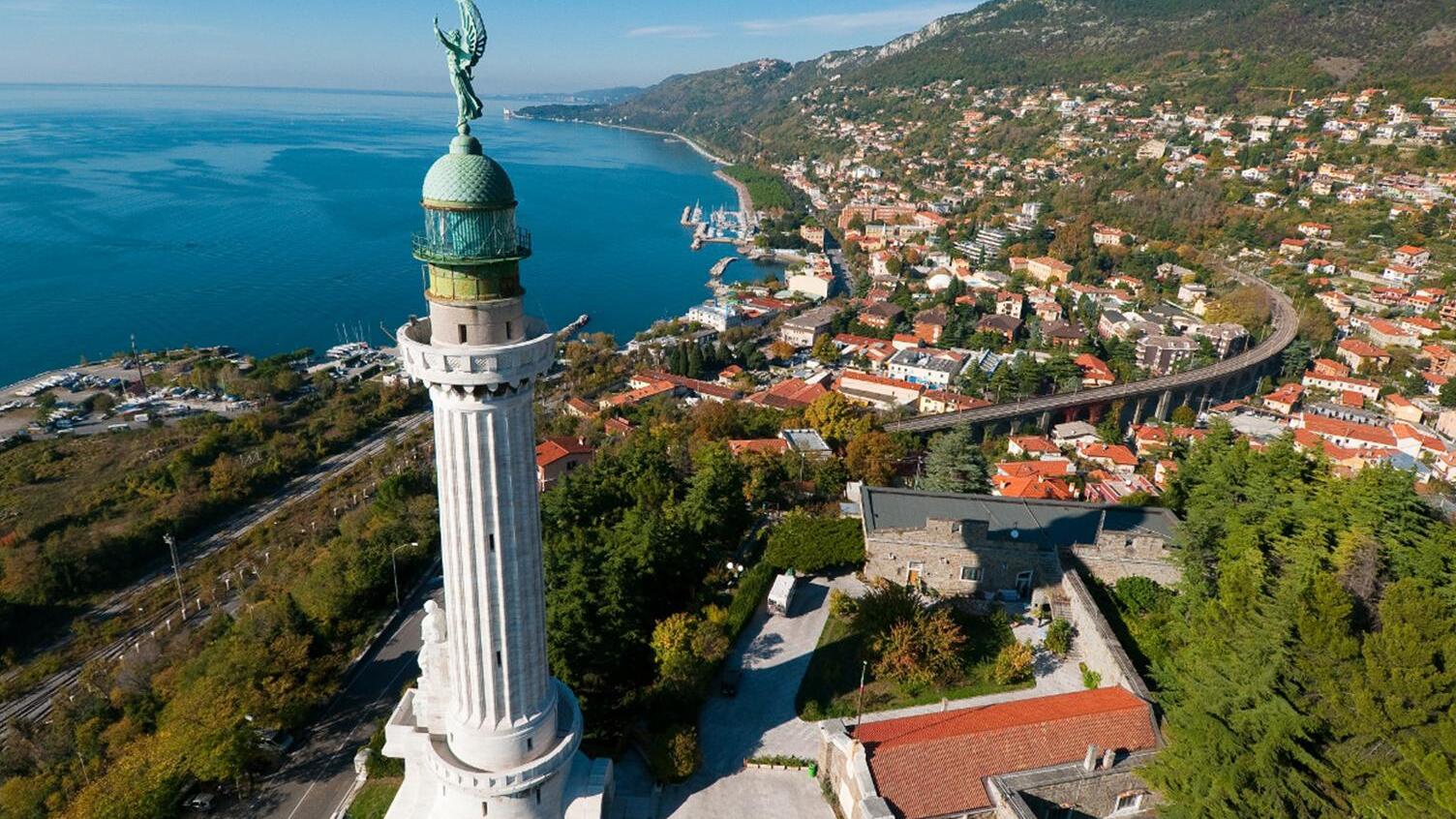
The Victory Lighthouse is located in Trieste and was built between 15 January 1923 and 24 May 1927 by the Italian architect Arduino Berlam. In addition to its function as a lighthouse for navigation, illuminating the Gulf of Trieste, it also serves as a memorial to those who fell at sea during World War I, as evidenced by the inscription at its base: "Shine and Remember the Fallen at Sea". The monument was built on the Poggio di Gretta, 60 meters above sea level, on the ancient structures of the Austrian fort Kressich of 1854. The original project of Berlam was modified, after a heated debate, by the architect Guido Cirilli, who directed the works. The base of the structure is made of stones coming from Istria and Karst, respectively Orsera stone and Gabrie stone. The base is made of stone from Istria and Karst, respectively Orsera stone and Gabrie stone, and a column stands tall and majestic, with a bronze and crystal cage at the top that holds the lantern-lighthouse. The final shape is deliberately that of an upside-down lyttorian beam. The sculptor Giovanni Mayer (Trieste, 1863-1943) created the bronze statue of Winged Victory that crowns the top of the lamp, and the statue of the sailor that adorns the front of the lighthouse. The two statues are 7.2 and 8.6 metres high respectively. At the base of the building there is an anchor that is popularly believed to be that of the torpedo boat Audace, which was the first ship of the Royal Italian Navy to enter the port of Trieste in 1918, while in reality it is the anchor of the R.N. Berenice. At the entrance of the lighthouse there are two shells from the Austrian battleship Viribus Unitis.

🗺 AI Trip Planner

Plan your visit to Trieste

Suggested itinerary near The Victory Lighthouse of Trieste

MAJ+
500.000+ travelers worldwide
  1. 🌅
    Morning
    The Victory Lighthouse of Trieste
    📍 Trieste
  2. ☀️
    Afternoon
    The hydrodynamic power plant of Porto Vecchio in Trieste
    📍 1.1 km · Trieste
  3. 🌆
    Evening
    Waterfront of Barcola
    📍 1.4 km · Trieste

Buy Unique Travel Experiences

Powered by Viator

See more on Viator.com

Explore nearby · Trieste

Frequently Asked Questions

The Victory Lighthouse was designed by Italian architect Arduino Berlam and constructed between January 15, 1923 and May 24, 1927. The original design was modified by architect Guido Cirilli, who directed the construction works and shaped the final structure into the distinctive upside-down lyttorian beam form you see today.
Beyond serving as a functional lighthouse to illuminate the Gulf of Trieste, it stands as a solemn memorial to those who died at sea during World War I, as indicated by its inscription: 'Shine and Remember the Fallen at Sea.' The monument was built atop the ancient Austrian fort Kressich from 1854, symbolically reclaiming the site after WWI.
The lighthouse features two impressive bronze sculptures created by Trieste sculptor Giovanni Mayer: a 7.2-meter tall Winged Victory statue that crowns the top of the lamp, and an 8.6-meter tall statue of a sailor adorning the front of the lighthouse. These monumental figures are key attractions and can be admired from various vantage points around the structure.
At the lighthouse base, you'll find an anchor that many believe belonged to the torpedo boat Audace (the first Italian Navy ship to enter Trieste in 1918), though it actually comes from the R.N. Berenice. Additionally, two shells from the Austrian battleship Viribus Unitis are displayed at the entrance, serving as tangible reminders of the naval conflict.
The lighthouse stands on Poggio di Gretta, 60 meters above sea level, offering commanding views of the Gulf of Trieste. It was constructed using Orsera and Gabrie stone from Istria and Karst regions, with a distinctive bronze and crystal cage at the top housing the lantern, creating a striking architectural landmark visible throughout the area.
