
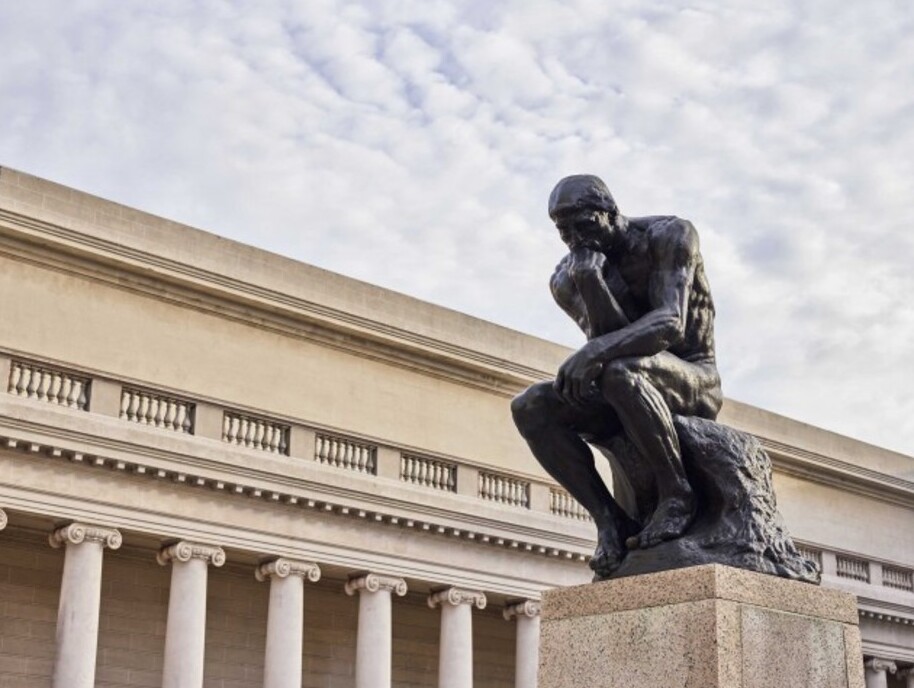

The ചിന്തകൻ, ഫ്രഞ്ച് Le Penseur, ശില്പം a pensive നഗ്ന പുരുഷ by French artist ഓഗസ്ത് Rodin, one of his most well-known works. പല മാർബിൾ, ഓട് പതിപ്പുകളും പല വലുപ്പത്തിലുള്ള were executed in Rodin ' s lifetime and ശേഷം, but the most famous പതിപ്പ് ആണ്. 6 അടി (1.8 മീറ്ററോളം ഉയരമുള്ള) വെങ്കല പ്രതിമ (commonly called ഒരു സ്മാരക) cast ഉദ്ദേശത്തോടെ, 1904-ൽ that sits in the gardens of the Rodin Museum in Paris. വലിയ പേശി ചിത്രം has captivated audiences for decades in his നിമിഷം കേന്ദ്രീകരിച്ചു introspection.The ചിന്തകൻ ആയിരുന്നു. യഥാർത്ഥത്തിൽ വിളിച്ചു കവി and was conceived as part of The Gates of Hell, തുടക്കത്തിൽ ഒരു കമ്മീഷൻ (1880), ഒരു ജോഡി ഓട് വാതിലുകൾ ഒരു ആസൂത്രിത museum of decorative arts in Paris. Rodin തിരഞ്ഞെടുത്തു തന്റെ വിഷയം Dante ' s Inferno നിന്ന് ഡിവൈൻ കോമഡി (c. 1308-21) and ബെല്റ്റ് a series of small clay കണക്കുകൾ that represented some of the poem ' s tormented characters. മ്യൂസിയം, however, was ഒരിക്കലും നിർമ്മാണം, and The Gates were never വോട്ടുകൾ സമയത്ത് Rodin ' s lifetime.ചില നിർദ്ദേശം തന്റെ ദർശനം can be found in the original കുമ്മായം exhibited at the Musée d'Orsay and in the doors that were made posthumously. In these examples, ഒരു 27.5 ഇഞ്ച് (70-സെ. മീ.) കവി appears on the tympanum above the doors. ആ നഗ്ന രൂപം ആണ് ഇരുന്നു. ഒരു റോക്ക്, തന്റെ തിരിച്ചു hunched മുന്നോട്ട്, നെറ്റിക്കു furrowed, chin resting on his വിശ്രമിക്കുന്ന hand, and വായിൽ കുത്തി കടന്നു അവന്റെ ചൂടുചായ. ഇപ്പോഴും pensive, he observes the twisting figures of those suffering in the circles of Hell below. ചില പണ്ഡിതന്മാർ അഭിപ്രായപ്പെടുന്നു. ആ കവി was originally meant to represent ഡാന്റെ, എന്നാൽ പേശി പിടിവിട്ടു രൂപത്തിൽ അതിന് സാധാരണ ശില്പങ്ങളും that depict the കവി as slender and gorgeous.After the proposed മ്യൂസിയം വീണു വഴി, Rodin continued to rework പല കണക്കുകൾ നിന്ന് ഗേറ്റ്സ് ഉപയോഗിച്ച് ചില പുതിയ വഴികൾ exhibiting മറ്റുള്ളവരെ വ്യക്തിഗതമായി. അദ്ദേഹം ഒടുവിൽ renamed The കവി എന്ന ചിന്തകൻ and exhibited it on its own in 1888 and then വികസിക്കും അത് bronze in the early 1900s.


