
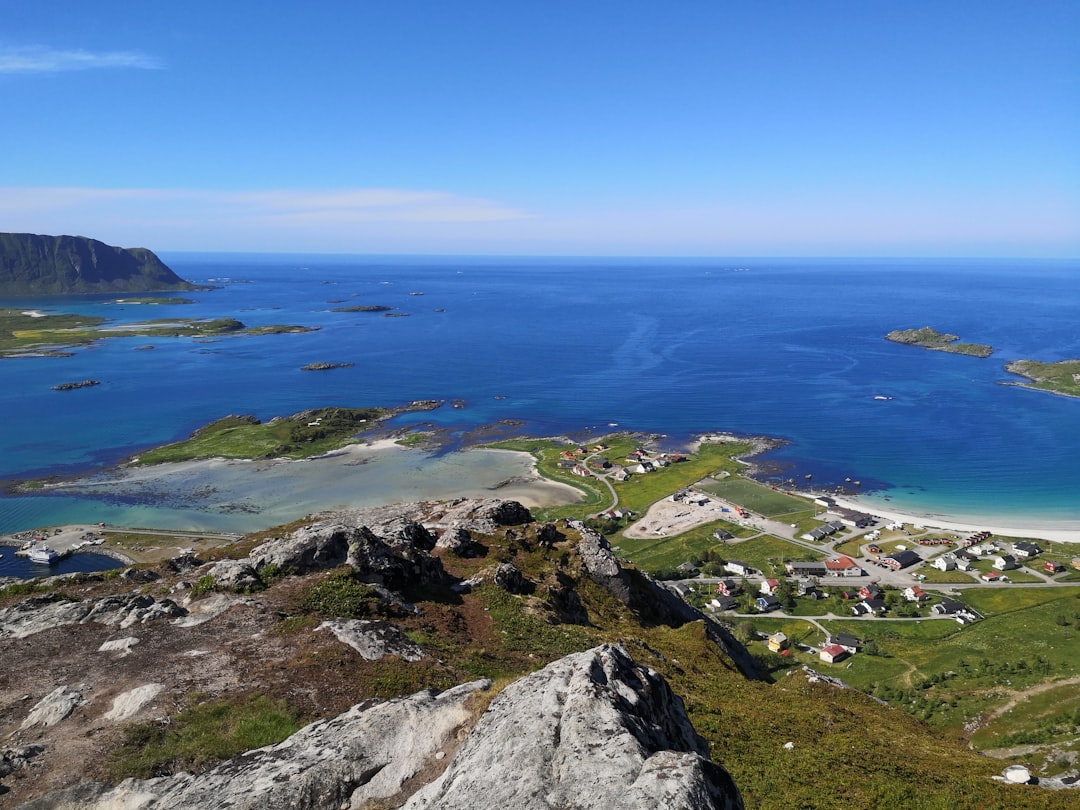

About 1,200 kilometers from the Arctic Circle, in the Thule region of northwestern Greenland, there exists a place where the winter night sky becomes a physical presence, almost overwhelming in its intensity. During the darkest months of the Arctic year, from November to January, the darkness is nearly total for consecutive weeks, and the almost absolute absence of light pollution transforms every clear night into an astronomical spectacle difficult to match elsewhere on the planet. Thule Site J is one of the most remote observation stations in the Northern Hemisphere, situated in a geographical context that alone justifies the journey.
The Thule base — now officially named Pituffik Space Base after the renaming that took place in 2023 by the US Space Force — is an American military infrastructure active since the 1950s. Within this complex, Site J represents a privileged observation point, where Arctic atmospheric conditions and the extremely high latitude — about 76° North — create the conditions for some of the most intense and frequent documented sightings of the northern lights. It is not an observatory in the traditional architectural sense, but a functional site where nature itself is the main instrument.
The Northern Lights at this Latitude
At 76 degrees north latitude, Thule is located within the so-called auroral oval, the area of the planet where charged particles emitted by the sun interact more frequently and intensely with the Earth's magnetic field. This means that the northern lights here are not occasional events to be awaited patiently: on clear nights during the winter months, the luminous displays can last for hours, with colors ranging from deep green to crimson red, passing through purple and silvery white. Photographers who have documented the sky of Thule frequently report the simultaneous presence of multiple overlapping auroral arcs, a phenomenon rare even in Norway or Iceland.
The average temperature in January hovers around -25°C, with peaks that can drop further with the wind chill factor. This figure is not a marginal detail: photographic equipment and the batteries of electronic devices suffer significantly at these temperatures, and those intending to observe or document the sky must prepare with specific gear for extreme cold. The lenses of photographic lenses tend to fog up when returning to heated environments, a practical problem that experienced visitors learn to manage with sealed bags and gradual temperature transitions.
Access and logistics: an extraordinary journey
Reaching Thule is not a conventional tourist operation. The Pituffik base is a military structure with controlled access, which means that civilian visitors must obtain specific permissions before they can access the area. Flights to Thule Air Base primarily depart from Kangerlussuaq, Greenland, with connections operated by Air Greenland, but seat availability is limited and often tied to the logistical needs of the base itself. There is no structured tourism industry in Thule in the Western sense of the term.
The most important practical advice for those planning a visit is to start the bureaucratic procedures at least six months in advance, by directly contacting the relevant authorities of the base or specialized operators in extreme Arctic tourism who have experience with access procedures. The optimal period for astronomical and auroral observation is between December and February, when the polar night ensures continuous darkness. Bringing everything you need is essential: local supplies are limited and intended for base personnel, not for occasional visitors.
The geographical context and history of the base
The Thule base was built by the United States starting in 1951, during the Cold War, as a strategic outpost in the North Atlantic defense system. Its geographical location, just 1,500 kilometers from the North Pole, made it crucial for monitoring Arctic airspace. It still hosts the 21st Space Wing of the US Space Force, which manages, among other things, space surveillance systems. This military history is an integral part of the identity of the place, and authorized visitors can physically perceive the layering of decades of human presence in an otherwise inhospitable environment.
The surrounding landscape is dominated by the Greenland ice sheet, which covers about 80% of the island's total surface with an average thickness of over 2,000 meters. At night, under the aurora, this white expanse reflects the colorful lights of the sky, creating a visual effect that visitors describe as surreal. There are no trees, no city lights, no artificial sounds beyond those of the base: only ice, wind, and sky. For those seeking a genuinely remote stargazing experience, this is one of the last places on the planet to find it.
Practical tips for observation
Anyone who manages to access the site should know that the best nights for observation are not necessarily the coldest, but the most stable from an atmospheric point of view. Arctic storms can cover the sky for consecutive days, making any rigid planning useless. Flexibility in the schedule is essential: planning a stay of at least one week significantly increases the chances of experiencing optimal conditions. The minimum recommended equipment includes thermal layers certified for temperatures below -30°C, gloves with separated fingers for handling instruments, and a headlamp with lithium batteries, which perform better in the cold compared to standard alkaline batteries.
Finally, it is worth remembering that the experience of Thule Site J is not measured only in terms of successful photographs or auroras sighted. Standing on the Arctic ice, with silence around and the sky moving above your head, is an experience that redefines the sense of scale: that of the Earth, that of time, that of one's presence in the world.


