
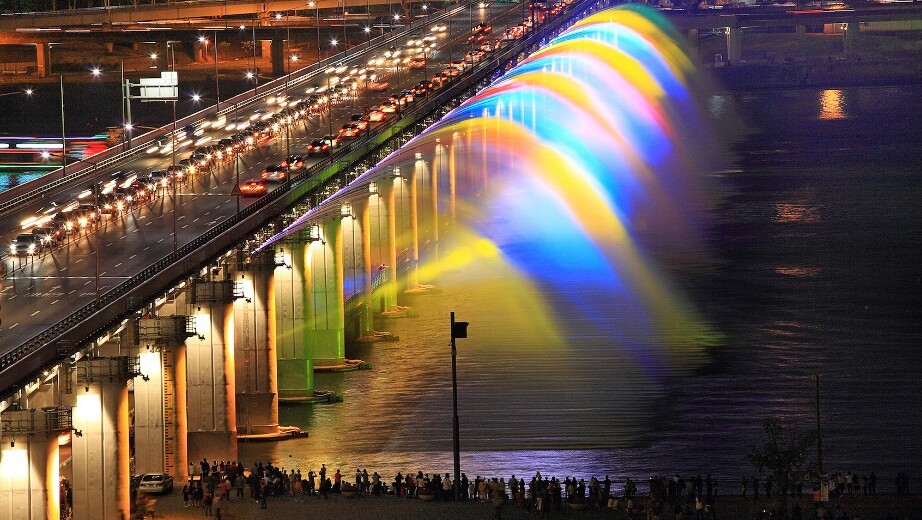

Nestled along the vibrant banks of the Han River in Seoul, the Thư viện mà ánh Trăng cầu Vồng đài Phun nước stands as a testament to human creativity and engineering prowess. This magnificent structure, often translated as the Moonlight Rainbow Fountain, is not just the world's longest bridge fountain at 1,140 meters but also a cultural beacon that beautifully merges modern innovation with Korea's rich heritage.
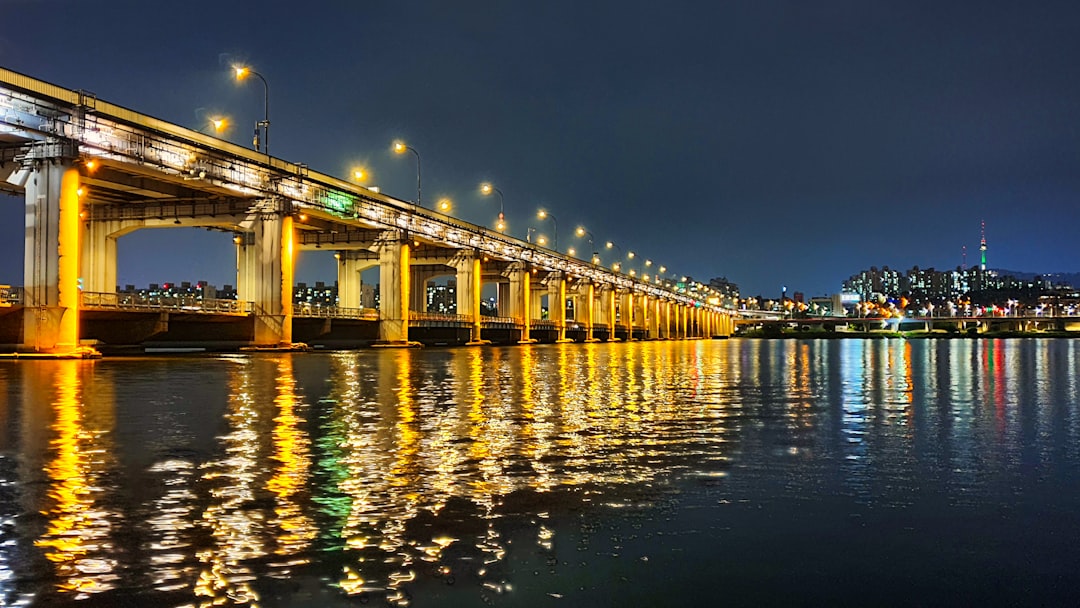
The history of the Moonlight Rainbow Fountain is intertwined with the development of the Banpo Bridge, a critical infrastructure project completed in 1982 that connects the bustling districts of Seocho and Yongsan. This bridge, originally designed to alleviate traffic congestion, found new life in 2009 when the Seoul Metropolitan Government decided to incorporate a dazzling water and light show as part of a broader initiative to enhance the city's public spaces. The introduction of the fountain marked a significant moment in Seoul's urban development, transforming a utilitarian structure into a celebrated public artwork.
Architecturally, the Moonlight Rainbow Fountain is a marvel. The fountain's design integrates 380 nozzles that draw water directly from the Han River, capable of projecting 190 tons of water per minute. Each spout is choreographed to music, with a spectrum of LED lights creating a vibrant display that dances over the river's surface. This fusion of technology and artistry not only captivates visitors but also underscores Korea's commitment to sustainability, as the fountain operates with recycled river water.
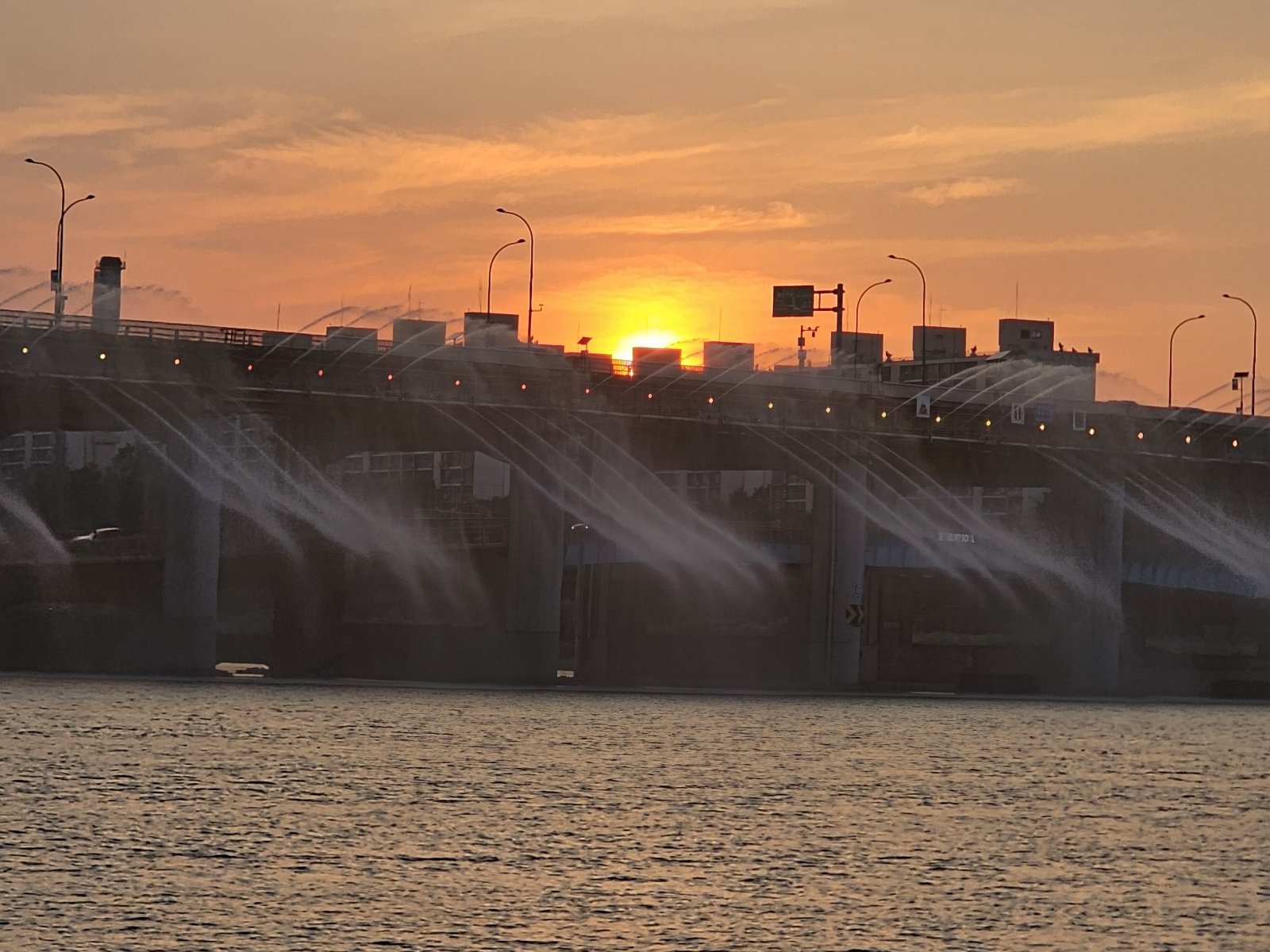
Culturally, the fountain is more than a spectacle; it is a gathering place that reflects the communal spirit of Seoul. The bridge becomes a lively promenade, especially during the Seoul Lantern Festival in November, where locals and tourists alike come to witness the interplay of light, water, and music against the backdrop of the city's skyline. This event, and others like it, showcases the importance of public art in fostering community and celebrating Korea's cultural narratives.
No visit to the Moonlight Rainbow Fountain would be complete without indulging in the local gastronomy. Street food vendors nearby offer a taste of traditional Korean snacks such as tteokbokki (spicy rice cakes) and hotteok (sweet pancakes filled with brown sugar syrup). For those seeking a more sit-down experience, restaurants along the Han River serve up samgyeopsal (grilled pork belly) and makgeolli (a traditional Korean rice wine), offering a culinary journey that complements the visual feast of the fountain.
Among the lesser-known curiosities of the Moonlight Rainbow Fountain is its role in Korean pop culture. It has served as a backdrop for numerous music videos and dramas, embedding it further into the hearts of the Korean people and international fans alike. The fountain's evening performances, particularly the "rainbow" segment, have been described as enchanting moments that capture the essence of Seoul's blend of tradition and modernity.
For those planning a visit, the best time to enjoy the Moonlight Rainbow Fountain is during the warmer months, from April to October, when the shows run frequently. Arrive early to secure a good viewing spot along the riverbank or on the bridge itself. While there, keep an eye out for the interactive displays that provide information about Seoul's other attractions and historical sites, enhancing your understanding of the city's dynamic landscape.
In conclusion, the Thư viện mà ánh Trăng cầu Vồng đài Phun nước is not merely a bridge or a fountain; it is a symbol of Seoul's evolving identity. It invites visitors to pause and reflect on the harmonious blend of nature, technology, and human ingenuity. Whether you're a history buff, an architecture enthusiast, or simply someone in search of a memorable experience, this captivating site promises a unique glimpse into the soul of Seoul.


