
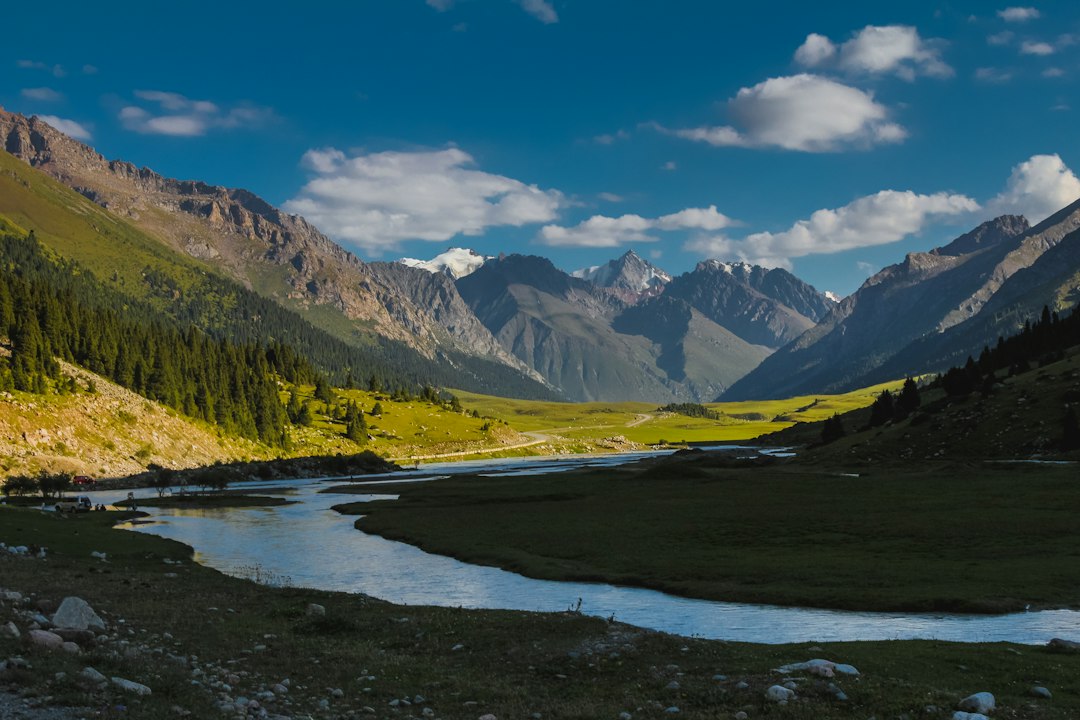

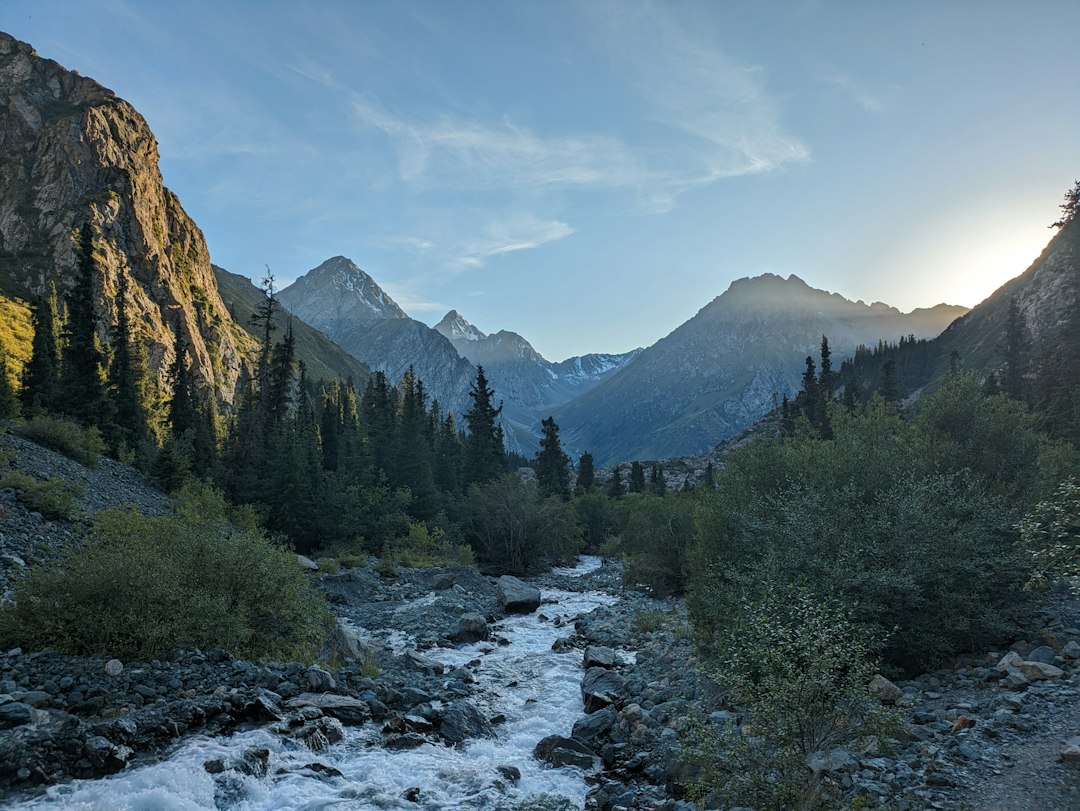
At over 2600 meters above sea level in the Ala-Too mountains, the air is so thin and clear that the stars seem within reach. The Tian Shan Astronomical Observatory is located in this privileged position, accessible from the city of Karakol, in the northeast of Kyrgyzstan, through the gorge of the same name that winds between rocky walls covered with firs and larches. It is not a place built for tourism: it is a true scientific facility, born during the Soviet era, which today opens its domes to visitors on clear nights in Central Asia.
The legacy of the Soviet Union is visible everywhere: in the mechanical telescopes with heavy and precise gears, in the white-painted metal domes that rotate on rusty tracks with a characteristic creak, in the austere concrete buildings that still bear signs in Cyrillic. Yet, what the observatory offers is anything but outdated: the sky above the Karakol gorge is among the darkest in the entire Central Asian region, far from the light pollution of large cities.
An observatory with Soviet roots
The Tian Shan Observatory was founded as part of the Soviet scientific program for astronomical exploration of Central Asia, which aimed to take advantage of the high altitudes and atmospheric stability of the mountain ranges of Kyrgyzstan. The location at over 2600 meters ensures fewer atmospheric layers between the telescope and space, reducing optical turbulence and increasing the quality of observations. The Soviet-era telescopes still in use are robust instruments, designed to last for decades in harsh climatic conditions, and today they themselves constitute a piece of the history of science.
During guided night sessions, researchers or local guides show visitors how to orient these instruments towards planets, nebulae, and star clusters. These are not simplified presentations: the explanations are technical and passionate, often conducted by astronomers who are still actively working at the observatory. Those who are already familiar with astronomy will find serious interlocutors; those who are beginners will still receive a concrete and not superficial introduction.
The Darkest Sky of Central Asia
Karakol is located in the Issyk-Kul region, where the population density is low and industry is almost non-existent. This results in exceptionally low levels of light pollution. On moonless nights, the Milky Way is visible to the naked eye as a dense and structured band, with its regions of dust and star concentrations clearly distinguishable. It is an experience that those living in Western Europe or large Asian cities have rarely had.
The best season for observations is from July to September, when the night sky is more stable and temperatures, although dropping below ten degrees even in summer, remain bearable with appropriate clothing. In winter, the observatory is more difficult to access due to the snow covering the access road to the gorge, and night sessions require extreme cold weather gear.
How to get there and what to expect
From Karakol, reachable by bus or marshrutka from Bishkek in about 6-7 hours, you ascend the gorge by taxi or with a four-wheel drive vehicle. The dirt road leading up to 3000 meters is passable in summer but requires caution. Many visitors organize the trip through local agencies in Karakol, which offer packages that include transportation, dinner, and a night session at the observatory. Prices vary, but guided sessions generally fall within an accessible range for travelers on a medium budget.
It is essential to book in advance, especially in the summer months when the observatory receives groups of tourists and researchers. Bringing layers of warm clothing even in July is a must: the temperature drops quickly after sunset at these altitudes. A flashlight with a red light is useful for moving around without disturbing the eyes' adjustment to the dark. Plan for at least three or four hours on-site to fully enjoy the observation session and the nighttime landscape of the gorge.
Why it's worth the trip
The Tian Shan Observatory is not a destination you visit on a whim: it requires planning, a bit of effort, and the willingness to stay up late in a remote place. But it is precisely this combination of isolation, Soviet scientific history, and the quality of the sky that makes it an experience hard to replicate elsewhere. Looking at Saturn through a 1970s telescope, in a dome creaking in the winds of the Kyrgyz mountains, has something tangible and authentic that no digital planetarium can provide.
For those traveling in Kyrgyzstan with an interest in nature and science, Karakol and its gorge already offer memorable hikes to glaciers and alpine pastures. The observatory adds a nighttime and intellectual dimension that transforms a stay in the mountains into something more layered. The sky of Tian Shan alone is worth the trip to Central Asia.


