



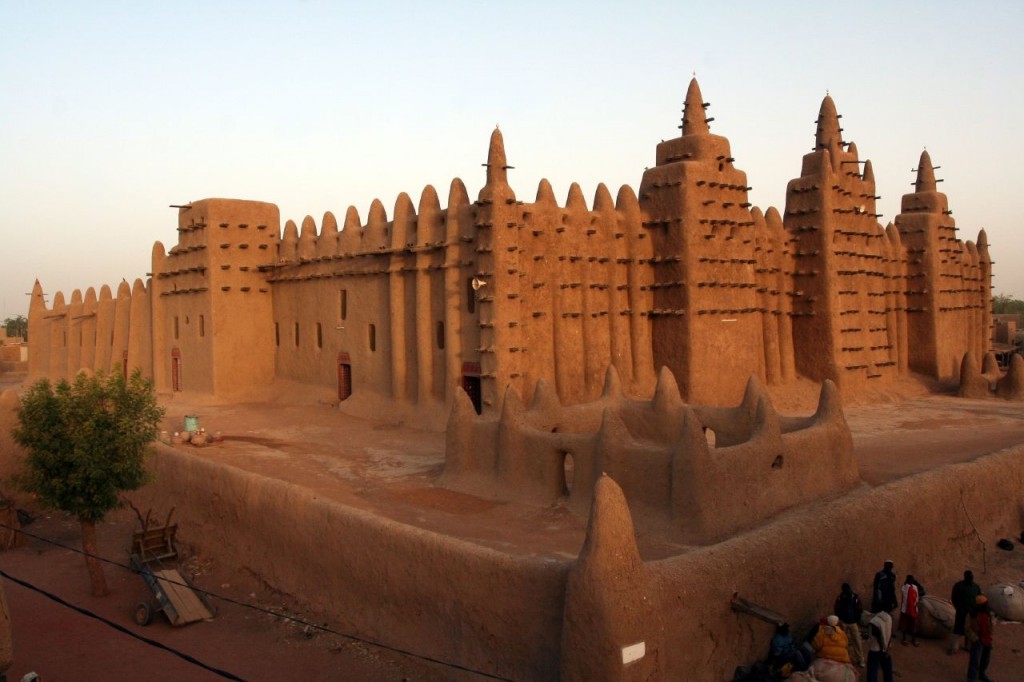
Once a thriving center of commerce and learning, Timbuktu is more than just a mystical name; it is a living testament to Africa's rich historical tapestry. Nestled on the fringe of the Sahara Desert in Mali, this ancient city beckons travelers with tales of its illustrious past and enduring cultural vibrancy.

The origins of Timbuktu trace back to the early 12th century when it was founded by the Tuareg people. Legend has it that the name "Timbuktu" originated from the phrase "Tin Abutut," meaning "the place of Buktu," named after a Tuareg woman who once managed a well in the area. By the 14th century, Timbuktu had blossomed into a bustling hub of the trans-Saharan trade routes, primarily dealing in gold, salt, and ivory. The city reached its zenith under the Songhai Empire in the 15th and 16th centuries, becoming a beacon of Islamic scholarship and culture. The renowned University of Sankoré, one of the world's earliest universities, attracted scholars from across the Islamic world, including the celebrated traveler Ibn Battuta.
Timbuktu's architectural landscape is a vivid reflection of its historical significance. The city is dotted with mud-brick structures that have withstood the test of time. The Djinguereber Mosque, built in 1327, stands as a marvel of Sahelian architecture. Commissioned by the celebrated Emperor Mansa Musa upon his return from Mecca, this mosque is famed for its distinctive minarets and intricate wooden scaffolding. The Sankoré Mosque, another architectural gem, was a cornerstone of the city's intellectual life, housing countless manuscripts and serving as a center for teaching Islamic law and sciences.

Culturally, Timbuktu is a mosaic of traditions that echo its storied past. The city's residents, primarily of Tuareg, Songhai, and Arab descent, celebrate an array of festivals, with the Festival au Désert being a highlight. This annual music festival, held in January, brings together musicians from across the Sahara to perform traditional Malian music, including the mesmerizing sounds of the kora and ngoni. It is a vibrant showcase of the region's cultural resilience and artistic heritage.
Gastronomy in Timbuktu is a delightful exploration of Malian flavors. The cuisine is characterized by hearty stews and grains, with tigadèguèna—a rich peanut butter stew with meat—being a staple. The use of millet and sorghum is prevalent, often served as porridge or in flatbreads. For a refreshing drink, visitors can try gingembre, a spicy ginger juice that perfectly complements the desert climate.
While Timbuktu's legendary status is well-known, some of its lesser-known stories are equally enchanting. The city is home to a remarkable collection of ancient manuscripts, with texts covering subjects from astronomy to poetry. These manuscripts are a testament to Timbuktu's historical role as an intellectual powerhouse. Efforts by locals to preserve these invaluable documents during times of conflict underscore the city's dedication to safeguarding its heritage. Additionally, the intriguing story of Heinrich Barth, a 19th-century German explorer who documented his travels extensively, provides a fascinating glimpse into Timbuktu's past through a European lens.
For those planning a visit, the best time to explore Timbuktu is between November and February, when the temperatures are more forgiving. The journey to this remote city is part of the adventure, with options to travel by road or take a flight to the nearby city of Mopti. Once in Timbuktu, hiring a local guide is invaluable for navigating the sandy streets and uncovering the city's hidden stories. Be sure to visit the Ahmed Baba Institute, which houses a collection of ancient manuscripts and offers insights into the city's scholarly legacy.
Timbuktu's allure lies not only in its historical grandeur but also in its enduring spirit. As you wander through its ancient streets, you're not just exploring a city; you're journeying through centuries of African history and culture.
