
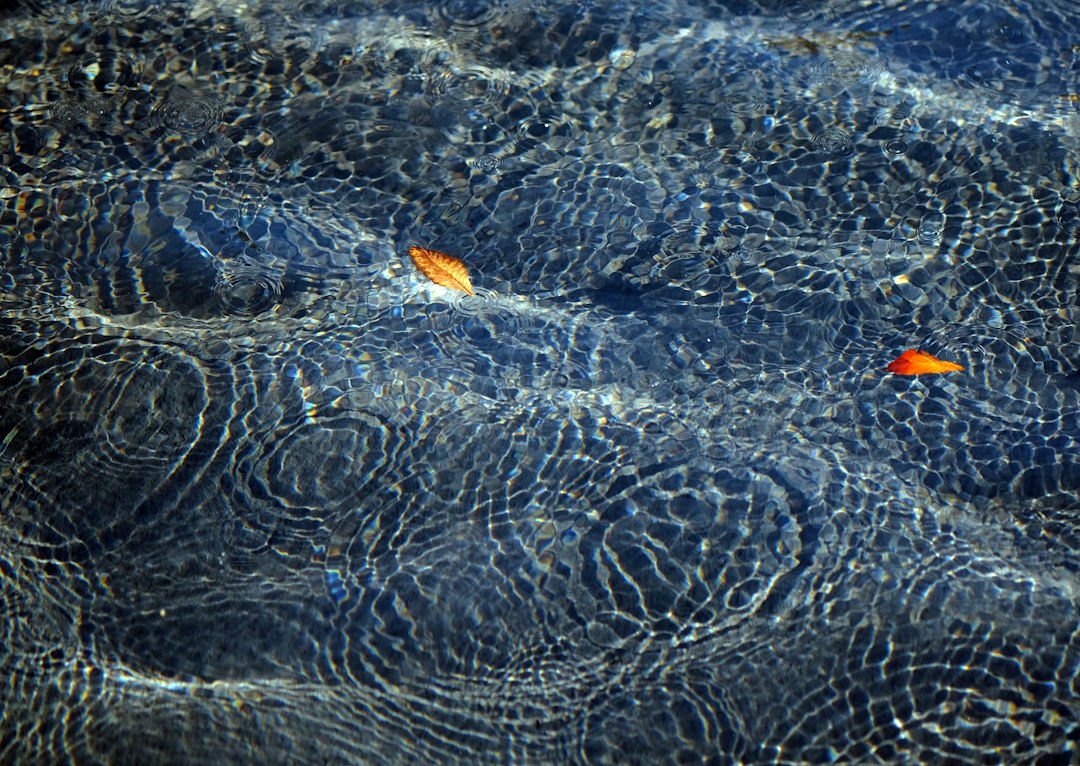

The water splashes in unpredictable directions, the rusty iron arms rotate slowly, and someone laughs. The Tinguely Fountain in Basel does not announce itself with tourist signs or lines of visitors: it simply stands there, in a small square next to the Theater Basel, doing what it has always done since 1977, the year of its inauguration. It sprays, turns, creaks, and transforms every passerby into an unwitting witness of something difficult to classify — art, play, mechanical irony.
The work was commissioned by the city of Basel to the Swiss artist Jean Tinguely, born in Fribourg in 1925 and artistically raised between Paris and New York, where he became one of the protagonists of the kinetic art movement and Nouveau Réalisme. Tinguely was obsessed with movement, with the machine as a metaphor for human existence, with controlled chaos. The fountain that bears his name — located in Theaterplatz, in the heart of the city — is perhaps the most accessible and everyday example of his poetic universe.
Iron, water, and movement: what you see in front of the fountain
The fountain is composed of nine kinetic sculptures in black iron, arranged in a rectangular basin. Each element is in constant motion: gears that turn, arms that swing, nozzles that project jets of water at ever-changing angles. There is no fixed cycle, there is no repeatable sequence — every minute the composition is slightly different, as if the machine were improvising.
What strikes you physically, when standing close to the basin, is the sound: a mix of bubbling water, metallic creaks, and the rhythmic ticking of the gears. The materials are deliberately raw, industrial, almost construction-like. Tinguely was not seeking polished beauty; he was seeking the chaotic life of mechanical things. Looking closely, you notice bolts, chains, pieces of iron that seem to have been salvaged from a disused factory — and they probably were.
Jean Tinguely and the Artistic Context of the Work
When Basel commissioned the work from Tinguely, the artist was already famous for his Méta-Matics, machines that autonomously drew, and for his self-destructive sculptures, such as Homage to New York from 1960, which deliberately ignited in the garden of MoMA. The fountain in Theaterplatz represents a more serene, almost playful Tinguely, but no less radical in his vision.
The work was made with iron materials and hydraulic mechanisms designed to withstand continuous use and the elements. The fact that it still functions today, after almost fifty years, without losing its chaotic vitality, is in itself a remarkable technical achievement. The fountain is visible and active throughout the year, although in the coldest winter months the hydraulic system may be temporarily suspended to protect the mechanisms from freezing.
How to get there and when to visit
The fountain is located in Theaterplatz, in the center of Basel, easily reachable on foot from the central station (Bahnhof Basel SBB) in about fifteen minutes, or by tram — several lines stop nearby. Entrance is free and open to all: the fountain is a permanent public installation, accessible to anyone passing through the square.
The best time to visit is in the early morning or late afternoon on weekdays, when the square is less crowded and you can calmly stand in front of the basin without being overwhelmed by the flow of tourists. In summer, with the sun hitting the water jets, small temporary rainbows are created around the sculptures — a detail that alone is worth the visit. Bringing a camera or a smartphone with a good video mode is advisable: the continuous movement of the sculptures is much better appreciated in a video than in a static photograph.
Why the Detour is Worth It
Basel is already an extraordinary city for those who love contemporary art — it hosts Art Basel, one of the most important art fairs in the world, and museums like the Kunstmuseum and the Museum Tinguely, the latter entirely dedicated to the work of the artist and located along the Rhine. But the fountain in Theaterplatz has something that museums cannot offer: it is free, it is outdoors, it is noisy, and it has no closing hours.
There is something profoundly honest about a work of art that asks for nothing — neither a ticket, nor silence, nor reverential admiration. The Tinguely Fountain simply exists, in the middle of the city, and does its strange and wonderful work every day. Those who pass by by chance, knowing nothing of Jean Tinguely or kinetic art, still stop. Because the water splashes in unpredictable directions, the iron arms rotate, and someone laughs.


