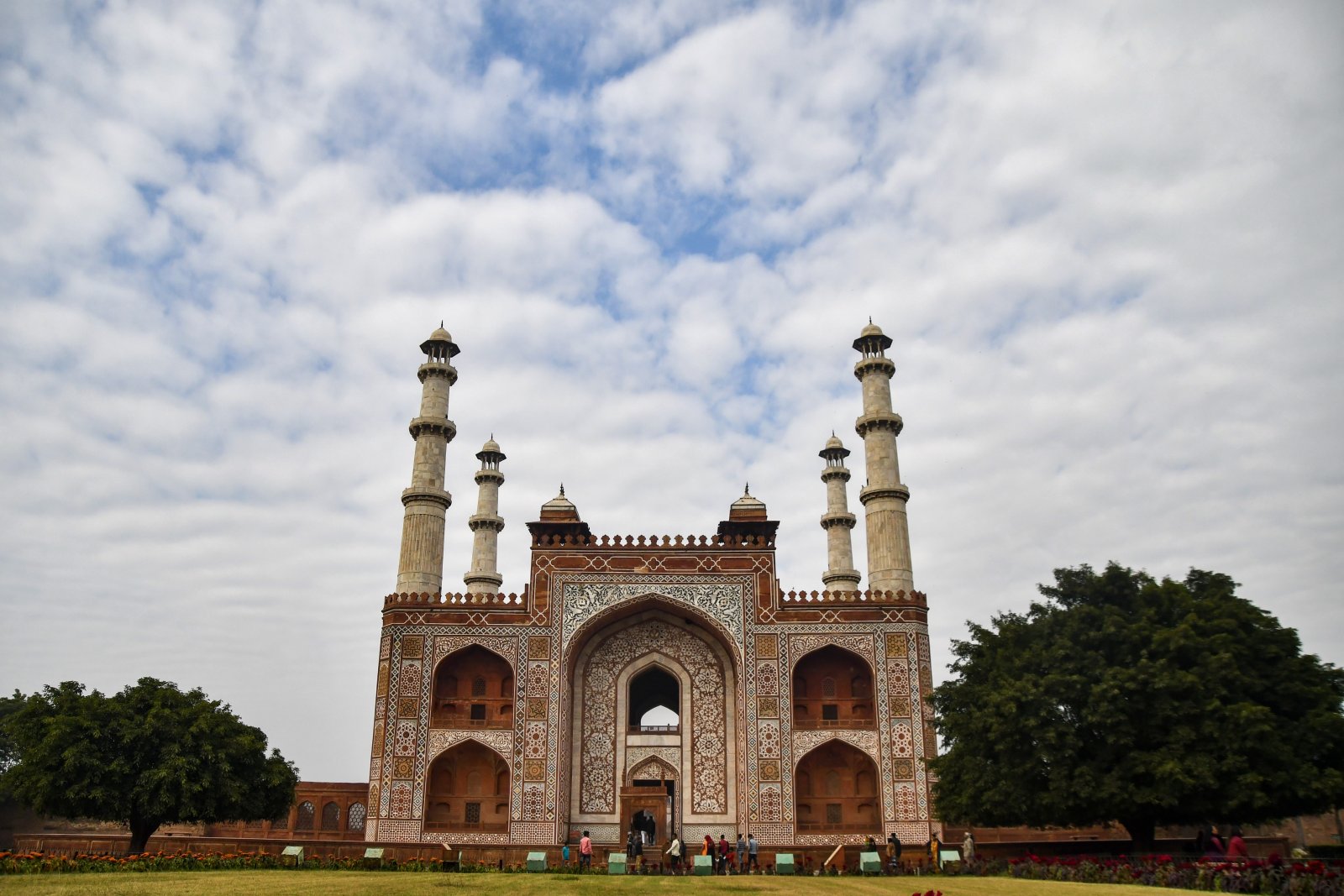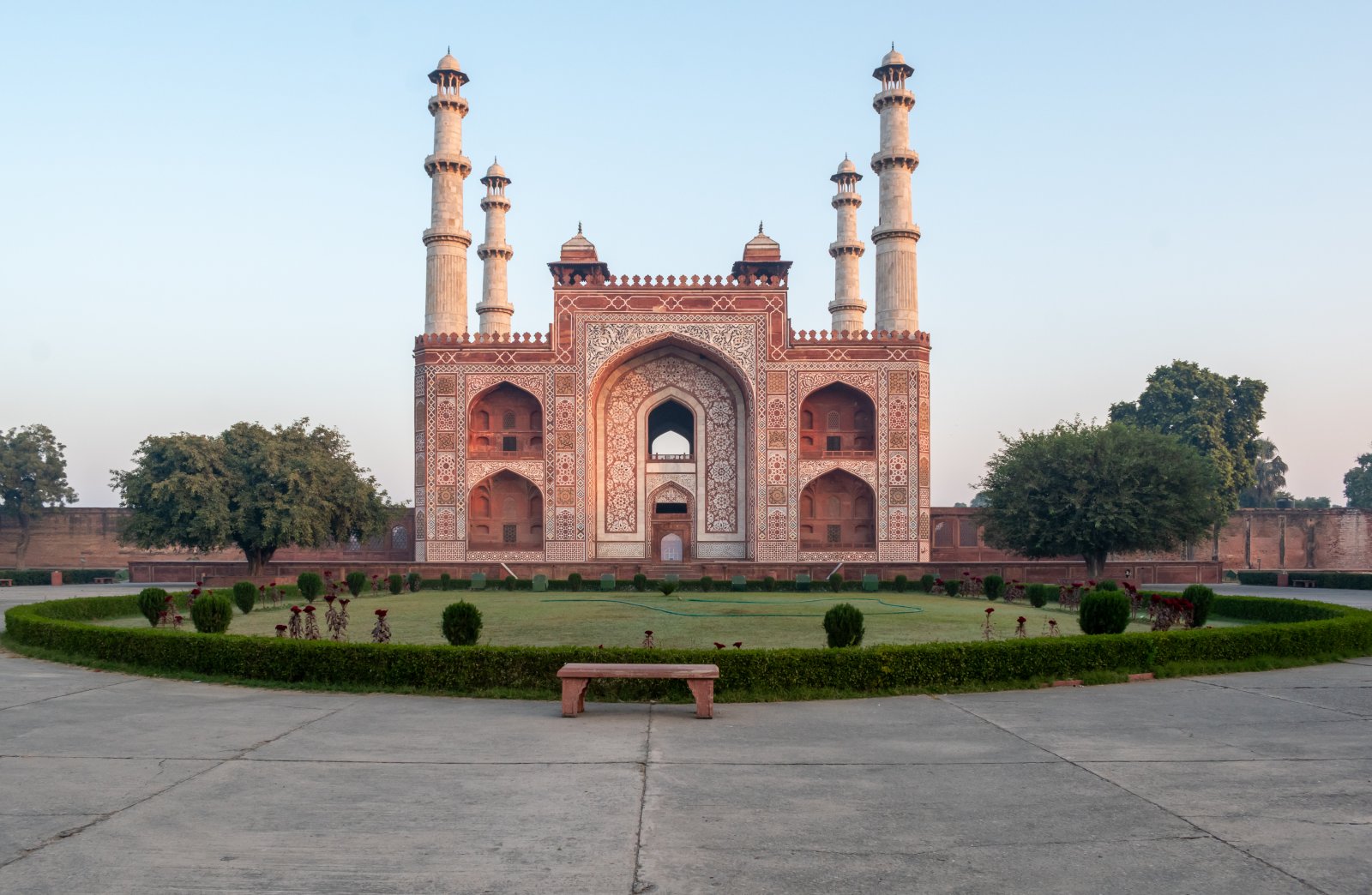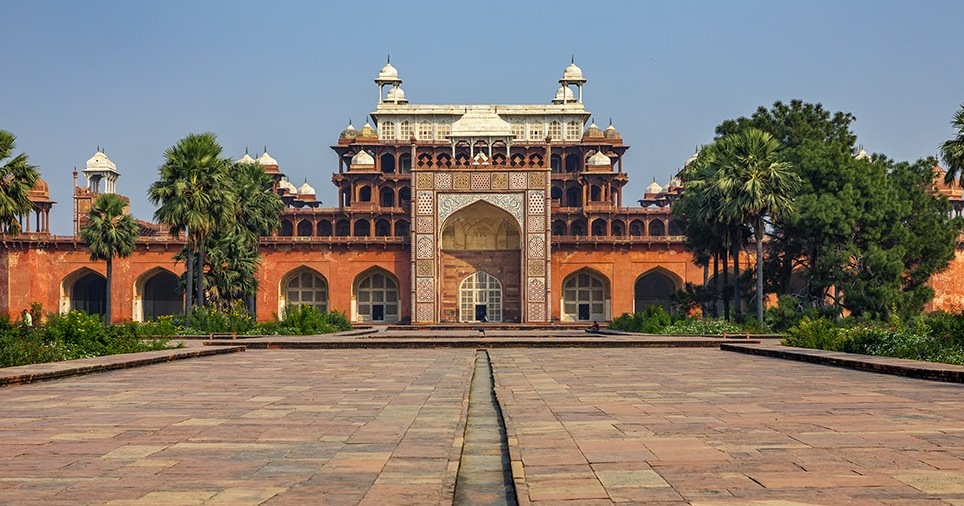

It was the third Mughal emperor, അക്ബര് ദി ഗ്രേറ്റ് (1542 - 1605), who began the construction of the സ്മാരകം around 1600, താഴെ പുരാതന തതാരി tradition for which it was necessary to start the preparation of the Tomb ഇതിനകം during his life. It seems that it was Akbar who designed the building and chose its location. മേൽ അക്ബർ 's death, the construction was completed by Akbar' s son, Jahangir, in 1613. The ശവകുടീരം സ്ഥിതി തണുപ്പ്, 10 കി. മീ. വടക്കുപടിഞ്ഞാറ് of Agra Fort.Il ശവകുടീരം is surrounded by a beautiful garden പ്രദാനം ഒരു സമാധാനപരമായ setting അവസാന ഹോം of this great ruler. ബ്രിട്ടീഷ് ഉണ്ടായിരുന്നു പരിചയപ്പെടുത്തി ചില antelopes ഈ ആല ഇന്ന് ഒരുപക്ഷേ ഉണ്ട്. ഏകദേശം 50-60 of them. The ശവകുടീരം red ചെങ്കല്ല്, മാർബിൾ, without the dome, shows the influence of the വിഹര, പരമ്പരാഗത monastery ഹിന്ദു and highlights the mix of ornamental motifs and architectural elements, ഇസ്ലാമിക, ഹിന്ദു, ബുദ്ധ, ക്രിസ്ത്യാനികളും, on the basis of the തത്ത്വചിന്ത മത syncretistic developed by the same അക്ബര്.ദേശം attributable to create a square to the correct side of 690 മീറ്റർ, aligned with the കർദ്ദിനാൾ points of the compass, surrounded by a wall and ഏർപ്പാട് പ്രകാരം ക്ലാസിക് ലേഔട്ട് തോട്ടം പല bagh. ഒരു പ്രവേശന കവാടം stands out in the center of ഓരോ perimeter wall and wide paved കോഴ്സുകൾ-ഏർപ്പാട് according to the Mughal പാരമ്പര്യം കൊണ്ട് കേന്ദ്ര വെള്ളം ചാനലുകൾ representing the Four Rivers Of Paradise-lead from the ends to the ശവകുടീരം, located in the center of the square. തെക്കൻ gate is the largest: equipped with four white marble minarets കിരീടധാരണം by chhatris, വളരെ സമാനമായ എന്നാൽ dating back to നേരത്തെ തവണ-ആ താജ് മഹൽ, it is generally used as an entrance to the Tomb. This is in turn surrounded by a square wall വേലി from the side of 105 മീറ്റർ. ആന്തരിക building looks like a four-level പിരമിഡ്, surmounted by a marble പവലിയൻ containing the false Tomb. യഥാർത്ഥ ശവസംസ്കാരം പോലെ മറ്റ് mausoleums, is placed in the plinth.