
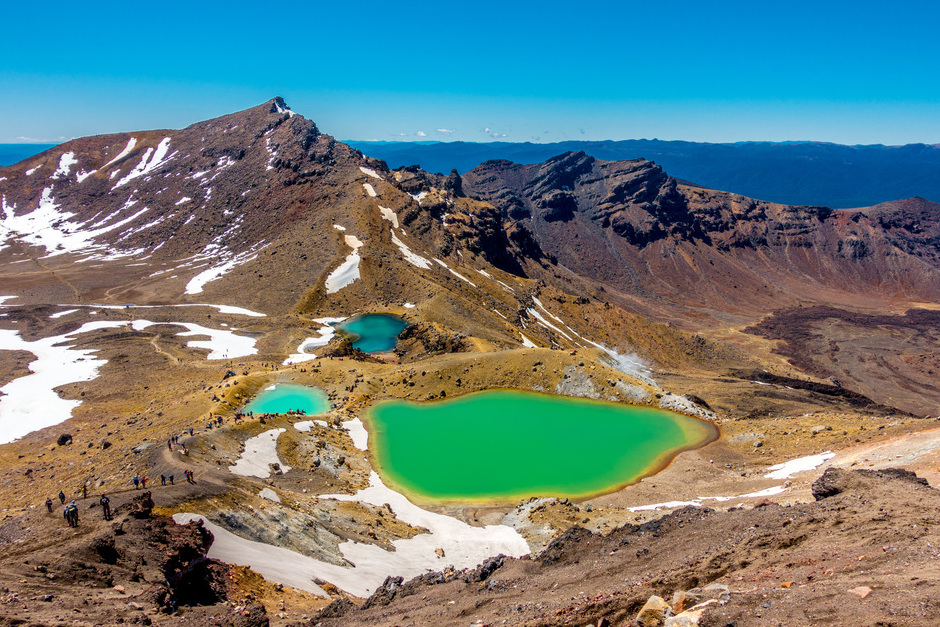

Nestled in the heart of New Zealand's North Island, Tongariro National Park is a mesmerizing blend of cultural significance and breathtaking landscapes. Established in 1887, it holds the title of New Zealand's oldest national park and a dual World Heritage Site, recognized for both its natural and cultural heritage. The park's founding is intrinsically linked to the Māori people, particularly Ngāti Tūwharetoa chief Te Heu Heu Tukino, who gifted the land to the nation in a bid to preserve its sacred mountains, Tongariro, Ngāuruhoe, and Ruapehu. This act was not just a gift of land but a profound recognition of the area's spiritual significance, which continues to resonate through Māori culture today. Spanning over 795 square kilometers, the park is home to dramatic volcanic landscapes, including emerald lakes and craters formed by volcanic activity, making it a haven for adventurers and nature lovers alike. The Tongariro Alpine Crossing, often hailed as one of the best one-day hikes in the world, attracts thousands of hikers each year, eager to traverse its rugged terrain and witness its striking features, like the vibrant Emerald Lakes and the stark beauty of the Red Crater. This trek is not just a physical challenge; it’s an immersive experience steeped in the region’s history and geography. The architecture within the park is minimalistic, focusing on the natural beauty rather than manmade structures. The Whakapapa Visitor Centre, designed with an emphasis on sustainability, serves as a hub for information and connection to the land. Here, visitors can learn about the park’s unique geology and the various walking tracks available. Art in Tongariro manifests through Māori carvings and traditional crafts, which reflect the cultural heritage of the indigenous people. Local customs include the sharing of stories and legends associated with the mountains, emphasizing the connection between the land and its people. The annual Māori New Year celebration, Matariki, is a significant event, marked by cultural performances, feasts, and communal gatherings that highlight local traditions. While exploring Tongariro, one must not miss the chance to indulge in traditional Māori cuisine. Dishes such as hāngī—a meal cooked in an underground oven—offer unique flavors that connect visitors to the land’s rich cultural tapestry. Local ingredients, including fresh fish, root vegetables, and seasonal berries, often find their way into dishes, reflecting the natural bounty of the region. For those interested in lesser-known curiosities, the park is also home to a few hidden gems. For instance, the Tawhai Falls, often overshadowed by the more famous attractions, showcases stunning waterfalls surrounded by lush greenery. Additionally, the park has been a backdrop for various films, most notably the Lord of the Rings trilogy, where Mount Ngauruhoe stood in for the fiery Mount Doom. The best time to visit Tongariro National Park is during the shoulder seasons of spring (September to November) and autumn (March to May), when the weather is mild, and the crowds are fewer. However, prepare for rapidly changing weather conditions, and always check forecasts before embarking on hikes. Essential tips include wearing sturdy hiking boots, bringing sufficient water, and packing layers to accommodate temperature shifts. Look out for unique flora and fauna, including the rare Tongariro skink and native kākā parrots, which are often spotted within the park's diverse ecosystems. In conclusion, whether it's the striking volcanic landscapes, rich Māori heritage, or the thrill of adventure, Tongariro National Park promises an unforgettable experience. To enhance your journey, consider using the Secret World app to craft a personalized itinerary that captures the essence of this remarkable destination.


