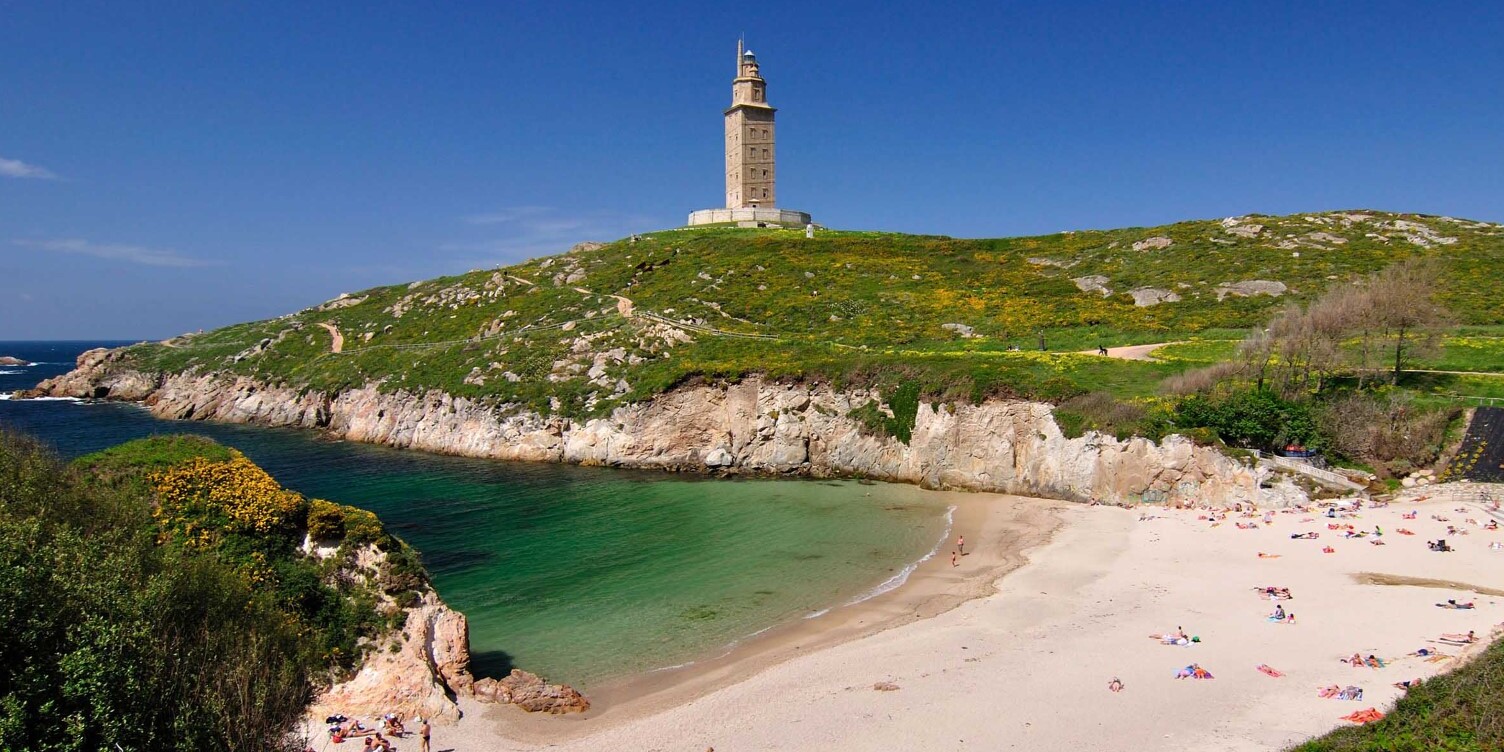

Standing sentinel over the rugged coastline of A Coruña, the Tower of Hercules is not only a remarkable architectural feat but also the oldest surviving lighthouse in the world. Its majestic structure, rising 55 meters above the Atlantic, has guided sailors for nearly two millennia, a testament to both ancient engineering and the relentless power of the sea.
### History and Origins
The origins of the Tower of Hercules are steeped in mystery and legend. Although its exact construction date is unrecorded, historical references indicate that it has stood since at least the 2nd century CE. The tower is often attributed to Emperor Trajan, who ruled from 98 to 117 CE, and it is believed to have been inspired by the famed Lighthouse of Alexandria, one of the Seven Wonders of the Ancient World.
An inscription at the base credits the architect Gaius Sevius Lupus, hailing from Aeminium (modern-day Coimbra, Portugal). This inscription reveals that the lighthouse was dedicated to Mars, the Roman god of war, emphasizing its importance as a guiding light for those navigating treacherous waters. Over the centuries, the tower has witnessed numerous historical events, including invasions and shipwrecks, becoming an enduring symbol of resilience. It underwent significant restoration between 1788 and 1791, which helped preserve its structure and maintain its operational status.
In recognition of its cultural and historical significance, the Tower of Hercules was designated a National Monument of Spain and was inscribed as a UNESCO World Heritage Site in 2009, joining the ranks of other monumental treasures around the globe.
### Art and Architecture
The architectural style of the Tower of Hercules is a captivating blend of Romanesque and Neoclassical influences. Its stone façade, constructed from local granite, exhibits a robust simplicity that is both functional and aesthetically pleasing. The tower’s design features a square base, with a cylindrical body that tapers as it rises, culminating in a lantern room adorned with a bronze weathervane.
Inside, visitors can ascend a winding staircase of 234 steps that leads to the lantern at the top, where breathtaking panoramic views of the Atlantic Ocean and the surrounding coastline await. The interior also showcases various historical artifacts and inscriptions that tell the story of its long-standing maritime heritage.
### Local Culture and Traditions
The presence of the Tower of Hercules has profoundly influenced the local culture of A Coruña. It is entwined with local folklore and is often celebrated in Galician traditions. The nearby San Juan Festival, held annually on the night of June 23, is a vibrant celebration where locals light bonfires along the coast. This festival honors the summer solstice and is steeped in rituals aimed at warding off evil spirits, with the Tower serving as a majestic backdrop.
Moreover, the lighthouse is a source of inspiration for local artists, poets, and musicians, who continually weave its imagery and symbolism into their works. The Tower is also a focal point for various cultural events throughout the year, including exhibitions and concerts that draw both locals and tourists alike.
### Gastronomy
No visit to A Coruña would be complete without indulging in its rich culinary offerings. The city is famed for its seafood, particularly octopus, which is often served as pulpo a la gallega—boiled octopus seasoned with paprika, olive oil, and sea salt. Pair this with a glass of Albariño, a crisp white wine that complements the maritime flavors of the region.
Another local specialty is empanada gallega, a savory pie filled with a variety of ingredients, most commonly tuna or meat. As you explore the area around the Tower of Hercules, be sure to stop by one of the many tapas bars to experience the vibrant culinary scene that reflects the area’s maritime heritage.
### Lesser-known Curiosities
While the Tower of Hercules is a popular tourist destination, some intriguing details often go unnoticed. For instance, the lighthouse is said to have inspired the design of several other lighthouses around the world, including the famous Cape Blanco Lighthouse in Oregon, USA. Additionally, the legend of the Giant of Hercules, a mythological figure associated with the tower, adds a mystical layer to the site, suggesting it was once a place of worship and reverence.
Another curiosity is that the lighthouse still functions today, guiding vessels with its powerful beam, which can be seen from miles away. The surrounding park, Parque Escultórico (Sculpture Park), features contemporary sculptures that echo the tower’s historical significance while offering a modern artistic interpretation of its legacy.
### Practical Visitor Information
The best time to visit the Tower of Hercules is during the spring and early fall when the weather is mild, and the crowds are fewer. The site is easily accessible from the city center, and guided tours are available to offer deeper insight into its history and architecture.
When visiting, take time to explore the surrounding park, where you can enjoy leisurely walks and stunning ocean views. Don't forget your camera; the vistas from the top of the tower are nothing short of breathtaking.
To fully immerse yourself in the rich tapestry of A Coruña, consider using the Secret World app to craft a personalized AI itinerary that highlights the city’s hidden gems alongside the iconic Tower of Hercules.
