



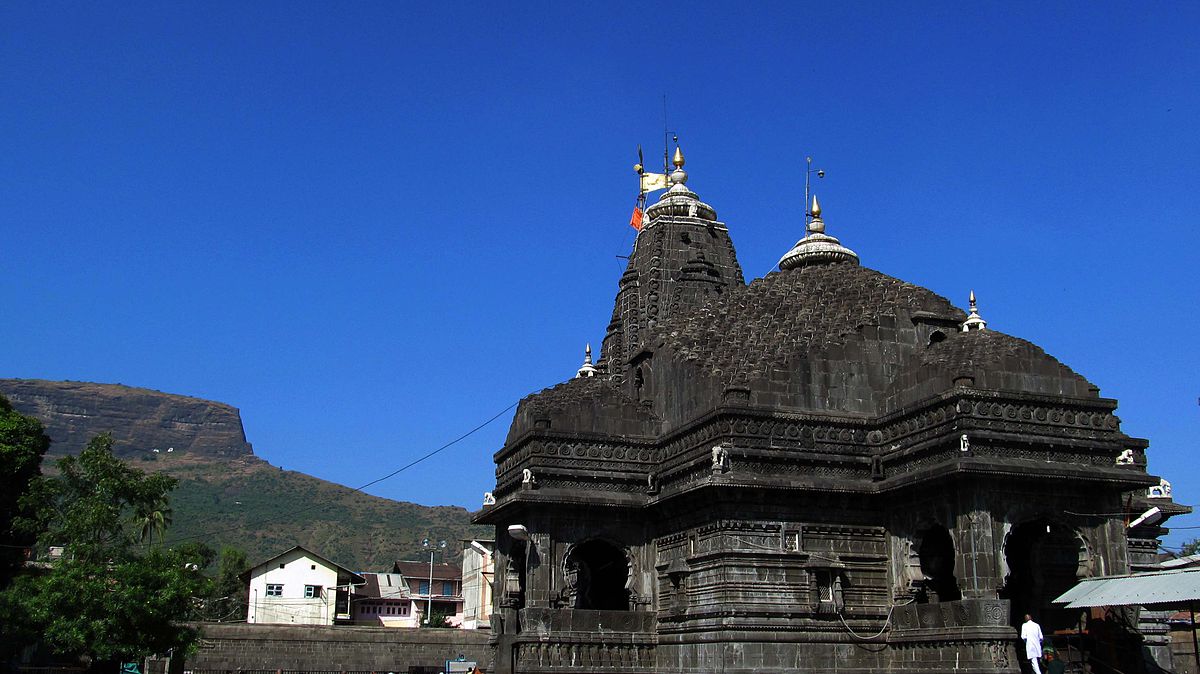
Nestled in the serene hills of Trimbakeshwar, just 28 kilometers from Nashik, the Trimbakeshwar Shiva Temple stands as a revered pilgrimage site and a significant spiritual landmark in India. This sacred temple is not only one of the twelve Jyotirlingas scattered across the country but also holds a special connection to the origins of the Godavari River, one of the longest rivers in India.

### History and Origins
The roots of the Trimbakeshwar Shiva Temple trace back to ancient times, with legends entwined in myth and devotion. According to Hindu mythology, the temple is believed to have been constructed in the 18th century by Peshwa Balaji Baji Rao, and it was built to enshrine the Jyotirlinga dedicated to Lord Shiva. The temple's name is derived from the Sanskrit word "Trimbak," which means "three-eyed," a reference to Shiva's third eye, symbolizing wisdom and enlightenment.

The temple's history is steeped in tales of divine intervention. It is said that the sage Gautama Rishi, who lived in the region, performed intense penance to please Lord Shiva. In return, Shiva granted him the boon of establishing the Jyotirlinga here. The temple has faced various challenges, including natural calamities and invasions, yet it has persisted as a center of devotion.
### Art and Architecture
The Trimbakeshwar Temple is an architectural marvel showcasing intricate craftsmanship characteristic of the Hemadpanthi style. Built primarily from black stone, the temple features ornate carvings and sculptures that depict various deities, floral patterns, and mythological scenes.
One of its most striking features is the Shiva Linga, which is unique as it has three faces representing the trinity of Brahma, Vishnu, and Shiva. Visitors are often awed by the temple's grand entrance, flanked by impressive carvings, and its richly adorned interiors, which combine spirituality with artistic excellence.
### Local Culture and Traditions
The temple is not merely a place of worship; it is a vibrant center of local culture. The annual festival of Mahashivaratri draws thousands of devotees who come to participate in night-long vigils, chanting, and prayers to honor Lord Shiva. The atmosphere during this time is electrifying, with the air filled with the sounds of bells, devotional songs, and the fragrance of offerings.
The locals also celebrate the Kumbh Mela, a significant Hindu festival that occurs every twelve years in Nashik. This event attracts millions from across India and the world, providing a glimpse into the rich tapestry of Indian spirituality and hospitality.
### Gastronomy
No visit to Trimbakeshwar is complete without indulging in the local cuisine. The region is renowned for its vadas, puran polis, and modaks, which are traditional Maharashtrian sweets. The Bhaji (fried snacks) served with chai (tea) is a popular choice among temple visitors.
A unique culinary experience can be found at the local stalls where you can savor kothimbir vadi, a dish made from coriander and gram flour, often enjoyed with spicy chutneys. For those with a sweet tooth, the Chivda (a savory snack made from flattened rice) is a delightful pick.
### Lesser-known Curiosities
While many are drawn to the temple's spiritual significance, few know about the Saraswati Kund, a sacred water tank located close to the temple. It is believed that those who bathe in its waters are cleansed of their sins. Additionally, the temple is surrounded by the Anjaneri Mountain, which is said to be the birthplace of Lord Hanuman, adding layers of mythological intrigue to the landscape.
Another fascinating aspect is the Trimbakeshwar’s unique Shiva Linga, which is said to be self-manifested and is continuously covered in ghee (clarified butter) and milk, symbolizing the ever-living essence of the deity.
### Practical Visitor Information
The best time to visit Trimbakeshwar is during the winter months, from November to February, when the weather is pleasant for exploration. During the monsoon season, the surrounding hills come alive with lush greenery, offering breathtaking views that enhance the temple experience.
When planning your visit, be sure to dress modestly, as this is a sacred site. Arriving early in the morning allows you to witness the morning rituals and enjoy a quieter atmosphere. For those interested in photography, the early dawn light beautifully illuminates the temple's intricate carvings.
Visitors should also take the time to explore the nearby Nashik region, known for its vineyards and picturesque landscapes, making it a holistic getaway combining spirituality with nature.
In a land rich with history and devotion, Trimbakeshwar offers an experience that resonates deeply with the heart and soul. For a personalized journey through this enchanting destination, consider using the Secret World app to tailor your itinerary.
