

A facade of aluminum panels that reflects the polar sunlight like a giant mirror: this is the first image that strikes those who arrive at the Arctic Cathedral of Tromsø. Built in 1965 based on the design of Norwegian architect Jan Inge Hovig, this Lutheran church is technically known as Tromsdalen kirke, and its sharp triangular profile has become the most recognizable symbol of the Norwegian city beyond the Arctic Circle.

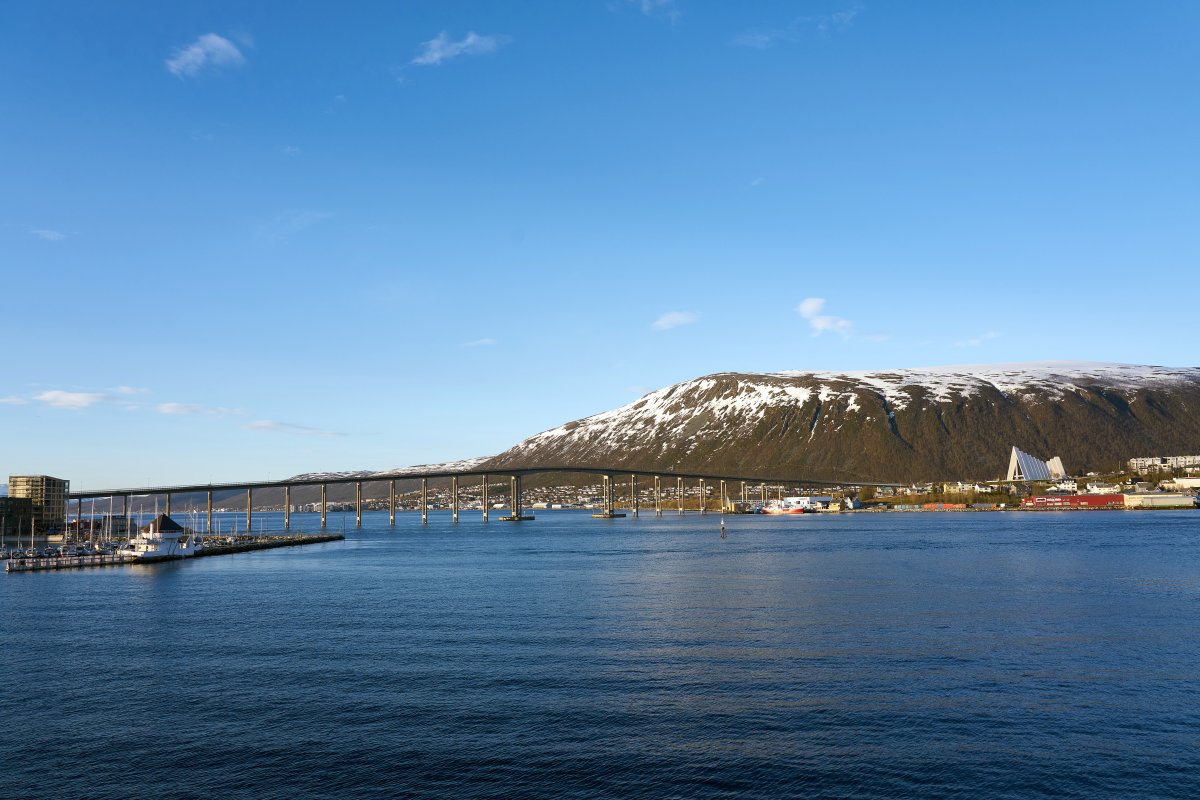
The structure is located in the Tromsdalen neighborhood, on the eastern shore of the fjord, reachable in just a few minutes on foot from the city center via the Tromsø Bridge. From this viewpoint, the cathedral appears framed by the snow-capped mountains in the background, creating a visual composition that immediately explains why it has become one of the most photographed religious buildings in Scandinavia.
An architecture designed for the Arctic landscape
Hovig designed the church explicitly inspired by the surrounding landscape: the three triangular sections that make up the structure evoke the mountain peaks that surround Tromsø, while the aluminum cladding was chosen precisely for its ability to capture and reflect the variable light of the Arctic, which changes radically between the summer midnight sun and the almost total darkness of the polar winter. The building is about 70 meters tall at the highest point of its gable, a proportion that makes it visible from almost every corner of the city.
Inside, the element that leaves one speechless is the apse stained glass: it is one of the largest stained glass windows in Europe, created by the Norwegian artist Victor Sparre and installed in 1972. It measures about 140 square meters and depicts the return of Christ, with a color palette ranging from deep blue to gold, and on sunny days transforms the interior of the church into an almost unreal environment, with beams of colored light streaming through the air.
The Northern Lights and Winter Magic
Tromsø is one of the most famous destinations in the world for observing the Northern Lights, and the Arctic Cathedral offers one of the most evocative settings for this natural spectacle. In the months between October and March, when the sky is clear, visitors often gather near the church in the evening hours to photograph the green and purple lights dancing above the triangular facade. It is a combination of architecture and nature that is hard to replicate elsewhere.
During the winter period, the church regularly hosts organ music concerts, which take advantage of the unique acoustics of the triangular space. Attending an evening concert, with the Sparre stained glass illuminated from within and perhaps an aurora moving outside the side windows, is an experience that many visitors describe as one of the most intense moments of their trip to Norway.
Practical information for the visit
The cathedral is open to visitors almost all year round, with hours that vary seasonally: in summer, the opening often extends into the evening hours to catch tourists arriving during the midnight sun. The entrance ticket costs around 50 Norwegian crowns (about 4-5 euros), a symbolic amount that contributes to the maintenance of the building. It is advisable to check the updated hours on the official website before departing, as the church remains closed during religious services.
To reach the cathedral from the center of Tromsø, the simplest solution is to walk across the Tromsø Bridge: the journey takes about 15-20 minutes from the main island and offers spectacular views of the fjord in both directions. Those who prefer public transport can use the local bus lines that connect the center to Tromsdalen. The best time to photograph the aluminum facade is during the central hours of the day in winter, when the low light of the Arctic sun creates golden reflections on the metal surface, or at summer sunset, when the colors become particularly intense.
What to Observe Up Close
As you approach the building, it is worth pausing to notice the construction details: the aluminum panels are not smooth but slightly textured, and the junction between the three triangular sections reveals the engineering complexity of a structure that had to withstand snow loads and Arctic winds. On the back side of the church are the bells, visible from the outside, while the main entrance is preceded by a small square that on clear sky days serves as a natural observation point towards the Tromsdalstinden mountains.
Inside, in addition to the stained glass by Sparre, the pipe organ deserves attention, a professional quality instrument that is used both for liturgical functions and public concerts. The simplicity of the interior furnishings — light wood benches, white walls, absence of excessive decorations — is a deliberate choice that serves to not distract attention from the apse stained glass, the true protagonist of the sacred space.


