


An elephant slowly approaches the waterhole, then rolls in the reddish earth until it is covered in a bright red that almost looks orange under the afternoon sun. This is the scene that greets visitors to the Tsavo National Park, the largest national park in Kenya, which with its over 20,000 square kilometers of total area — divided between Tsavo East and Tsavo West — represents about four percent of the entire Kenyan territory. This is no small detail: here nature operates on a scale that is hard to conceive until you are inside it.
The park was established in 1948, making it one of the oldest protected parks in East Africa. Its foundation occurred at a time when the British colony of Kenya was beginning to recognize the extraordinary ecological value of this semi-arid region, crossed by the Tsavo River and dotted with volcanic formations, open savannas, and acacia forests. Today the park is managed by the Kenya Wildlife Service and remains one of the most visited places on the African continent for photographic safaris.
The red elephants: a unique natural phenomenon
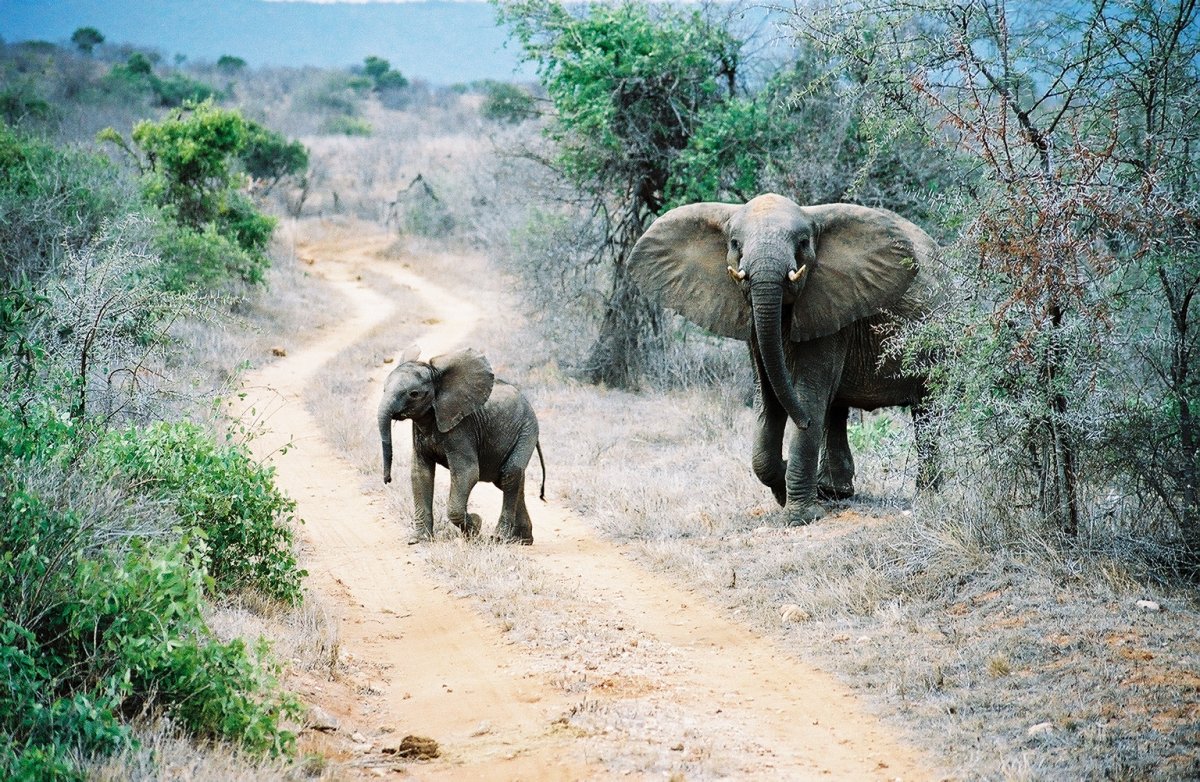
The most iconic feature of Tsavo is undoubtedly its elephants, famous worldwide for the characteristic reddish color of their coat. The phenomenon is neither genetic nor aesthetic: the elephants of Tsavo regularly roll in the iron oxide-rich soil that characterizes this area of Kenya, and the red dust adheres to their thick skin, creating a coloration that visually distinguishes them from any other population of African elephants. This habit likely serves a protective function against insects and parasites, as well as regulating body temperature.
Observing this behavior live is an experience that leaves a lasting impression. The park rangers know the watering holes regularly frequented by the herds, and many lodges organize morning outings specifically to intercept these moments. Tsavo is home to one of the largest elephant populations in Kenya, with estimates around 12,000-15,000 individuals in the entire protected area.
The Mzima Springs: an underwater window
In the heart of Tsavo West are the Mzima Springs, a system of natural springs that delivers about 225 million liters of water per day, fed by rainwater filtered through the volcanic rocks of Mount Kilimanjaro and the surrounding mountains. The water that emerges is extraordinarily clear and cold, creating an aquatic habitat that seems almost unreal amidst the arid savannah.
The springs are famous for the stable presence of hippos and crocodiles, observable from an elevated viewing platform and — a truly rare fact in Africa — from a glass underwater observatory built directly in the water, allowing for a surprisingly clear view of hippos swimming underwater. It is one of the very few places in the world where this is possible in a safe and non-invasive manner. The springs also provide part of the drinking water to the city of Mombasa, about 200 kilometers away.
The Dark History of the Man-Eaters of Tsavo
Tsavo carries with it a darker story that has made its way around the world. In 1898, during the construction of the Uganda Railway, two male lions — lacking manes, a not uncommon trait for lions in this region — killed a significant number of workers involved in the construction of the bridge over the Tsavo River. Colonel John Henry Patterson, the engineer in charge of the works, shot them after months of hunting and wrote a book about the incident, The Man-Eaters of Tsavo, published in 1907. The two stuffed lions are now displayed at the Field Museum in Chicago, but their story is still alive in local memory and natural history literature.
This incident helped to build the almost legendary reputation of Tsavo as a wild and unpredictable place, a perception that still fuels the park's allure among visitors from around the world.
Practical tips for visiting Tsavo
The best time to visit the park is during the dry season, which runs from June to October and from January to February: the vegetation thins out, animals concentrate around water sources, and visibility during safaris is at its best. It is advisable to avoid the months of April and May, when long rains make some dirt roads impassable even with 4x4 vehicles.
Tsavo can be reached by car from Nairobi in about three to four hours via the A109, or from Mombasa in about two hours. Several mid-range and high-end lodges are located within or on the outskirts of the park, with rates varying considerably depending on the season. The entrance fee for foreign visitors is managed by the Kenya Wildlife Service and can be paid through the official digital platform before departure: always check the updated rates on the official website, as they are reviewed periodically. Always carry good quality binoculars: distances in the open savannah of Tsavo East can be enormous.


