
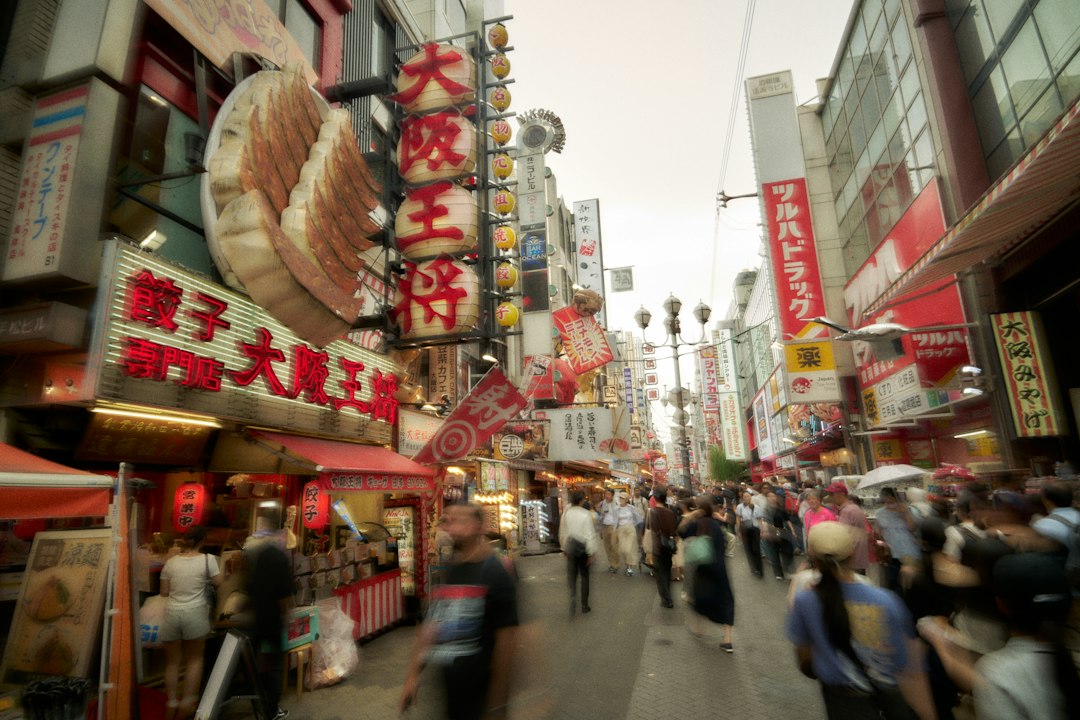

The smell arrives before everything else. Fermenting kimchi, marinated meat sizzling on invisible coals, garlic and sesame mixing in the humid air of the covered alleys. Tsuruhashi, in the Ikuno district of Osaka, is one of the oldest Korean markets in Japan, a labyrinth of narrow corridors where stalls follow one another seamlessly and where time seems to have stopped a few decades ago.
The market has its roots in the post-war period, when the Korean community residing in Osaka — one of the largest in Japan, historically concentrated in the Ikuno district — began trading food products and textiles in this area near the Tsuruhashi train station. Today, the district still hosts one of the largest communities of Korean residents in Japan, and the market is its most visible and everyday expression.
The colors and flavors of the stalls
Walking through the covered galleries of Tsuruhashi means navigating through bright shades: the deep red of gochujang in lined jars, the pale white and green of freshly made baechu kimchi, the rolls of hand-dyed fabric hanging on the walls in shades of indigo, ochre, and vermilion. The vendors — often middle-aged or elderly women, some in aprons, some sitting on low stools — weigh the spices with precise and quick gestures, without looking up.
The grocery stores offer specific cuts of meat for Korean barbecue: samgyeopsal (thick slices of pork belly), galbi (marinated ribs), tongue, and offal that rarely appear in ordinary Japanese supermarkets. Next to the meat counters, small family-run restaurants serve dishes like sundubu jjigae — soft tofu in spicy broth — or naengmyeon, the cold buckwheat noodles typical of the northern cuisine of the Korean peninsula.
Human Stories Among the Alleys
What makes Tsuruhashi different from a simple food market is the layering of personal stories that emerge from every corner. Many merchants belong to the third or fourth generation of families that opened the first stalls in the post-war period. Some signs are still written in Korean and Japanese side by side, a legacy of a time when the clientele was almost exclusively Korean. Today, visitors are a mix of local residents, Japanese tourists, and foreigners, but the character of the market remains rooted in its origins.
Talking with the merchants — even just through gestures and a few words — often reveals a quiet pride in what they have built. A kimchi shop may have its family recipe guarded for decades, with proportions of chili and fermented fish passed down orally. It is not folklore staged for tourists: it is simply how this place works.
Fabrics and Craftsmanship: a Less Known Side
Alongside food, Tsuruhashi has a long tradition in the trade of fabrics. Some sections of the market are dedicated to textiles, traditional Korean clothing such as the hanbok, and materials dyed using manual techniques. The colors are vibrant and the prices are generally more accessible compared to traditional clothing stores in the tourist areas of Osaka. Those interested in textile craftsmanship will find in this part of the market a different atmosphere, quieter, with shopkeepers willing to show the materials calmly.
It is a dimension of the market often overlooked by hurried visitors who focus only on food, but it is worth dedicating at least half an hour of attention to it, especially during the central hours of the morning when the light filters through the awnings and illuminates the colors of the displayed fabrics.
How to get there and when to visit
Tsuruhashi is easily accessible by the Osaka subway: the Tsuruhashi station is served by the Osaka Metro Sennichimae Line and the JR Osaka Loop Line. From the main exit, the covered market is just a few minutes' walk away, following the signs and, above all, the smells.
The best time to visit is in the morning, roughly between 9:00 AM and 12:00 PM, when the food stalls are at their busiest, the products are fresh, and the atmosphere is more authentic. On Saturdays and Sundays, the market is more crowded and lively, but also more chaotic. Some shops are closed on Wednesdays, so it is preferable to avoid that day. It is advisable to bring cash, as not all stalls accept digital payments. Allow at least two hours for a leisurely visit to explore both the food section and the textile section without rushing.


