


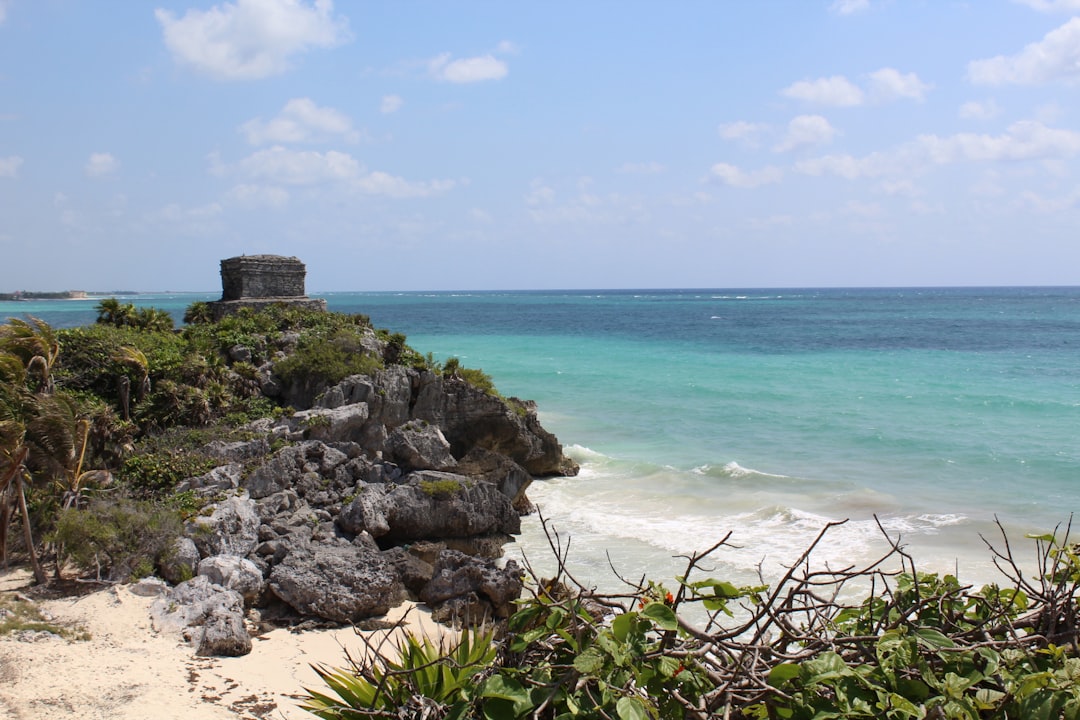
From the edge of the cliff, about 12 meters above the sea, El Castillo dominates one of the most dramatic views of the entire Yucatán Peninsula. The main structure of the Tulum Archaeological Zone stands on a limestone promontory that drops steeply into the turquoise waters of the Caribbean Sea, and from that summit, it is immediately clear why the Maya chose this very spot to build their port city. This is not a secondary scenic detail: the orientation of the pyramid has been studied to capture the light of dawn, which filters through a small opening in the structure and projects a beam of light used, according to scholars, as a reference for coastal navigation.

Tulum was inhabited between 1200 and 1521 AD, when the Spanish conquistadors brought an end to the classical Maya civilization in this region. The city was protected on three sides by a limestone wall — still partially visible — while the fourth side was naturally defended by the cliff. This makes it the only walled Maya city built directly on the edge of a Caribbean cliff, a feature that no other Mesoamerican archaeological site can boast in the same way.
The colors of the sea seen from above: morning and afternoon
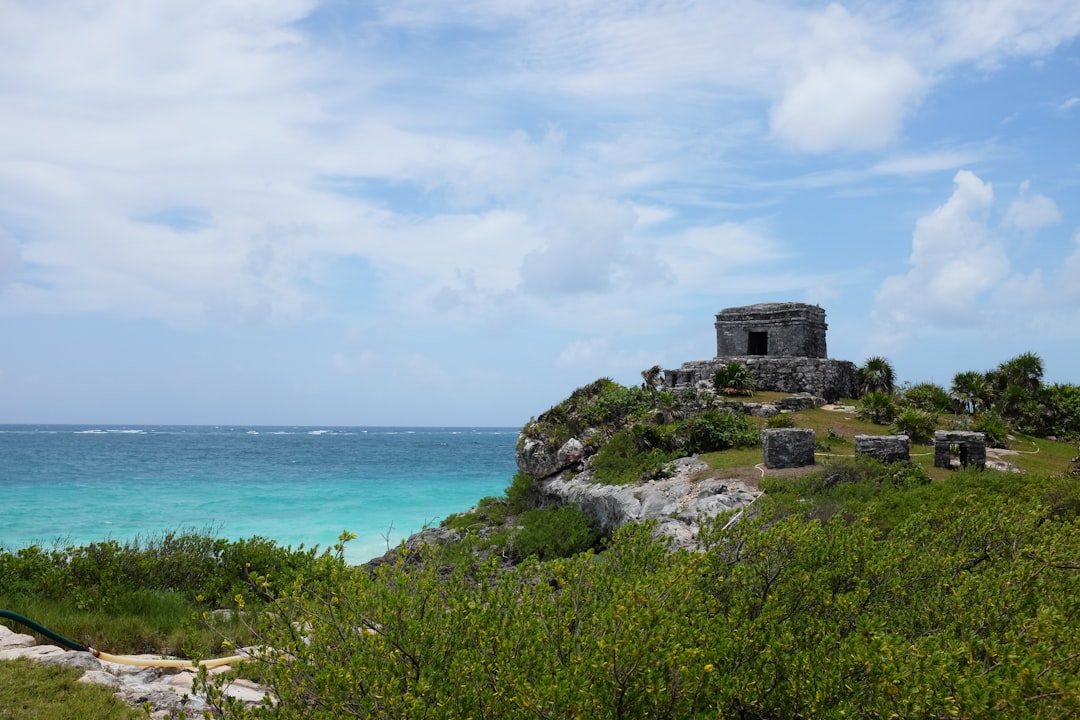
Those who arrive at the site in the early hours of the morning, shortly after opening at 8:00, find a slanting light that transforms the sea into a succession of chromatic layers difficult to describe without seeming exaggerated. The water near the shore is a nearly transparent aquamarine, then shifts to an intense turquoise, and finally becomes cobalt blue where the seabed drops sharply beyond the coral reef. From the elevated platform on which El Castillo stands, the eye embraces the entire curve of the bay below, with the white beach — accessible by descending an internal staircase at the site — reflecting the sunlight.
In the afternoon, the landscape changes character. The higher and more direct light slightly flattens the color contrasts of the sea but highlights the architectural details of the gray stone structures, some of which are covered in orange and green lichens. The Temple of the Descending God, recognizable by the upside-down figure sculpted above the entrance — interpreted as a representation of the setting sun or a bee — captures sharp shadows that enhance its bas-reliefs. The contrast between the light limestone and the blue of the sea in the background is the frame that almost every visitor seeks to immortalize.
The city walls and the urban context
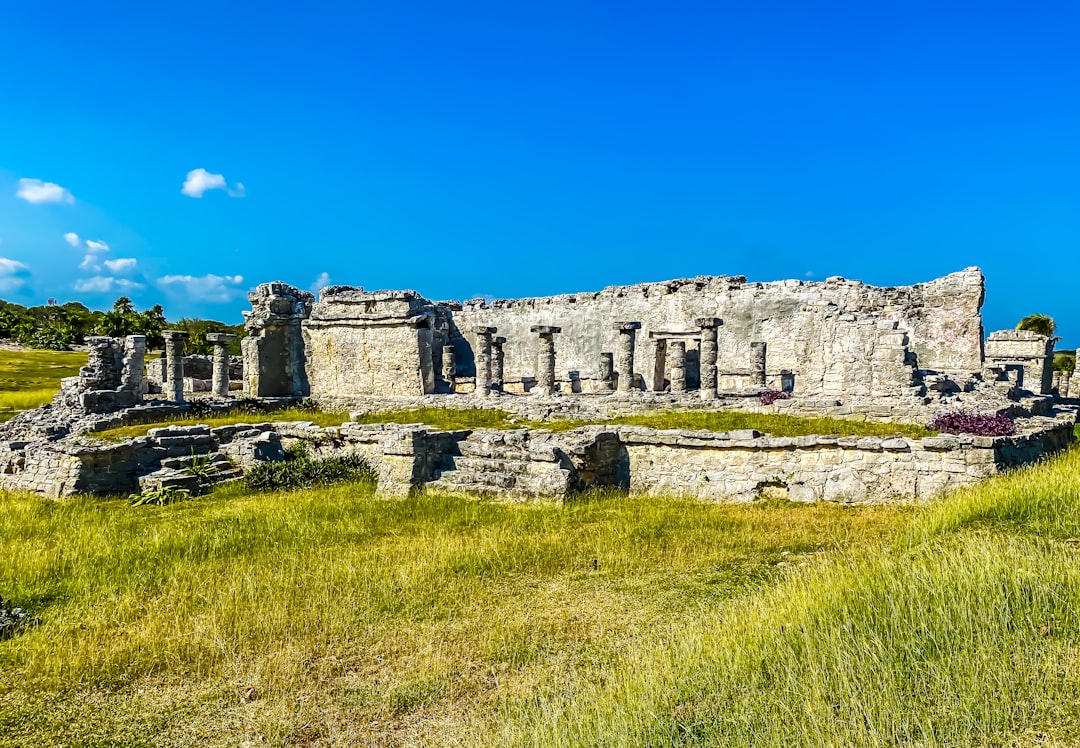
Walking along the inner perimeter of the walls allows one to understand the real scale of the city. The walls reach a height of about 3-5 meters at some points and a thickness of almost 8 meters at the base, with watchtowers at the corners. Inside, there are about 60 cataloged architectural structures, including the Palace, the Temple of Paintings — which preserves traces of original frescoes with divine figures — and several ceremonial platforms. Tropical vegetation grows among the stones, with green iguanas slowly moving on the sun-warmed walls: a presence so constant that it has become part of the visual experience of the site.

The Temple of Paintings is perhaps the structure richest in details observable up close. On the outer walls, polychrome decorations survive, in varying states of preservation, showing Maya deities in ritual postures. Access to the interior is limited for conservation reasons, but the exterior already offers sufficient elements to understand the level of artistic elaboration achieved by the inhabitants of Tulum in the postclassic period.
How to Organize the Visit Effectively
The entrance ticket to the archaeological site costs about 95 Mexican pesos (INAH rate, subject to updates), plus a separate state tax. The parking lots are a few kilometers from the entrance: from the parking lot, you can reach the entrance by a paid shuttle train or on foot in about 15-20 minutes. The most useful advice is to arrive at opening time, at 8:00 AM: between 10:00 AM and 1:00 PM, the site fills up with organized groups coming from Cancún and Playa del Carmen, making it difficult to linger calmly in front of the main structures. In high season, between December and March, this morning window is practically the only time you can photograph El Castillo without dozens of people in the field of view.
The average visit time is about two hours, but those who want to go down to the beach inside the site — one of the few Caribbean beaches accessible within an archaeological area — should plan at least half an hour more. The beach is small, with crystal-clear water and generally moderate currents, and is included in the entrance ticket. Bringing water and sunscreen is essential: shade inside the site is scarce, and the heat between May and September can be considerable.
The sunset light and the closing moment
The site closes at 5:00 PM. In the late afternoon, when the groups thin out, the slanting light of the sun colors the stones a golden yellow that contrasts with the darker blue of the sea — the Caribbean loses its green tones and becomes deeper as the sun sets. Those who manage to stay until the last hours of opening find a quieter and photographically different version of the site compared to the morning. It is not the sunset seen from the pyramid — access to the top of El Castillo is not allowed for visitors — but the light that falls on the east-facing facades still creates a visually unforgettable effect.


