
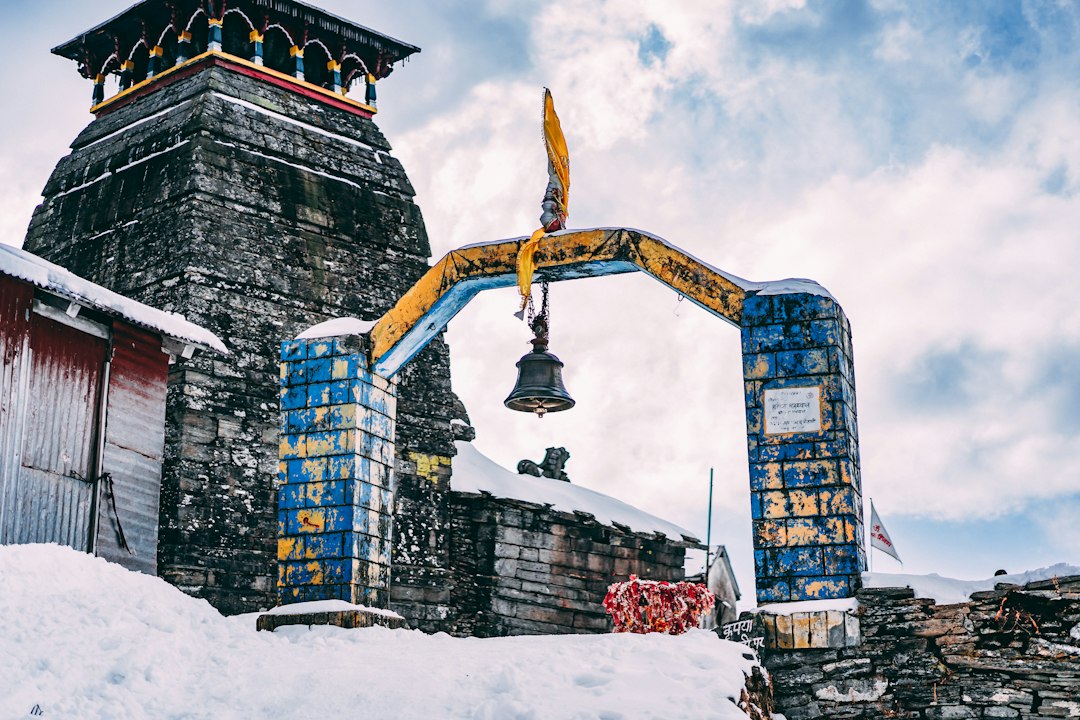

At a 3,680 meters above sea level, nestled among the folds of the Garhwal mountains, lies Tungnath, the highest Shiva temple on the planet. The path that leads to it starts from the small village of Chopta, at about 2,700 meters, and winds for almost four kilometers through one of the densest rhododendron forests in Uttarakhand. It is not a technical climb, but it is a journey that gradually changes the breath, the landscape, and the silence around those who traverse it.
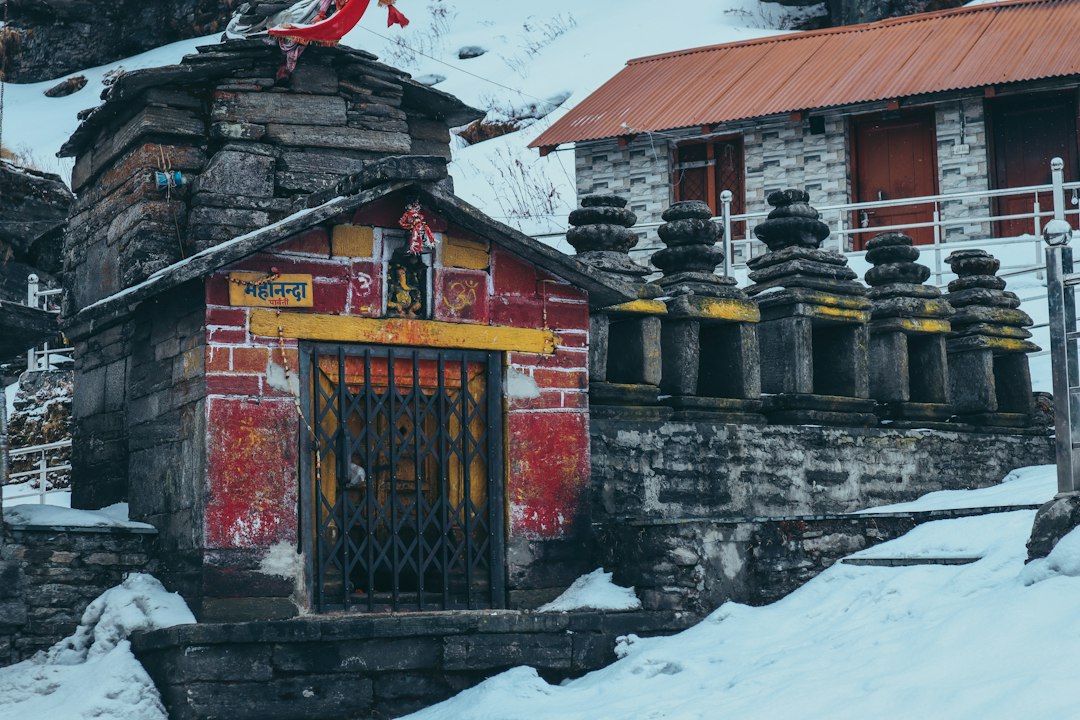
Chopta has remained almost completely off the mass tourist circuits that instead crowd Kedarnath, the most famous of the five temples of Panch Kedar, of which Tungnath is a part. Here, there are no lines of pilgrims stretching for miles, nor helicopters continuously flying over the valley. There are dirt paths, mules loaded with supplies, and a few huts selling hot chai to hikers.
The path through the rhododendron forest
The trailhead is located in the village of Chopta, accessible by car from Ukhimath or from Rudraprayag via mountain roads that require caution, especially during the monsoon period. From there, the path ascends with a constant slope, never brutal, passing through a dense forest of rhododendrons (Rhododendron arboreum) that in spring, between March and May, turn a deep red. The branches intertwine above the path forming a natural arch that filters the light in different ways at every hour of the day.
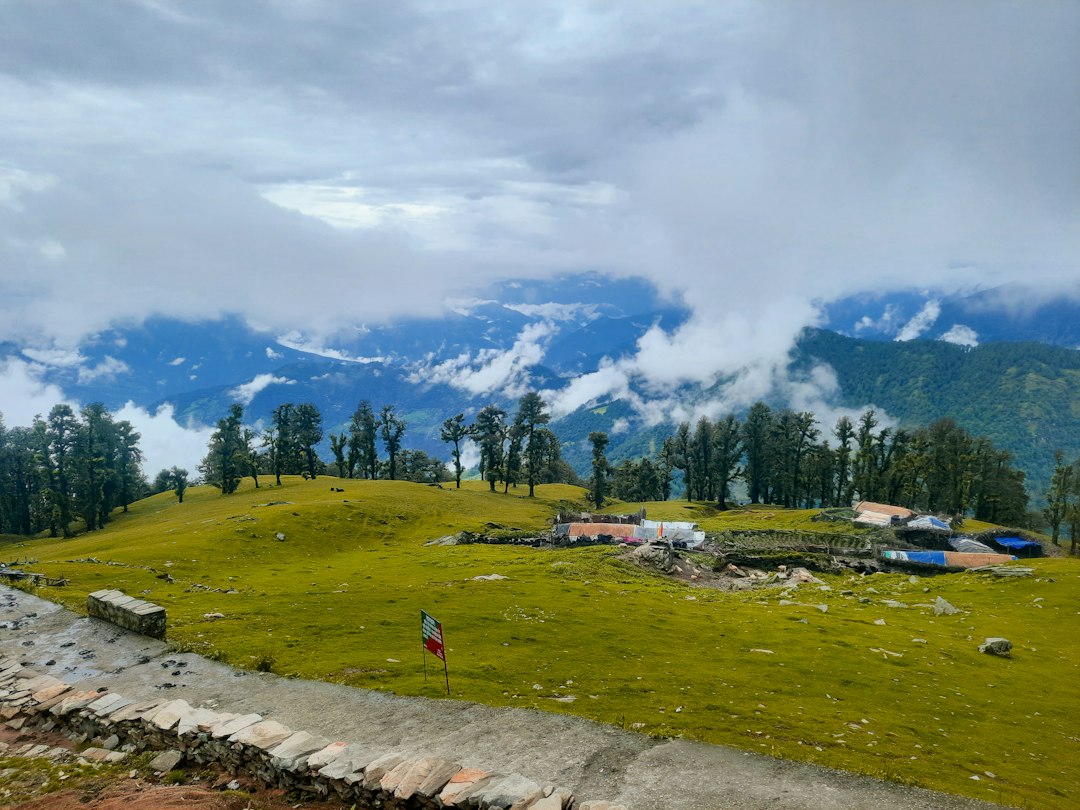
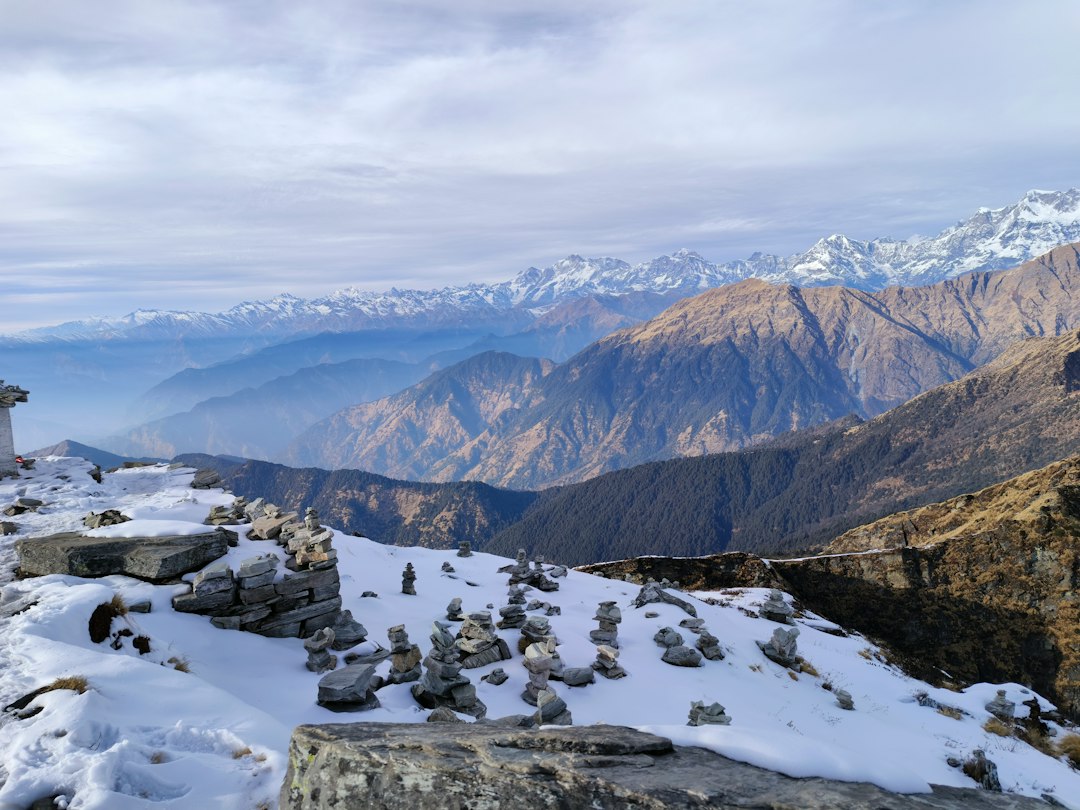
As you proceed upward, the vegetation becomes sparser and gives way to alpine meadows called bugyals. It is here that the panorama suddenly opens up: on clear days, particularly in autumn after the monsoon, you can see the peaks of the Garhwal Himalaya, including Nanda Devi at 7,816 meters, the highest mountain entirely in Indian territory. The view is direct, unfiltered, because there are no tall trees obstructing the horizon.
The Tungnath Temple and Its Architecture
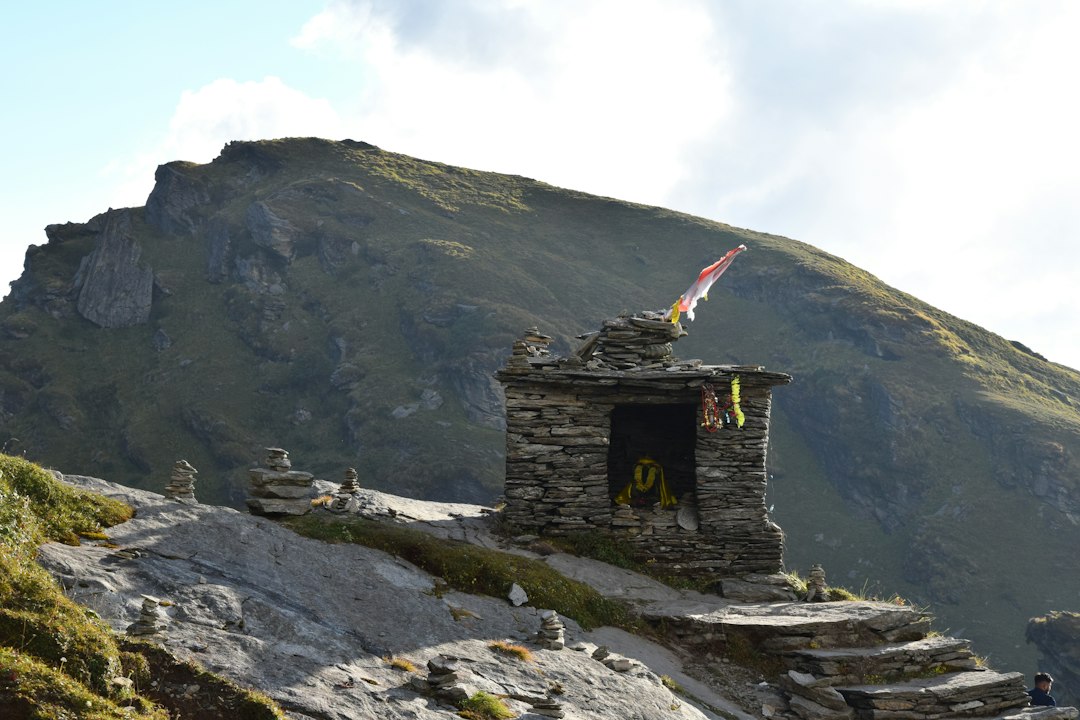
The Tungnath temple is built in nagara style, the architectural tradition typical of temples in northern India, with a shikhara tower made of local stone that rises compactly from the mountain rock. The dimensions are modest compared to many plains shrines, but the location makes it visually powerful. Inside, it houses one of the five jyotirlingas of Panch Kedar, which according to Hindu tradition corresponds to the arms of Shiva.
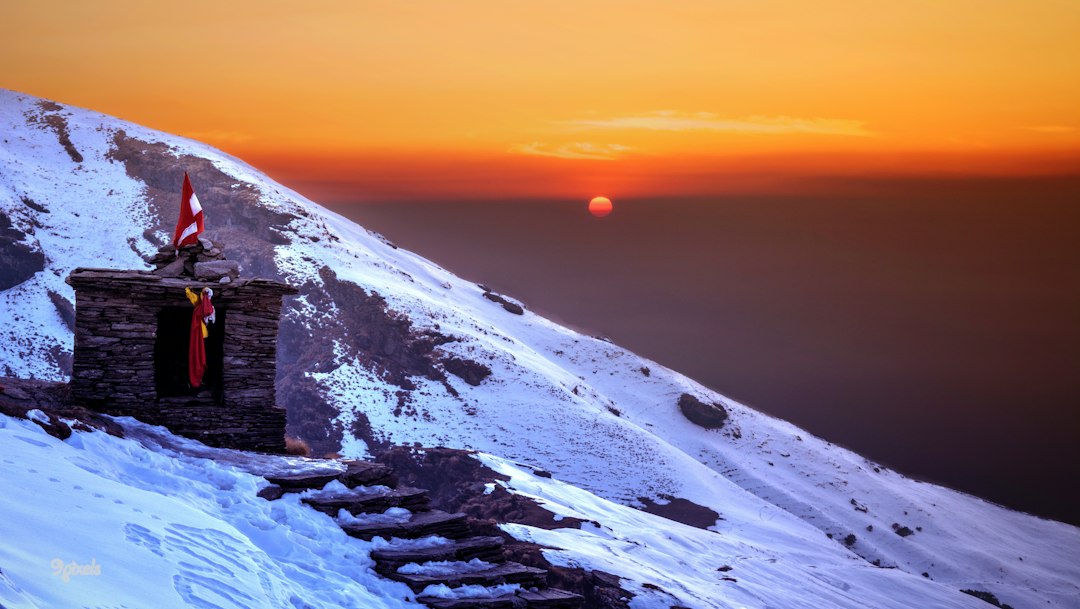
The temple is open to visitors only during the summer months, generally from May to November, and is closed during the winter when snow makes the area inaccessible. Before the seasonal closure, the deity is ritually transferred to the winter temple of Mkumath, in the valley below. The structures surrounding the main sanctuary include small secondary buildings and an open area where pilgrims rest after the ascent.
What to encounter along the way
The trail is frequented by a mix of hikers and pilgrims. The former carry technical backpacks and trekking poles; the latter often ascend in traditional clothing, sometimes barefoot, with floral offerings wrapped in banana leaves. Along the route, there are some small stalls selling water, cookies, and snacks, but their presence is not guaranteed at all times during the season. It is better to leave from Chopta with enough water.
About halfway along the route, there is a natural viewpoint where many hikers stop to catch their breath. From there, the upper meadows can already be seen, and on clear days, the first snow-capped peaks. The average time to climb from Chopta to the temple is about two hours for those walking at a moderate pace, and an hour and a half for the descent. The altitude is felt, especially for those coming directly from the plains without acclimatization.
Practical tips for the visit
The best time to visit Tungnath is October and November, after the end of the monsoon: the sky is clear, the vegetation is still green, and the temperatures are cool but manageable during the day. In spring, between April and May, the blooming of the rhododendrons offers a different visual experience, but visibility on the peaks can be more uncertain. Summer, from June to August, coincides with the monsoon and can make the trail slippery and the views obscured by clouds.
Chopta does not have luxury accommodations, but offers some guesthouses and basic campsites for overnight stays. Arriving the night before and leaving at dawn allows you to reach the temple in the early hours of the morning, when the light is better and the trail is still quiet. From Rishikesh, the most convenient starting point for those arriving by train or plane, Chopta is about 200 kilometers away and requires a day of travel by road.


