
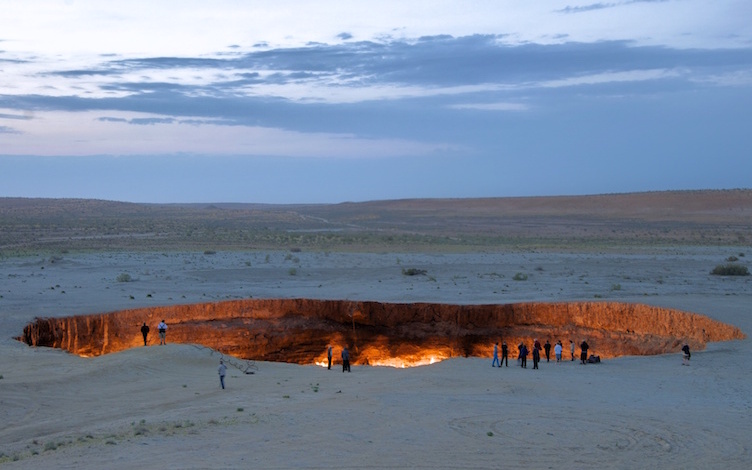

Nestled in the vast expanse of the Karakum Desert, the enigmatic "Door to Hell" captivates the imagination of adventurers and geologists alike. This fiery crater, with its eternal flames, stands as a testament to the intriguing confluence of human error and natural wonder.
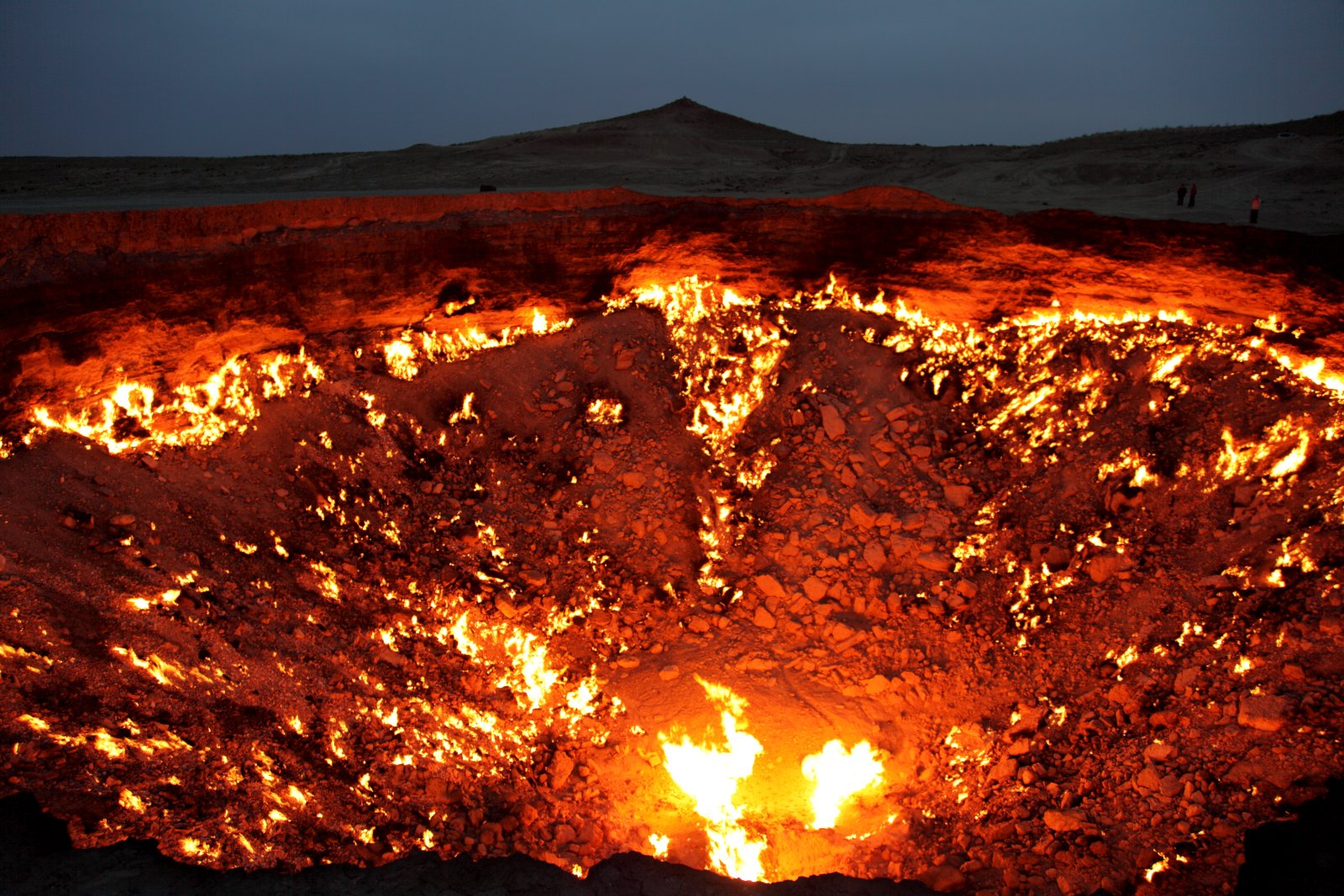
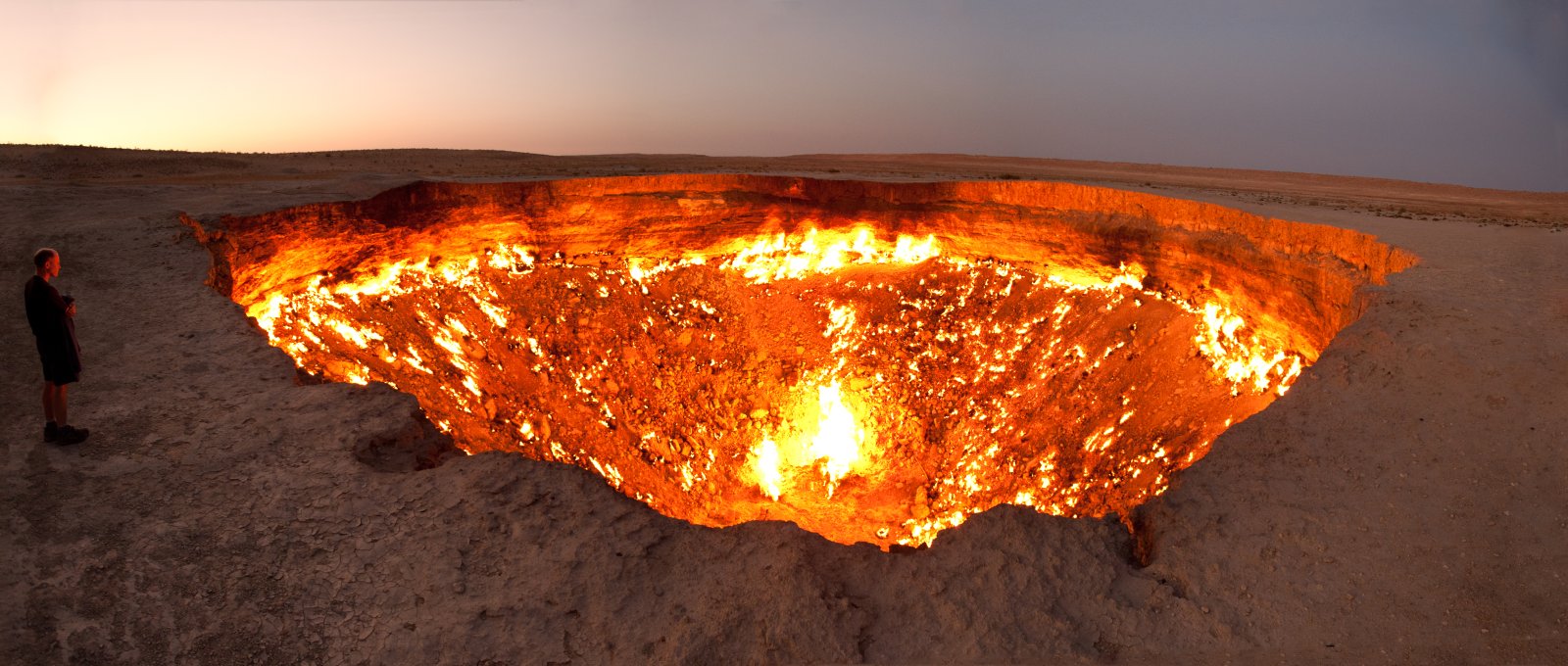
The origins of this blazing anomaly trace back to 1971, during a Soviet drilling expedition in search of oil. Instead of oil, geologists struck a cavern filled with natural gas, leading to the collapse of the ground beneath them and forming a crater approximately 70 meters wide and 20 meters deep. To prevent the spread of methane gas, the team decided to ignite it, expecting the fire to burn out within a few weeks. However, over forty years later, the flames continue to dance, earning the site its ominous nickname.
Turkmenistan's history, however, stretches far beyond this modern marvel. The region, once a crucial part of the Silk Road, has witnessed the rise and fall of empires, including the Parthian and Sassanian Empires, and later, the Islamic Caliphates. This historical tapestry is woven with cultural exchanges and conflicts, contributing to the rich legacy of the nation.
While the Door to Hell lacks ornate architecture, the surrounding regions boast significant historical structures. The nearby city of Ashgabat is known for its gleaming white marble buildings, modern and monumental, a stark contrast to the ancient ruins scattered throughout the country. The architectural style here is a blend of Soviet influences and contemporary extravagance, with notable sites like the Independence Monument and the Neutrality Arch capturing the eye.
Culturally, Turkmenistan is a land of rich traditions and vibrant customs. The people celebrate Nowruz, the Persian New Year, with great enthusiasm, marking the arrival of spring with music, dance, and elaborate feasts. Traditional craftwork, such as the intricate carpets and textiles, reflects the artistic heritage passed down through generations.
Turkmen cuisine offers a delectable taste of Central Asia, with dishes like "plov," a hearty rice dish with lamb and vegetables, and "shashlik," skewered and grilled meats, often enjoyed with fresh naan. The flavors are earthy and robust, showcasing the simple yet satisfying culinary practices of the region.
Among the lesser-known facts about the Door to Hell is its stark beauty under the night sky. The orange glow of the crater is a surreal sight against the backdrop of an endless desert, making it a must-see for those seeking unusual travel experiences. Additionally, the site is not officially designated as a tourist attraction, adding an element of adventure to the visit.
For those planning a visit, the best time to explore the Karakum Desert is during the cooler months from October to April, when temperatures are more forgiving. Travelers should be prepared for the remote location, with a sturdy vehicle and ample supplies. It’s advisable to explore with a local guide who understands the terrain and can provide insights into the history and culture of the area.
To plan your visit to the mesmerizing Porta dell'inferno, the Secret World app offers a tailor-made itinerary for an unforgettable journey.


