
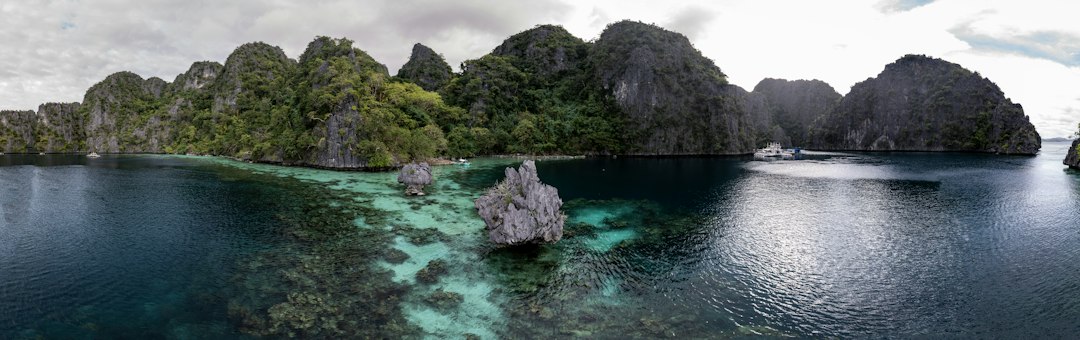

The water changes color halfway, and it is not an optical illusion. In the Twin Lagoon of Coron, in the Palawan archipelago in the Philippines, the boundary between the outer lagoon and the inner lagoon is marked by a limestone wall that rises from the water like a natural fortress. On one side, the salty water of the open sea. On the other, a closed basin of brackish water — a mix of freshwater from rock infiltrations and seawater — that maintains a noticeably warmer temperature and an almost unreal turquoise hue.
To pass from one lagoon to the other, at low tide, one must dive and swim through an underwater tunnel carved into the limestone. The passage lasts only a few seconds, but the feeling of emerging into a completely enclosed basin, surrounded by stone walls towering dozens of meters high and vegetation growing directly on the rock, is hard to describe accurately without having experienced it. The inner lagoon is unusually quiet: the limestone walls muffle the sounds of the open sea, and one finds themselves in a space that feels separate from the rest of the world.
The geology that makes all this possible
Coron belongs to the group of Calamian islands, in the northern part of Palawan. The area is characterized by karst limestone formations — the same ones that created the famous underground lagoons of Puerto Princesa, further south. In the case of the Twin Lagoon, the erosive process has over time separated two contiguous basins, leaving however an underwater connection that becomes accessible when the water level drops. At high tide, the tunnel is too deep to be safely crossed while free diving, and the inner lagoon becomes inaccessible without diving equipment.
The difference in salinity between the two lagoons creates a stratification of water visible to the naked eye during diving: at certain points, one can observe slight optical distortions similar to those seen above a flame, caused by the different density of the two layers of water that mix slowly. This phenomenon, called halocline, is one of the most photographed and discussed aspects among visitors who arrive with mask and snorkel.
How to get there and what to expect
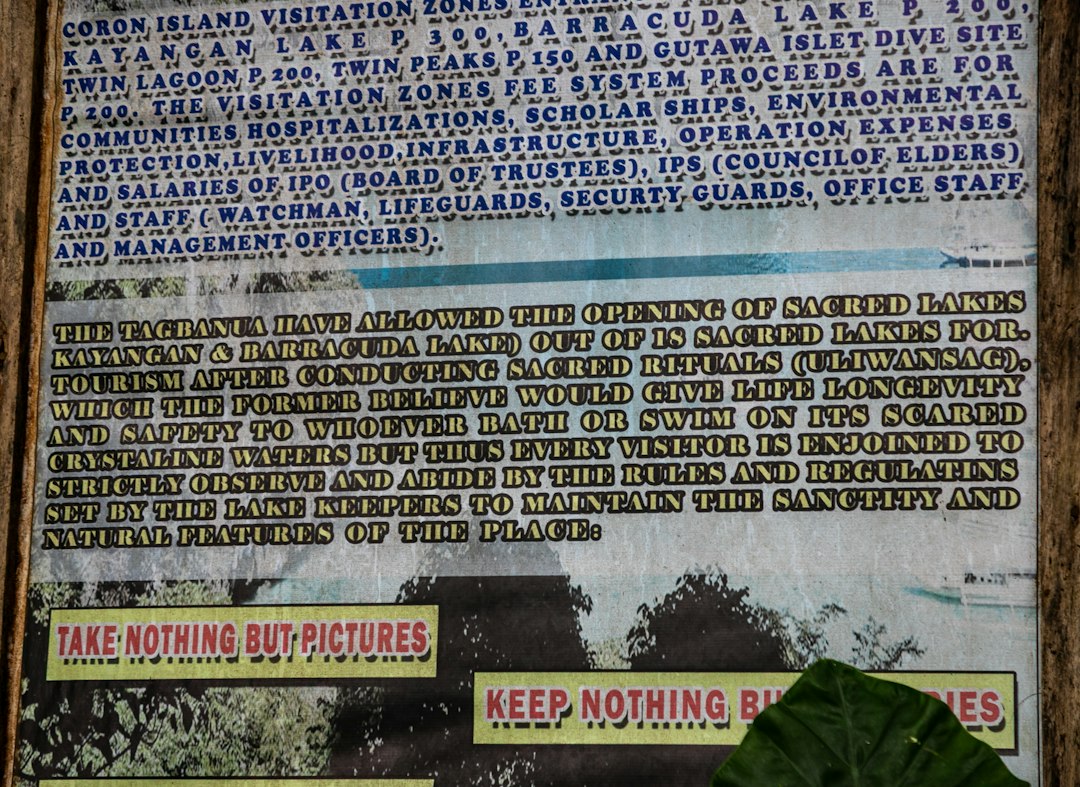
The Twin Lagoon is reached by boat from the port of Coron Town, on the island of Busuanga. The crossing takes approximately between 45 minutes and an hour, depending on the type of vessel. Most visitors arrive as part of organized tours that combine multiple destinations in the same day — the nearby islands of Kayangan Lake and Barracuda Lake are often included in the same itinerary. The cost of the tours varies, but a daily package with multiple stops generally ranges between 1,200 and 1,800 Philippine pesos per person, excluding local entrance fees which are paid separately at the municipal offices of Coron before departure.
The access structure to the lagoon is equipped with wooden piers and some floating platforms where it is possible to leave personal belongings before entering the water. There are no dining facilities on site: it is necessary to bring water and food if you intend to spend more time in the area. The presence of life jackets is mandatory for non-swimmers, and they are generally provided by the boats that organize the excursions.
The right time to visit it
The dry season in the central Philippines is roughly from November to April, and this is the recommended time to visit Coron. During the monsoon season, from June to October, the sea can be rough and many boat routes are suspended for safety reasons. For the Twin Lagoon in particular, it is essential to plan the visit taking the tides into account: arriving at low tide is the only way to cross the underwater tunnel without diving equipment. Local tide tables can be consulted at the tour agencies in Coron Town, and local guides are well aware of the timings.
The most useful advice is to arrive early in the morning, preferably between 7:30 and 9:00. During the central hours of the day, especially between November and March during the peak tourist season, the lagoon can become crowded with dozens of boats anchored at the same time. Early in the morning, however, the slanting light on the limestone walls creates reflections on the water that disappear during the central hours, and the inner lagoon maintains that quality of silence which is, after all, its rarest characteristic.
The life around the rocks
Under the surface, both in the outer lagoon and in the inner lagoon, live tropical fish common to the Palawan area: clownfish, parrotfish, and several species of needlefish are frequent sightings even for those snorkeling at the surface. The inner lagoon, due to its different chemical composition, hosts a slightly different fauna compared to the outside, and some local operators report the presence of jellyfish at certain times of the year — it is useful to inquire before entering the water. The limestone walls above the water level are colonized by plants and roots that grow directly into the rock, giving the inner lagoon the appearance of a closed and self-sufficient ecosystem that, more than anything else, justifies the journey here.


