



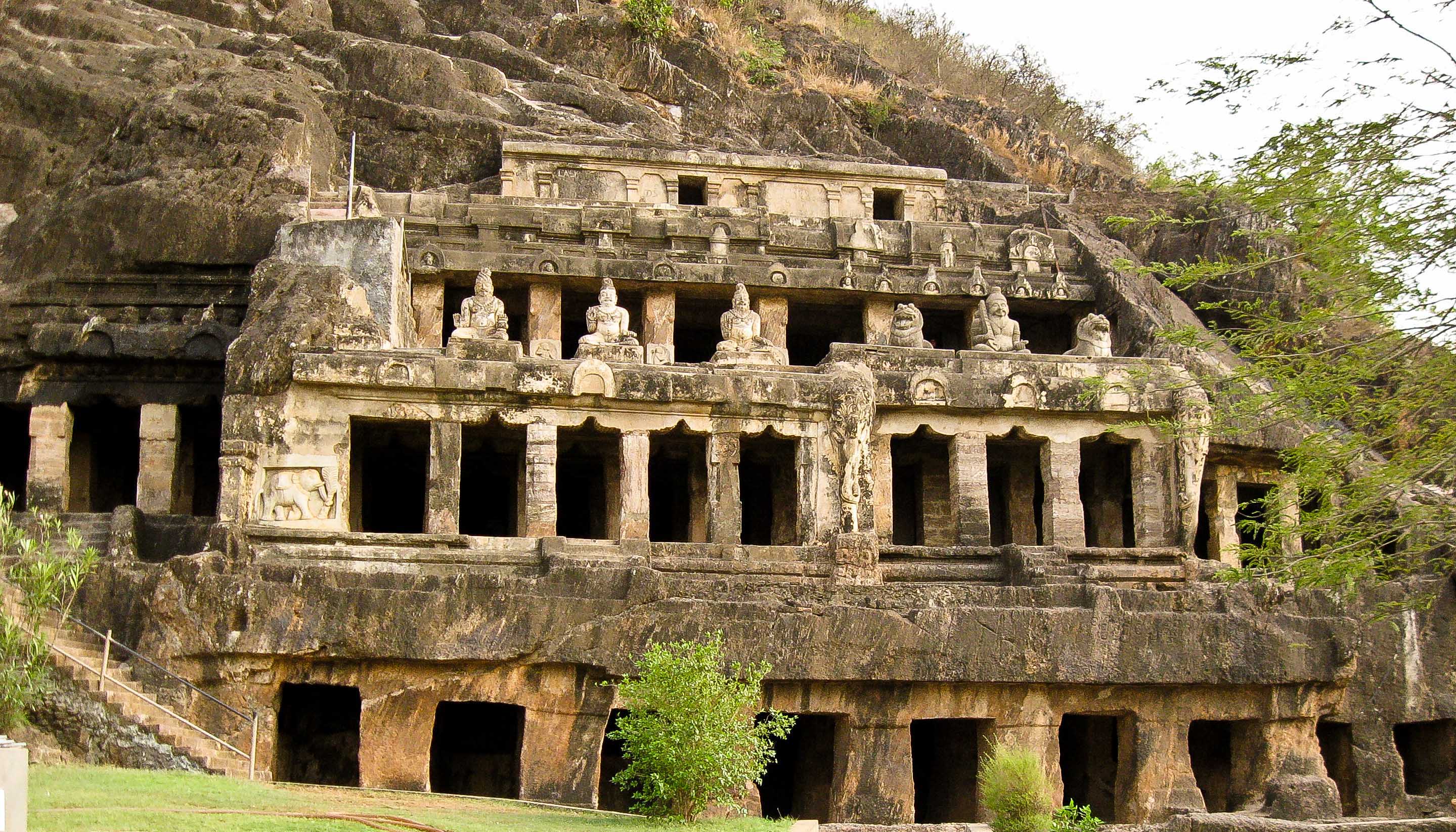
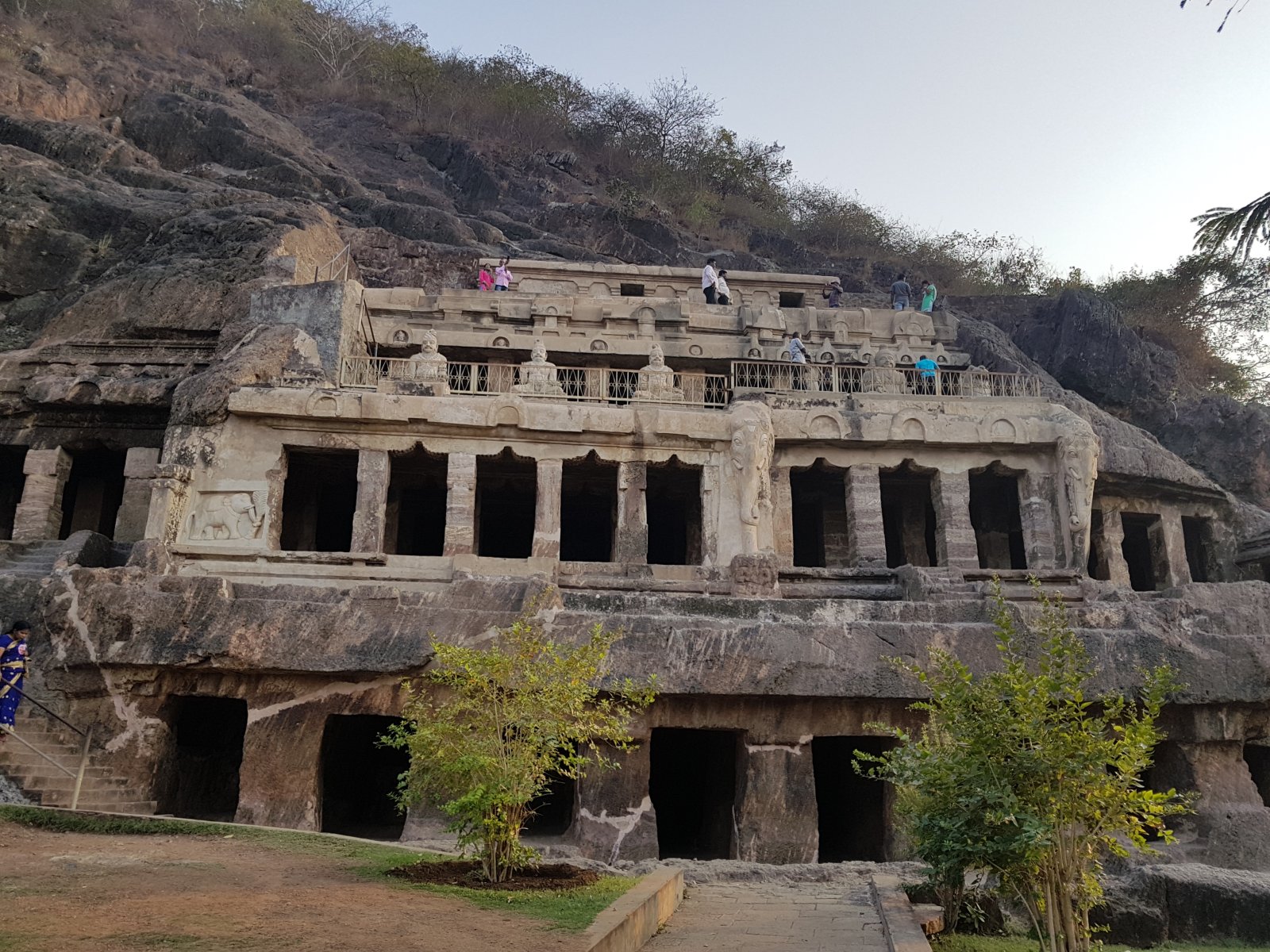
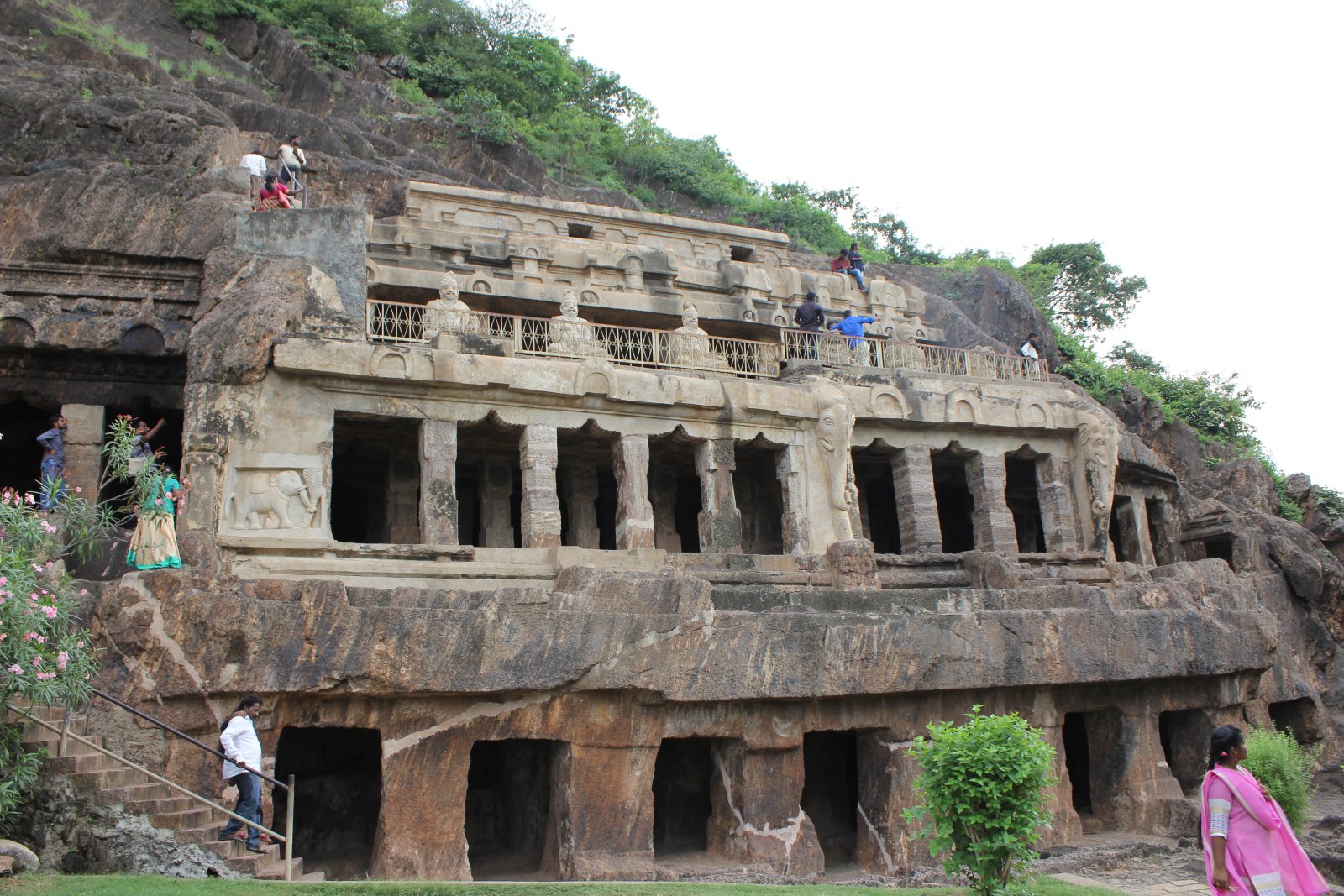
Nestled amidst the lush landscapes of Guntur, Andhra Pradesh, the Undavalli Caves stand as a stunning testament to India's ancient rock-cut architecture. Dating back to the 4th to 5th centuries, these caves were originally carved by the Vishnukundin kings and showcase a unique blend of Jain and Hindu influences. As you approach these monolithic structures, the intricate carvings and the grandiosity of the four-storey layout invite you to explore a world steeped in history.
### History and Origins The Undavalli Caves are believed to have been hewn from solid sandstone during the reign of the Vishnukundin dynasty, which flourished from AD 420 to AD 620. Originally Jain caves, they were later transformed into a Hindu temple, reflecting the religious transition in the region. An inscription found in the caves suggests that they were used as a monastic retreat for Jain monks before being repurposed for Hindu worship.
A significant historical event that marks the caves is their association with King Rudrasena II, who is credited with further enhancing their religious significance. The craftsmanship and design of the caves are indicative of the rich cultural milieu of ancient Andhra Pradesh, where art and spirituality intertwined seamlessly.
### Art and Architecture The architectural style of the Undavalli Caves is a remarkable example of rock-cut architecture, showcasing an intricate design that is both functional and aesthetically pleasing. The caves consist of several chambers, with the most notable being a large hall featuring a stunning reclining statue of Lord Vishnu, depicted as Anantapadmanabha. The statue is elegantly carved, with intricate details that highlight the skill of the artisans who worked on it.
The four-storey structure includes numerous smaller shrines and cells, adorned with elaborate carvings of deities, floral motifs, and geometric patterns that reflect the artistic trends of the period. The combination of natural light filtering through the cave openings and the cool interior creates a serene atmosphere, making it a perfect sanctuary for meditation and reflection.
### Local Culture and Traditions The cultural significance of the Undavalli Caves extends beyond their historical roots. The caves are a focal point for local devotees, especially during festivals dedicated to Lord Vishnu. One such festival is Vaikuntha Ekadasi, when devotees flock to the caves to offer prayers and seek blessings.
Local customs emphasize the caves' importance as a spiritual site, with rituals often performed by priests who guide visitors through the history and significance of the carvings. This blend of spirituality and community engagement enriches the cultural landscape of Guntur, making the caves a living part of the region's heritage.
### Gastronomy A visit to Guntur isn’t complete without indulging in its rich culinary offerings. The region is famous for its spicy cuisine, particularly the use of Guntur chili, which is renowned for its heat and flavor. Local dishes such as Pulihora (tamarind rice) and Gongura Pachadi (sorrel chutney) are must-tries, offering a taste of the region’s culinary traditions.
For those with a sweet tooth, Pootharekulu, a traditional rice paper sweet stuffed with a mix of jaggery and nuts, is a delightful treat. Pair your meals with Filter Coffee, a staple beverage that provides a perfect ending to any culinary journey in Andhra Pradesh.
### Lesser-Known Curiosities Despite the grandeur of the Undavalli Caves, many visitors overlook some fascinating details. For instance, the caves are home to a unique water tank, believed to have been used for ritualistic purposes. Additionally, the intricate carvings feature not only religious motifs but also scenes from daily life, providing a glimpse into the socio-cultural dynamics of the era.
One surprising story related to the caves is about the hidden chambers that some local legends claim still harbor treasures from the ancient kings. While unverified, this tale adds an air of mystery to the site, enticing curious explorers.
### Practical Visitor Information The best time to visit the Undavalli Caves is between October and March, when the weather is pleasant and conducive for exploration. The caves are easily accessible from Vijayawada, which is approximately 6 kilometers away, making it a convenient day trip.
When visiting, wear comfortable shoes as you will be navigating through uneven terrain and steep steps. Don’t forget to bring a camera to capture the magnificent sculptures and the stunning views from the hillside. Guided tours are available, offering deeper insights into the history and significance of the caves.
Exploring the Undavalli Caves is not just a journey through ancient architecture; it is an immersion into the rich tapestry of Indian history and culture. Plan your visit to experience this hidden gem in Guntur and uncover the stories that lie within its stone walls.
To enhance your visit, consider using the Secret World app to create a personalized itinerary that includes the best spots in Guntur.
