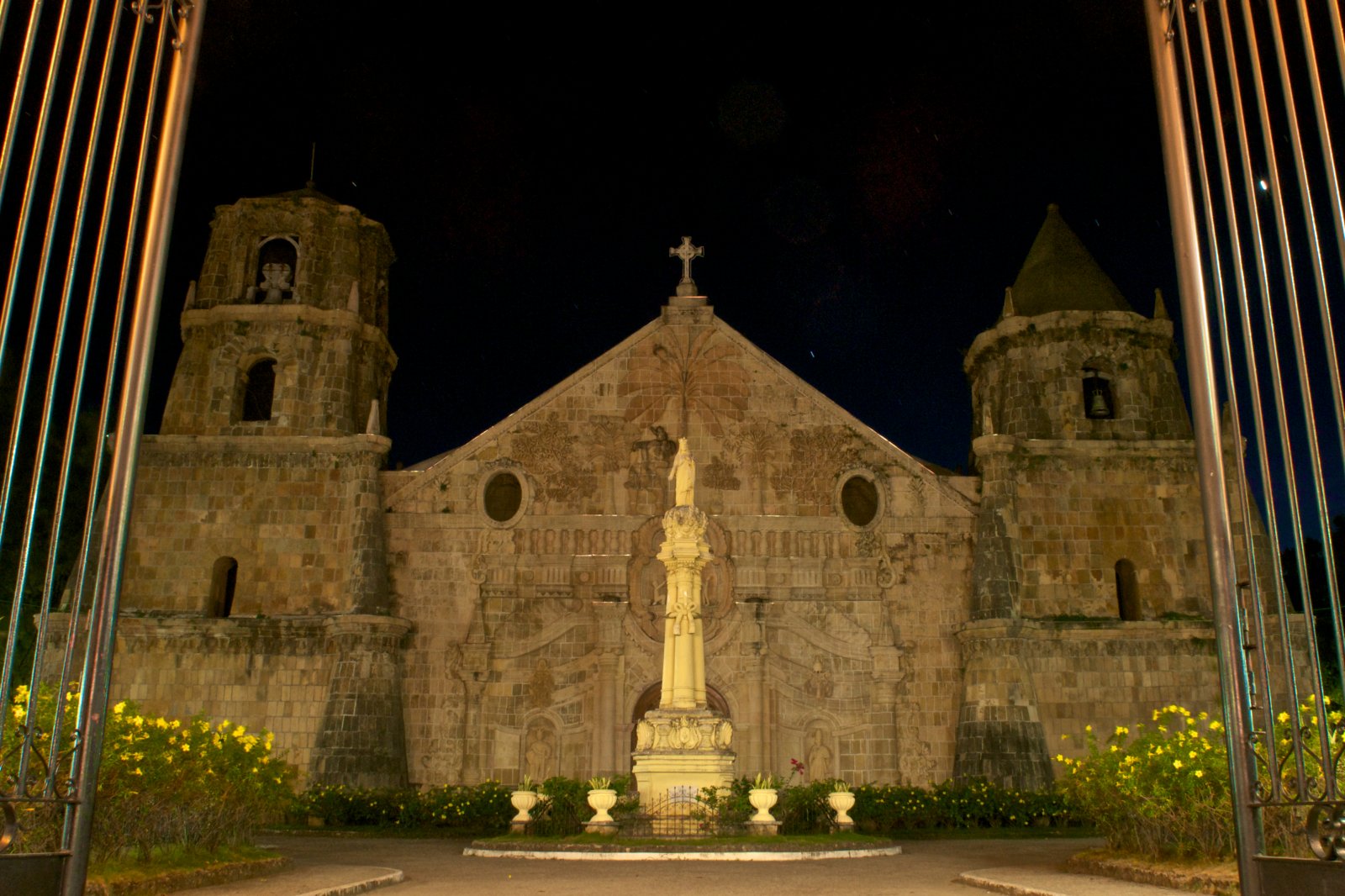


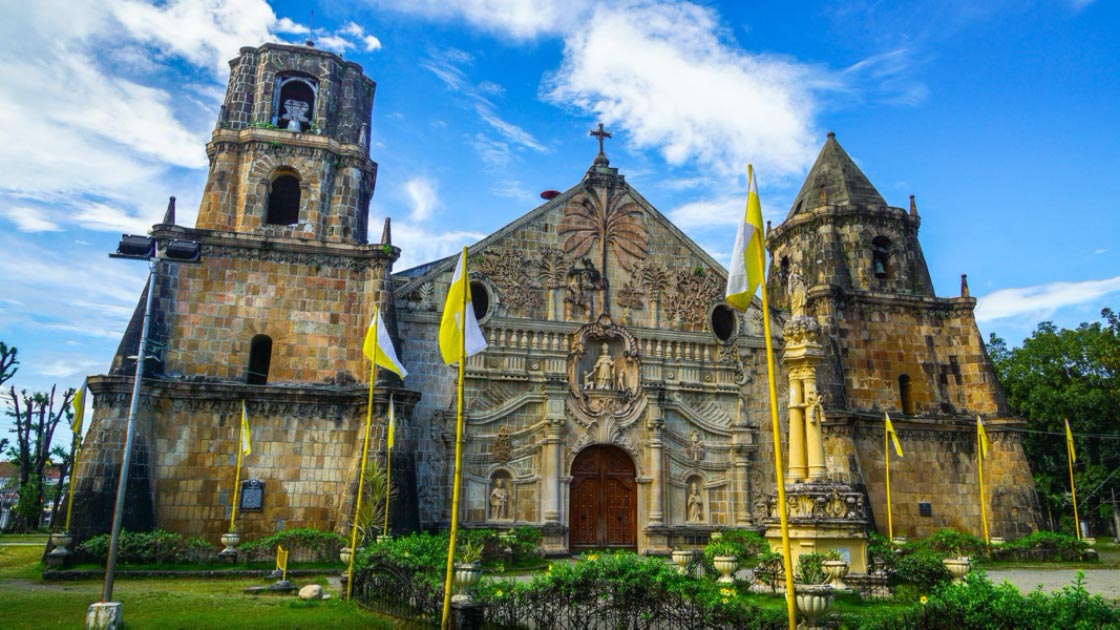
There are many important architectural and historic sites in the Philippines dating from the four centuries of Spanish occupation . Their influence is to be found in many areas, including the Baroque Churches, of which the Miagao Church is a superb example. Along with other similar churches, this has been granted the status of a UNESCO World Heritage site under the title of The Baroque Churches of the Philippines. Miagao Church was established not long after the Spanish colonization of the area in 1580. It was initially served by a visiting priest, but in the 1730s became a separate parish under the jurisdiction of the Augustinian Order, dedicated to Saint Thomas of Villanova. The first full-time parish priest was Father Fernando Camporredondo. A convent was later built near the church. As the Moro invasions became more frequent, the church and its members were in danger. These Muslim raiders from southern Philippines killed or enslaved any Christian that they found. The raids were so fierce that the town was forced to move. A new church was started in 1787 by laborers conscripted into the project by the Spanish. The new structure, which took 10 years to complete, was built on a hill overlooking the town and often acted as a fortress when the town was attacked. Local legend has it that there are secret passages in the church. In the late eighteenth and early nineteenth centuries, the town was often targeted by raiders. The church was both a place of worship, but also a fortress - not unusual at the time in this part of the Philippines. The church was badly damaged during the revolution of 1898 and had to be rebuilt. It was also damaged by a fire during the Second World War. The present church is the third one to have been built on the site and is faithful to the original design. It was restored in the 1960s and was declared a national shrine by the Philippine government. he church was built in a later Baroque style with elements of Romanesque and the color of yellowish-brown or ochre is a result of the adobe, coral, and limestone used in its construction. The church’s walls are 4.5 feet (1.4m) thick and its foundations are believed to be 18 feet (5.4m) deep, which provided solid foundations and protection for the local people during raids and invasions. The façade of the church is ornate, typical of the Baroque style, and dominated by a relief of a palm tree symbolizing the tree of life . A massive bas-relief on the front of St Thomas Villanova contains elements of Spanish, Arabic, Chinese, and the local culture, which makes it somewhat unusual and uniquely Filipino. The patron saint himself has place of honor above the main entrance to the church, while some of the features narrate the ordinary life of the local people. The church is flanked by two bell towers, the oldest of which dates from the eighteenth century and the other from the 19 th century. These towers also have thick walls and were used as watchtowers to defend the church agains