


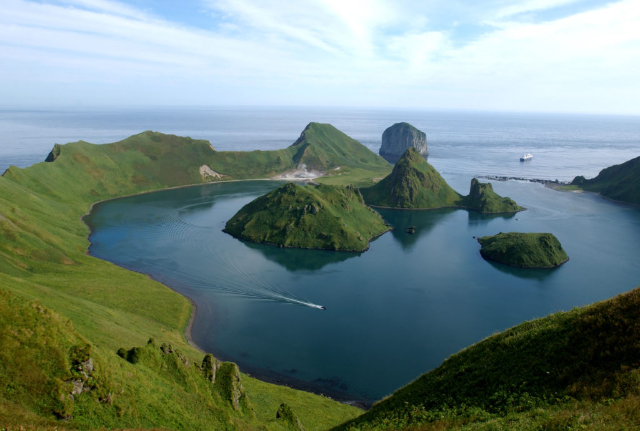
Rising dramatically from the frothy expanse of the Sea of Okhotsk, Urup Island is a remote jewel among the Kuril Islands, a chain stretching like a string of volcanic pearls between Russia and Japan. This uninhabited island, part of the Russian Federation, is shrouded in mist and mystery, offering a silent testament to the raw and untamed beauty of nature.
The history of Urup is as turbulent as the volcanic activity that formed it. Its name derives from the Ainu language, an indigenous people of the region, reflecting its ancient origins. The island was once a strategic point of contention between Russia and Japan, particularly during the 18th and 19th centuries. In 1855, the Treaty of Shimoda marked Urup as the southernmost island under Russian control, a decision that was a subject of dispute until the end of World War II. The scars of these historical conflicts still linger, with abandoned military installations dotting the landscape, silent witnesses to a bygone era.
While Urup lacks traditional architecture in the conventional sense, it is an artist's canvas, sculpted by natural forces. The island's dramatic cliffs and volcanic peaks are masterpieces of geological artistry. The towering Kutsugata-dake, Urup’s highest peak at 1,426 meters, offers breathtaking vistas of the surrounding seascape. The island's rugged terrain and lush vegetation create a living gallery that shifts with the seasons, offering a different palette of colors and textures with each visit.
Though uninhabited, Urup's cultural legacy is woven into the broader tapestry of the Kuril Islands. The Ainu, the island's original inhabitants, imbued the land with their spiritual traditions. Legends and folklore speak of the Kamui, or spirits, believed to inhabit the natural world, from the island's dense forests to its craggy shores. These stories, though rarely heard today, echo the deep connection between the Ainu and their environment, a relationship of respect and reverence.
As a land without permanent residents, Urup doesn't boast a local gastronomy scene. However, the surrounding waters are teeming with life, making it a paradise for seafood enthusiasts. The Sea of Okhotsk is known for its rich bounty of salmon, crabs, and sea urchins, delicacies that are prized both locally and internationally. Travelers visiting nearby inhabited islands often find these treasures of the sea served fresh, a taste of the ocean's abundance that defines the region's culinary heritage.
Urup is full of lesser-known curiosities that make it a fascinating destination for the intrepid explorer. One such curiosity is the island's role in the development of Sakhalin huskies, a breed of sled dog adapted to the harsh climates of the region. These dogs, though rare today, were once essential companions for navigating the Kuril's challenging landscapes. Additionally, Urup is a haven for wildlife, hosting an array of species from sea eagles to foxes, with the surrounding waters frequented by whales and dolphins.
For those who seek to visit this untouched wilderness, practical considerations are paramount. The best time to visit Urup is during the short summer months from June to August, when the weather is relatively mild and the seas are calmer. Access is typically by boat, with expeditions often arranged from the southern Kuril Islands or Hokkaido, Japan. Visitors should be prepared for the island's rugged conditions, bringing necessary supplies and camping gear, as there are no facilities on the island itself.
While Urup may not offer the comforts of more conventional destinations, it promises an experience of raw beauty and untamed nature. Those who venture here will find themselves stepping back in time, exploring a land that is as much a sanctuary for wildlife as it is a historical and cultural enigma. The island's allure lies in its seclusion and the stories whispered by the wind through its ancient, volcanic peaks.
