


Nestled within the lush landscape of the Yucatán Peninsula, Uxmal stands as a testament to the ingenuity and artistry of the ancient Maya civilization. Its name, meaning “built three times” in the Mayan language, reflects a history that spans centuries. Uxmal, a UNESCO World Heritage Site, is one of the finest preserved Pre-Columbian sites in Mexico, showcasing the architectural brilliance that flourished in the Puuc region between 600 and 900 A.D.

The origins of Uxmal are steeped in mystery, but it is believed to have been founded around the late Classic period of the Maya civilization. The site emerged as a significant political and economic center, likely due to its strategic location along trade routes. Uxmal flourished until around the 10th century, when it began to decline, as did many other Maya cities. Key historical events include its role in the Maya-Toltec interactions and the influence of the Chichén Itzá, which marked the shift from the Puuc architectural style to more central Mexican influences.
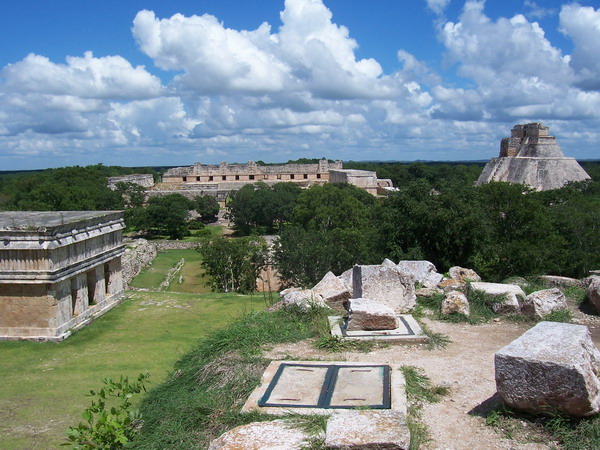
The architecture of Uxmal is a stunning representation of the Puuc style, characterized by elaborate stone mosaics, intricate carvings, and the use of soft limestone. Among the most iconic structures is the Pyramid of the Magician, a unique oval-shaped pyramid that towers over the site. Legend has it that the pyramid was built overnight by a dwarf who was a powerful sorcerer. Its steep steps and dazzling façade adorned with decorative stonework make it an awe-inspiring sight.

Equally impressive is the Governor’s Palace, an expansive structure that features a long façade adorned with ornate stone masks of the rain god Chac, symbolizing fertility and water. The artistry found in Uxmal's buildings not only reflects the technical skills of the Maya but also serves as a canvas for their cosmological beliefs and social hierarchies. The Nunnery Quadrangle, a complex of four buildings arranged around a central courtyard, is decorated with intricate stonework that depicts various deities and mythological scenes, showcasing the significance of religion in Maya daily life.
Local culture in Uxmal is deeply rooted in the traditions of the Maya people, who have preserved many of their customs over the centuries. Festivals such as Día de los Muertos (Day of the Dead) and Hanal Pixán (a traditional Maya feast for the dead) are celebrated with vibrant ceremonies that honor ancestors. The Yucatec Maya still engage in traditional practices, such as weaving and pottery, which reflect their rich heritage. Visitors may also encounter local markets where artisans sell handmade crafts, allowing for a deeper connection with the enduring Maya culture.
When it comes to gastronomy, the Yucatán Peninsula is renowned for its distinctive flavors and dishes. Local specialties such as cochinita pibil (slow-roasted marinated pork), sopes (thick corn tortillas topped with meat and vegetables), and poc chuc (grilled pork marinated in citrus) are must-tries. Pair these with a refreshing glass of agua de chaya, a drink made from the nutritious chaya plant, or indulge in the local honey, celebrated for its unique flavor due to the diverse flora of the region.
While many tourists flock to the more prominent structures, lesser-known curiosities of Uxmal offer hidden gems. One such detail is the sacbe, or raised white stone road, which connects Uxmal to nearby sites like Kabah and Sayil. These ancient pathways not only facilitated trade and communication but also highlight the Maya's sophisticated urban planning. Additionally, the Nunnery Quadrangle is said to have been a hub of education and governance, providing a glimpse into the social structure of the Maya elite.
For those planning a visit, the best time to explore Uxmal is during the cooler months, from November to March, when temperatures are more comfortable for outdoor exploration. Arriving early in the morning allows visitors to experience the tranquility of the site before the crowds descend. Don't miss the chance to climb the Pyramid of the Magician for sweeping views of the surrounding landscape, and take your time to appreciate the intricate details of the stone carvings that adorn the structures.
As you wander through the ancient pathways and marvel at the impressive architecture, you’ll find that Uxmal is not just a site of ruins but a living testament to the enduring spirit of the Maya civilization. To make the most of your journey, consider using the Secret World app to create a personalized itinerary that captures the essence of Uxmal and its neighboring wonders.
