
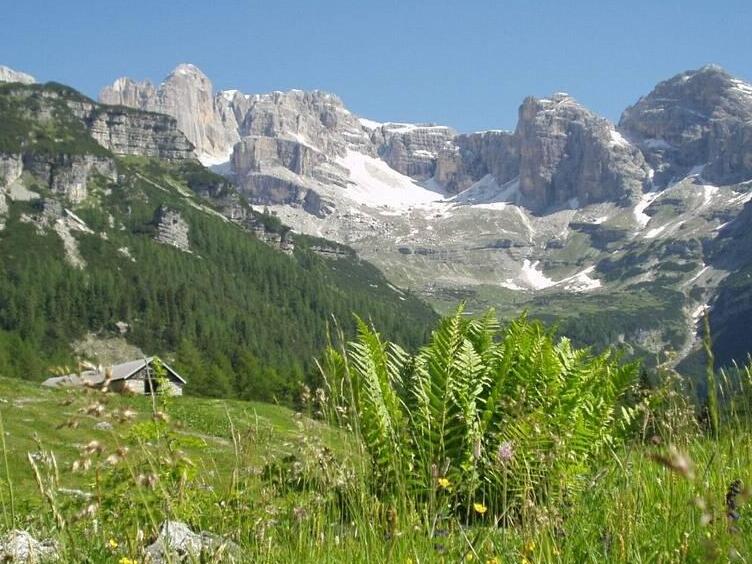

Nestled in the heart of the Brenta Dolomites, Val d'Ambiez is a spectacular amphitheater of nature that captivates visitors with its stunning landscapes and rich geological history. This enchanting valley serves as a gateway to some of the most breathtaking views in Italy, dominated by the majestic Cima Tosa, which rises to a staggering 3,173 meters.

The journey through Val d'Ambiez is steeped in history, tracing back to ancient times when the area was shaped by geological forces that would create the Dolomites we know today. Millions of years ago, this region was submerged under a tropical sea, home to diverse marine life. Fossilized remains of megalodonts—massive mollusks—can still be found, offering a glimpse into the ancient past. The valley's geological significance is recognized by both scientists and nature enthusiasts, making it a site of exploration and education.
Architecturally, the valley is characterized by traditional Tyrolean structures, particularly the charming malghe (alpine huts) of Prato and Senaso. These wooden structures, often adorned with intricate carvings, reflect the local building styles that harmonize with the surrounding landscape. The Cacciatore Refuge, situated at 1,821 meters, is not only a resting point for hikers but also a celebrated example of mountain hospitality, serving rustic dishes that highlight the local culinary tradition.
Local culture thrives in Val d'Ambiez, deeply intertwined with its agrarian roots. The valley is home to various festivals that celebrate the changing seasons, agricultural harvests, and traditional crafts. One notable event is the Sagra di San Lorenzo, held in the nearby village of San Lorenzo in Banale, where visitors can enjoy folk music, traditional dances, and artisanal market stalls. This village, recognized as one of the most beautiful villages in Italy, features narrow cobblestone streets and quaint squares, offering a perfect backdrop for cultural immersion.
When it comes to gastronomy, Val d'Ambiez boasts a rich variety of local delicacies. Typical dishes often include polenta, a staple made from cornmeal, and canederli, savory dumplings that are a beloved part of the regional cuisine. Local cheeses, particularly Puzzone di Moena, are crafted using traditional methods and can be sampled in local eateries. Pair your meal with a glass of Teroldego, a robust red wine that embodies the character of the Trentino region.
Hidden within the valley are lesser-known curiosities that add to its allure. For instance, the “garden of fossils” along the trail to the Agostini Refuge (2,450 m) is not just a geological wonder; it holds the history of a time when this area thrived under a warm sea. Additionally, visitors may stumble upon ancient rock carvings, remnants of prehistoric human activity, etched into the cliffs that surround the valley. These hidden gems often go unnoticed by the casual traveler but offer a deeper understanding of the region's rich tapestry of life.
The best time to visit Val d'Ambiez is during the summer months, from late June to early September, when the trails are clear and the landscape is alive with vibrant colors and blooming wildflowers. Hiking is the primary activity, with well-marked paths that cater to various skill levels. Be sure to pack a camera, as the photogenic vistas from the refuges are nothing short of spectacular.
For those planning a visit, it’s advisable to check weather conditions in advance, as mountain weather can be unpredictable. Also, consider spending a night at one of the mountain huts to fully immerse yourself in the tranquil beauty of the Dolomites and experience the magic of sunrise over the peaks.
Incorporating these elements into your travel itinerary will ensure that your journey to Val d'Ambiez is not just a visit but a profound experience. To make the most of your adventure and discover personalized highlights, consider using the Secret World app for tailored recommendations.


