
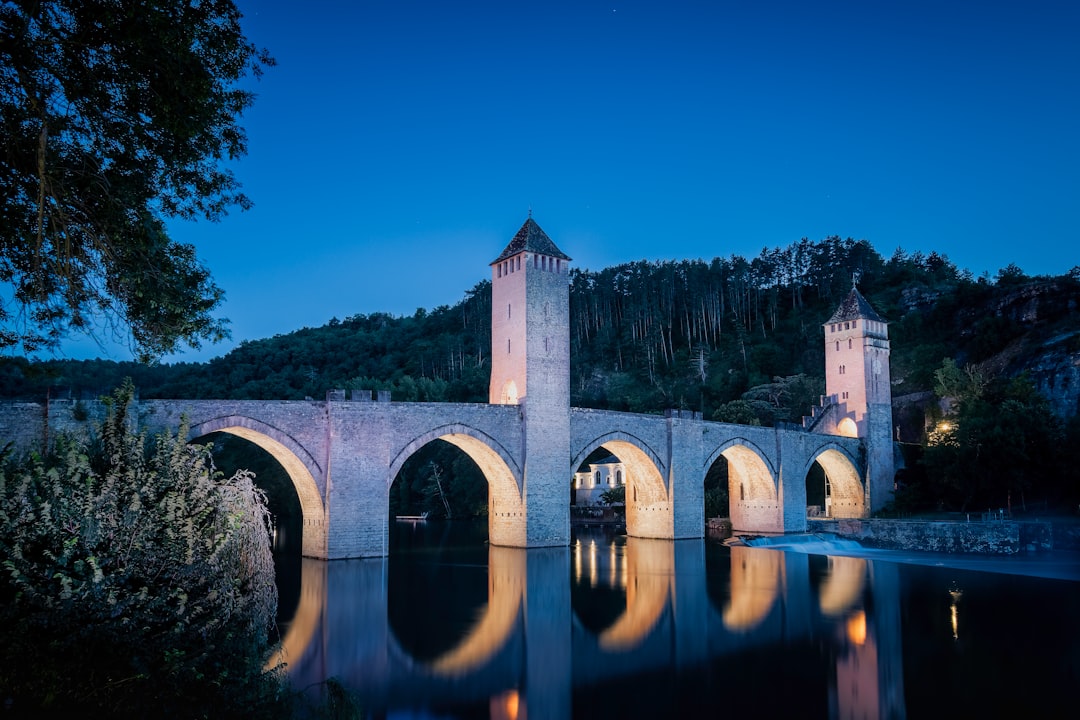

Three Gothic towers rise above the green water of the Lot like stone sentinels that have never stopped doing their job. The Valentré Bridge in Cahors is unlike any other bridge in Europe: it is not just a simple crossing, but a complete fortress built directly on the water, with defensive gates, battlements, and towers that reach forty meters in height. Yet, despite being one of the best-preserved medieval bridges on the continent, international tourists almost completely ignore it, leaving it to the pilgrims of the Camino de Santiago and the French who know their heritage.
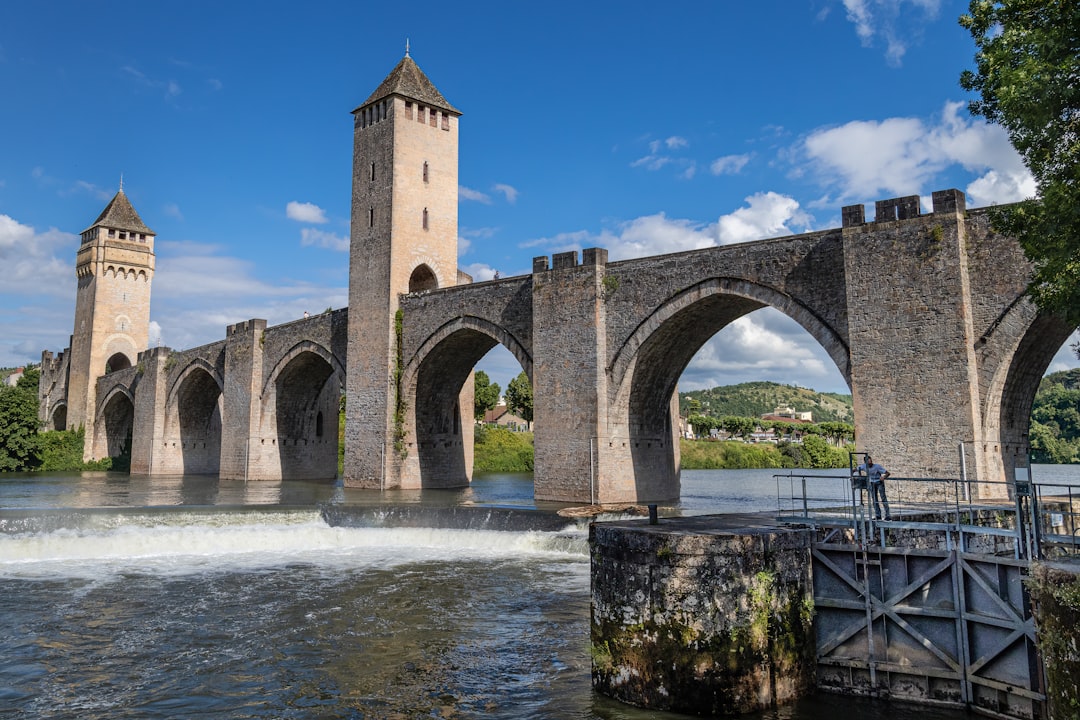
Cahors is a city in the Lot department, in the southwest of France, nestled in a bend of the river that almost completely surrounds it. It is not a postcard destination in the conventional sense of the term: it does not have the fame of Carcassonne nor the visibility of Avignon. But it is precisely this tourist marginality that is its greatest gift. The Valentré Bridge can be visited without queues, without crowds, often almost in solitude, with all the time in the world to understand what lies before you.
A construction that lasted almost a century

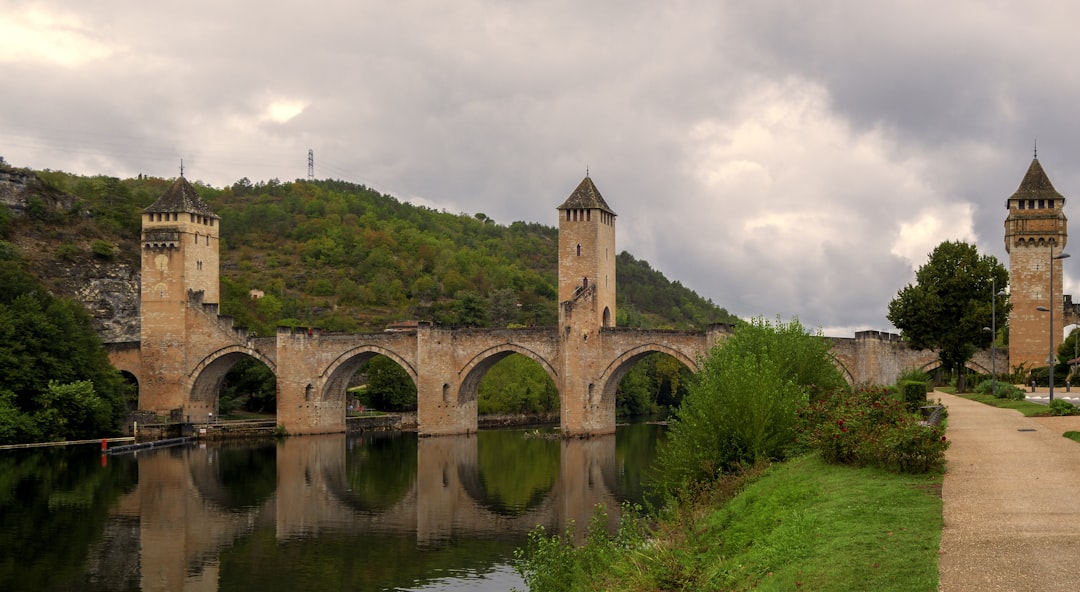
The works for the Valentré Bridge began in 1308, during a period when Cahors was one of the richest cities in France, home to bankers and merchants who even financed the crown. The bridge was designed from the beginning with both military and roadway functions: six pointed arches supported by massive pillars, three strategically positioned watchtowers along the route, and gates that could be closed to turn the entire crossing into a trap for enemies. The construction lasted for decades, and the bridge was completed in the second half of the fourteenth century.
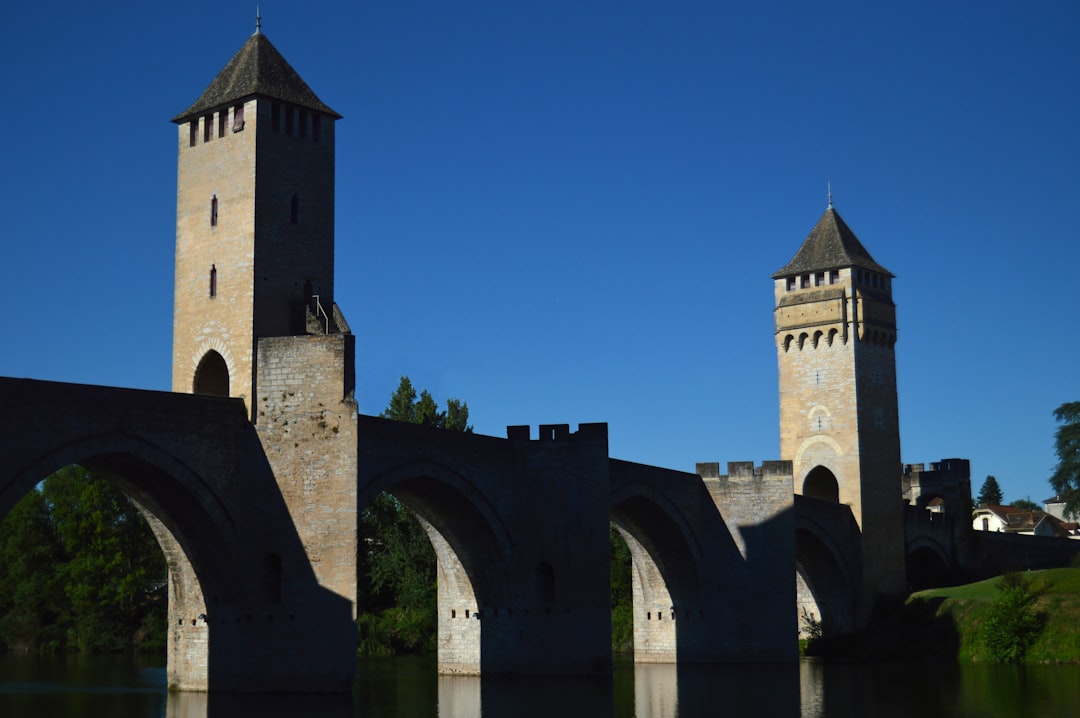
What strikes you when observing it up close is the architectural coherence: despite the centuries and various restoration interventions, including a significant one in the nineteenth century overseen by architect Paul Gout, the structure maintains immediate readability. It is clear where the tower ends and where the walkway begins, how the closing systems worked, and why the arrow slits are positioned exactly where they are. It is a manual of medieval military architecture that can be read while walking on it.
The Devil in the Keystone
There is a local legend that deserves to be sought on site. According to the popular tradition of Cahors, during the construction of the bridge, the master builder made a pact with the devil to speed up the work: in exchange for his soul, the devil would bring the necessary water for the construction sites. When the master builder tried to deceive him by handing him a sieve instead of a bucket, the devil took revenge by removing the last stone laid in the central tower every night, preventing its completion. In the keystone of that tower, during the nineteenth-century restoration, a small demonic figure was carved clinging to the stone: look for it while looking up as you cross the central tower. It is a small detail, easy to miss, but it tells how medieval communities explained construction difficulties.
This figure is not a random decorative addition: it was deliberately included by Gout during the 1879 restoration as an ironic homage to the legend, and since then it has become an integral part of the monument's identity. It is one of the rare cases where a nineteenth-century restoration has enriched a site instead of impoverishing it.
Come visit it the right way
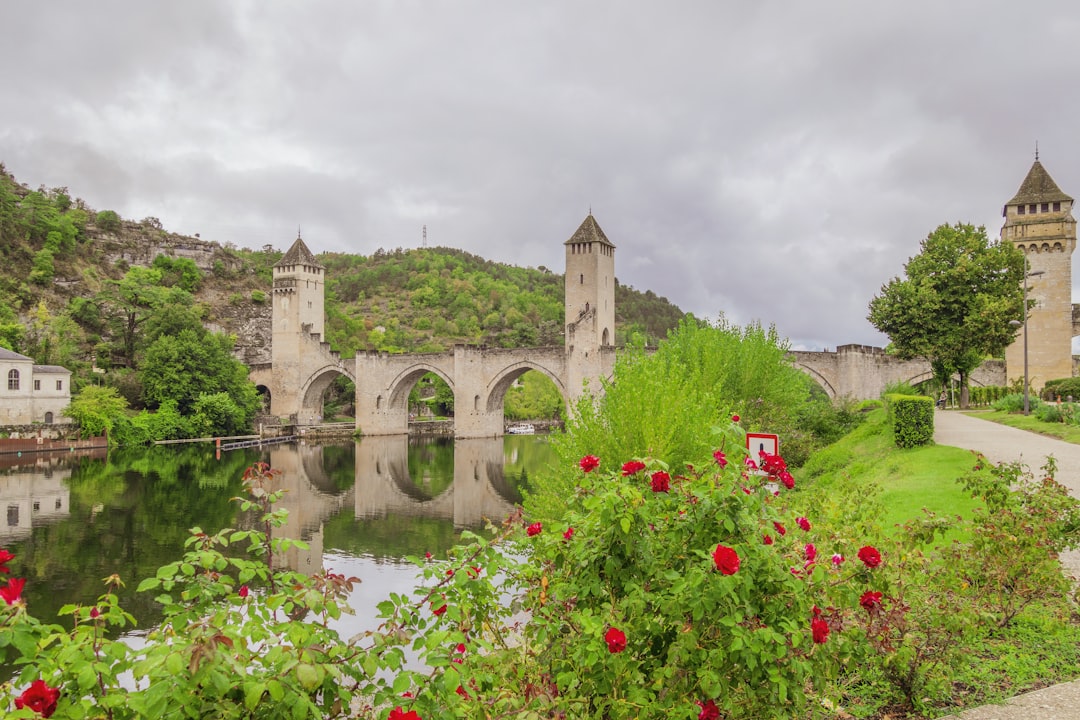
The Valentré Bridge is freely accessible and can be walked at any time of the day. A visit to the structure alone takes about thirty minutes, but it is worth dedicating at least double that time to walk around the banks of the Lot and observe the bridge from both sides. The best time is early morning or late afternoon, when the slanting light enhances the volumes of the towers and the reflection on the water is clearer. In summer, the direct midday light flattens the shapes and makes photographs less effective.
To reach Cahors by train, you depart from Toulouse, with a direct connection that takes about an hour and a quarter. The station is just a few minutes' walk from the historic center, and the bridge can be reached in about fifteen minutes on foot from the station itself. If arriving by car, the most convenient parking is located on the west bank of the river, right at the foot of the bridge. Cahors deserves at least one night: the city has a compact medieval center with the Cathedral of Saint-Étienne, also from the 12th century, and a local wine production — the Cahors AOC, an intense red made from Malbec — that pairs perfectly with a quiet evening by the Lot.
Why the trip is worth it
The Valentré Bridge does not need to be the most famous to be among the most extraordinary. Its strength lies in its integrity: it is not a ruin, it is not a reconstruction, it is not a backdrop for commercial events. It is a bridge that has crossed seven centuries remaining essentially what it was, in a city that has chosen not to transform into a theme park. For those traveling in search of places that require a careful look instead of a quick selfie, Cahors is exactly the kind of detour that is remembered for years.


