
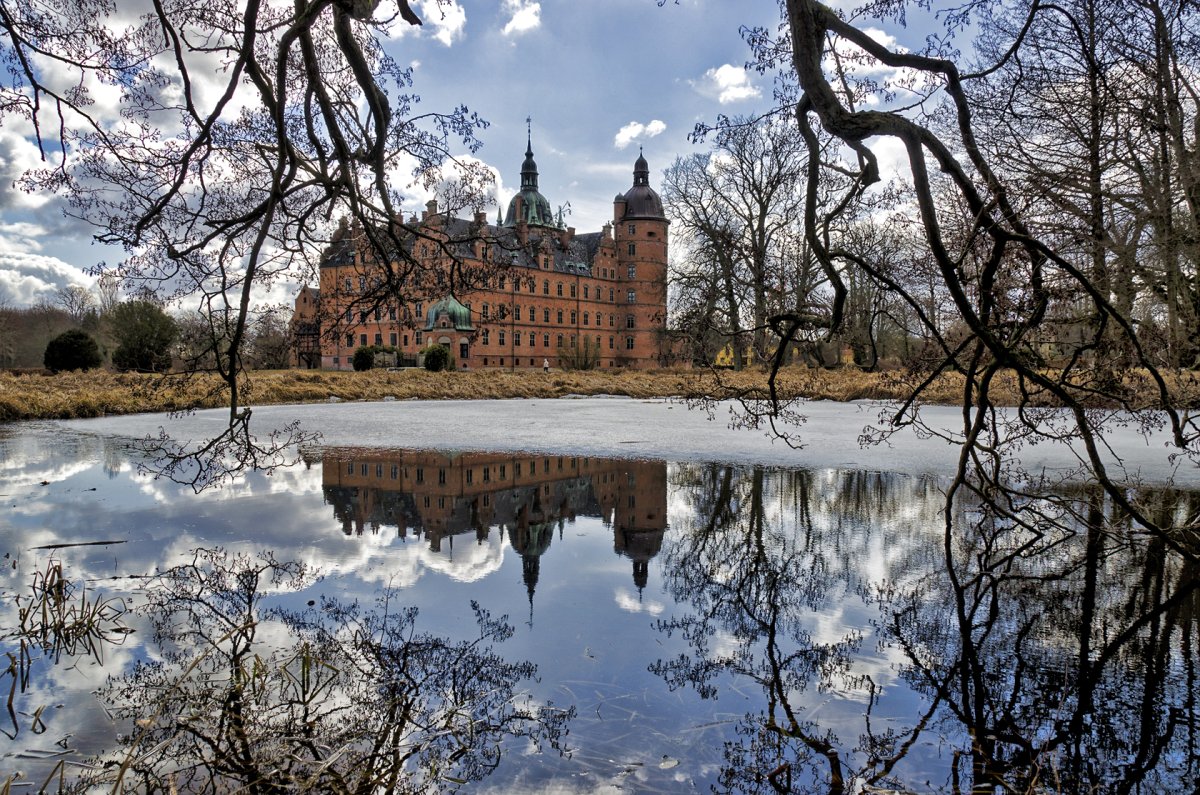

Red brick towers reflecting in the still water of the moat, deer grazing among the trees of the surrounding park, and a silence interrupted only by the wind among the branches. Vallø Slot, located a few kilometers from Køge in eastern Denmark, is one of those places that strikes you before you even understand exactly what you are looking at. It is not a postcard castle built to impress tourists: it is a building that has truly lived, that has hosted real people, and that still bears the marks of centuries of history.
What makes this castle particularly unusual is its historical function: for almost two centuries, Vallø Slot was a residence reserved exclusively for unmarried noblewomen. Queen Sofia Magdalena of Denmark transformed the castle into a foundation for ladies of the aristocracy in 1738, and that purpose remained active until the 20th century. Even today, the Vallø Stift foundation manages the property, and some residents live within the complex, giving the place a unique atmosphere — neither a museum nor a hotel, but something in between and hard to classify.
Architecture: bricks, towers, and Renaissance proportions
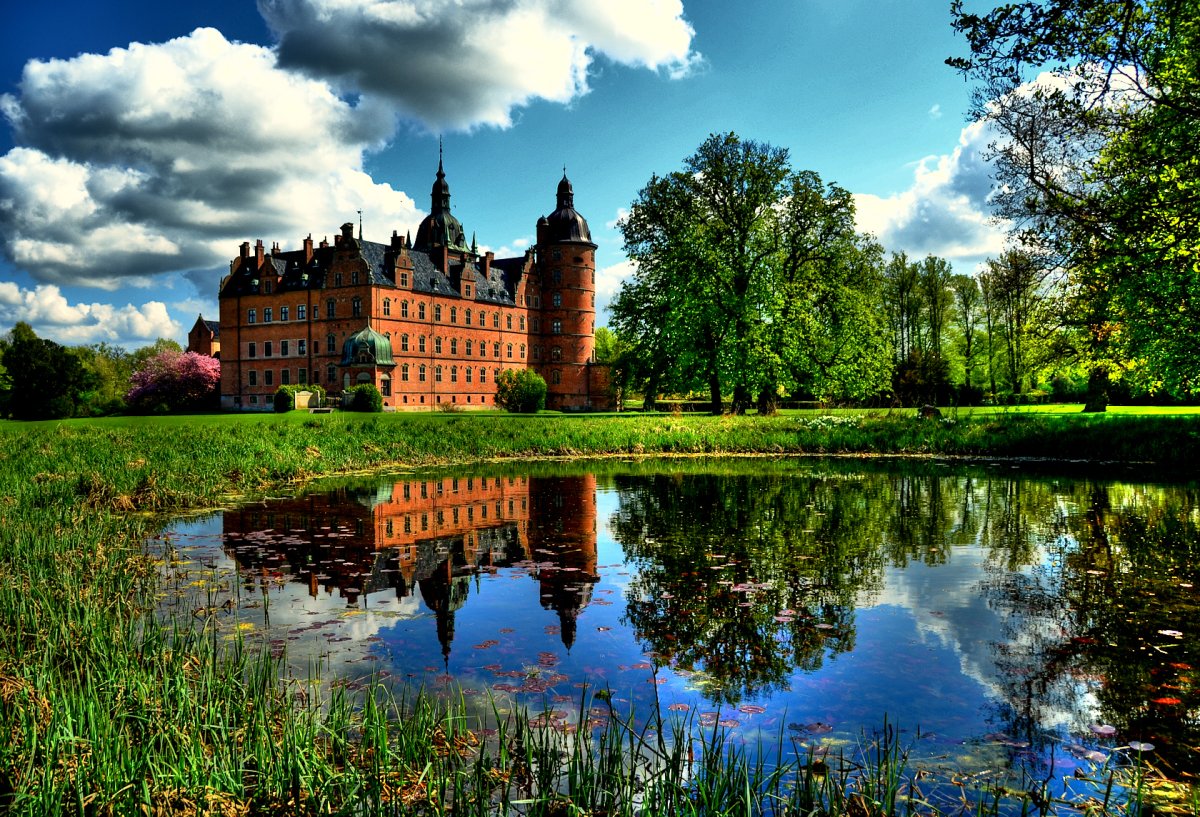
The castle in its current form dates mainly back to the 16th century, with significant interventions and reconstructions occurring in the following centuries. The structure is built of red bricks, a typical material of Nordic architecture of the period, and features two round towers that rise at the corners of the main facade. These towers, with their conical copper roofs now turned green, are the most photographed element of the castle and the one that is immediately recognizable in images. The moat surrounding the main building is still full of water, and the reflection of the towers on the surface of the moat creates a visual effect that completely changes depending on the light and the season.
Those approaching the entrance can closely observe the quality of the brick masonry, with decorative details that reveal the construction care of the Renaissance era. The access portal and the bridge that crosses the moat are privileged observation points to understand the proportions of the entire complex. The interior of the castle chapel, which also dates back to the original historical period, preserves decorative elements and period furnishings that deserve special attention.
The deer park and the gardens
Surrounding the castle is a large park that hosts a population of deer in monitored freedom. Walking among these animals, accustomed to human presence but not domesticated, is an experience that many visitors remember as the most memorable of the entire visit. The deer move freely among tall trees, and at certain times of the day — especially early in the morning and late in the afternoon — they approach the paths without showing particular signs of distrust.
The formal gardens near the castle follow a more orderly geometry, with trimmed hedges and flower beds that reflect the landscaping tastes of past centuries. The entire park and gardens are freely accessible to visitors, which makes Vallø Slot a particularly interesting destination even for those traveling on a limited budget. A visit to the park typically takes between an hour and a half and two hours to be enjoyed at a leisurely pace.
How to get there and when to visit
Vallø Slot is located about 5 kilometers from Køge, a city accessible by train from Copenhagen in less than an hour. From Køge, it is possible to reach the castle by bicycle, following well-marked bike paths — a solution that many local visitors prefer. Alternatively, you can arrive by car: parking near the castle is available and generally does not have overcrowding issues.
The best season to visit Vallø Slot is late spring or early summer, when the foliage is green and the moat reflects the colors of the surrounding vegetation. In autumn, the tones of the park offer a completely different atmosphere, with the leaves changing color around the red towers. It is advisable to avoid the days immediately following heavy rains, when the park paths can become muddy and difficult to navigate. Being a place almost completely ignored by international tourism, there is no need to worry about queues or overcrowding at any time of the year.
A place off the usual circuits
Vallø Slot does not appear in the main tourist guides dedicated to Denmark, and this absence is perhaps its greatest advantage. Those visiting Copenhagen and wanting to dedicate half a day to something completely different from the usual circuits find here a concrete alternative. It is not a castle set up for tourists with guided tours and souvenir shops: it is a place that still lives, with its own internal logic, and that welcomes visitors without transforming for them.
Bringing water and something to eat is advisable, as the dining facilities in the immediate vicinity of the castle are limited. With this small precaution, a visit to Vallø Slot can turn into one of the most peaceful and visually satisfying experiences that Denmark has to offer to those who know where to look.


