
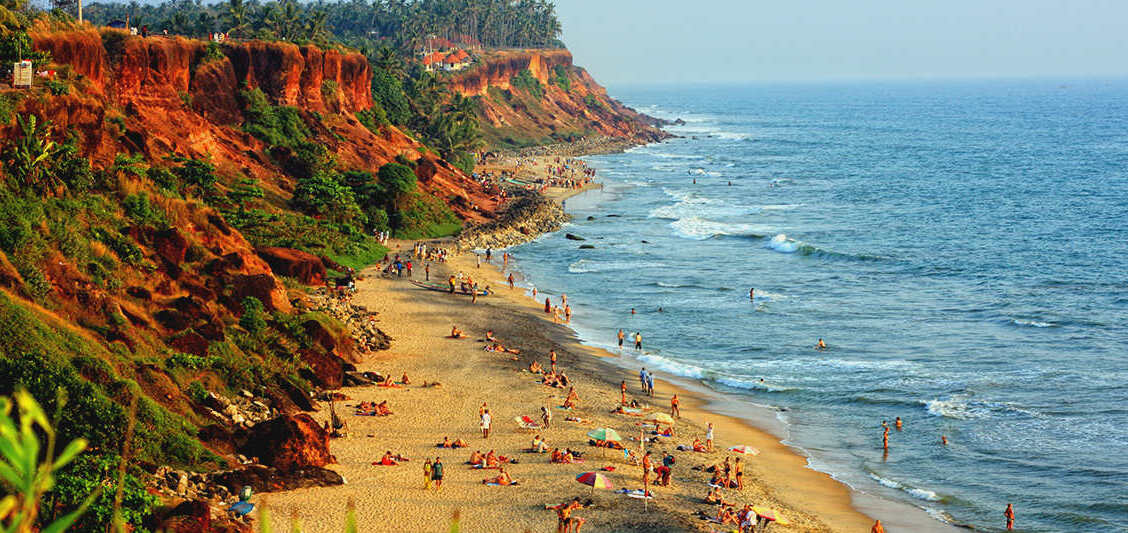

Varkala Beach, nestled along the Arabian Sea in the enchanting state of Kerala, beckons travelers with its stunning cliffs and serene waters. Known locally as Papanasham Beach, it offers more than just breathtaking views; it promises spiritual renewal. Legend has it that a dip in its waters can absolve sins, a belief that has drawn pilgrims and travelers for centuries.

The history of Varkala is steeped in mythology and religion. The beach is intrinsically linked to the ancient Janardhanaswamy Temple, a 2,000-year-old shrine that stands as a testament to the town's rich spiritual heritage. The temple, dedicated to Lord Vishnu, is a focal point for the annual Arattu festival, attracting devotees from across India. Historically, Varkala served as a coastal trading hub and a center for Ayurvedic treatments, with its natural springs believed to possess medicinal properties.
Architecturally, Varkala is a blend of classical Kerala style and colonial influences. The Janardhanaswamy Temple showcases traditional Kerala architecture with its sloping roofs and intricately carved wooden structures. The temple's ancient bell, said to have been retrieved from a shipwreck, adds a layer of maritime history to the site. Beyond religious architecture, the cliffs themselves are a natural masterpiece, with their unique sedimentary formations offering a stunning backdrop for artists and photographers alike.

Culturally, Varkala is a microcosm of Kerala's vibrant traditions. The locals celebrate a myriad of festivals, with Onam and Vishu being the most prominent. During these festivals, the town comes alive with spectacular boat races, traditional dances like Kathakali, and vibrant floral decorations known as Pookalam. This cultural tapestry is woven with age-old customs, such as the ritualistic Shraadham, performed on the beach to honor ancestors.
When it comes to gastronomy, Varkala offers a delightful array of flavors. Seafood is a staple, with fresh catches like karimeen (pearl spot fish) and prawns prepared in aromatic spices. Don’t miss trying the Sadya, a traditional feast served on a banana leaf, featuring a variety of vegetarian dishes, each bursting with the flavors of coconut, curry leaves, and mustard seeds. Refreshing drinks like tender coconut water and sambharam (spiced buttermilk) are perfect for quenching your thirst in the coastal heat.
For those seeking lesser-known curiosities, Varkala has its share of hidden gems. The Varkala Tunnel, a 924-meter long waterway built in the 19th century, is a feat of engineering that once served as a crucial passage for trading vessels. Another intriguing spot is the Sivagiri Mutt, the final resting place of the social reformer Sree Narayana Guru, whose teachings on equality and spiritual enlightenment left a lasting impact on Kerala's society.
Visitors should plan their trip during the cooler months from November to February. This period offers pleasant weather and calm seas, ideal for both beach lounging and adventurous activities like paragliding. While in Varkala, take a stroll along the cliff-top path for panoramic views of the sunset, a sight that truly encapsulates the essence of this coastal paradise.
To make the most of your visit, immerse yourself in the local rhythm. Engage with the artisans selling handmade crafts along the beach, partake in an early morning yoga session on the cliffs, or simply lose yourself in the tranquil sound of waves crashing against the rocks. Varkala Beach is more than just a destination; it is a journey into the heart of Kerala's cultural and natural beauty.


