
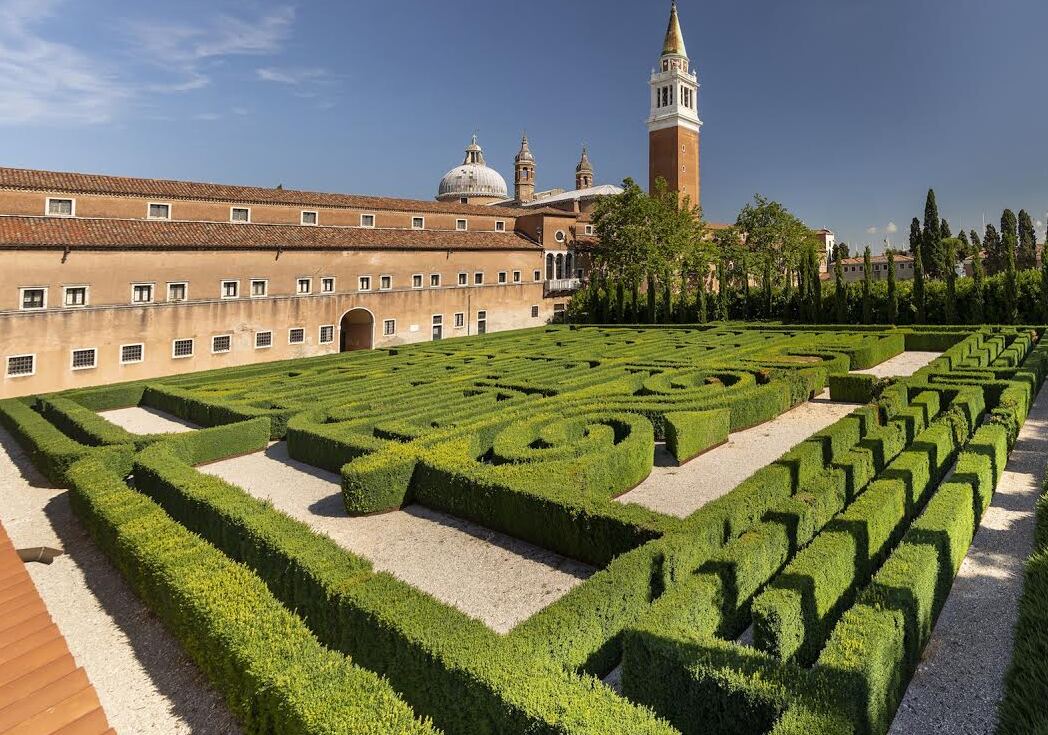

In the heart of Venice, a city renowned for its canals and artistry, lies a hidden gem that intertwines literature with landscape—the Borges Labyrinth. Conceived in 2011 by the English architect Randoll Coate, this intricate maze was commissioned by Maria Kodama, the widow of the celebrated Argentine writer Jorge Luis Borges. It stands as a tribute to Borges’ profound affection for Venice and his literary legacy, particularly drawing inspiration from his enigmatic story, “The Garden of Forking Paths.” Nestled within the Giardino della Marinaressa, the labyrinth comprises over 3,200 boxwood plants, meticulously arranged to symbolize the delicate interplay of choices and paths in Borges' narratives. Each hedge stands approximately 90 centimeters tall, inviting visitors to explore its winding routes that, from above, resemble an open book, spelling out the name 'Borges' adorned with symbols that echo his literary works—a stick, mirrors, two hourglasses, a gigantic question mark, the figure of a tiger, and the initials of his beloved wife.
History and Origins Venice, a city birthed from the marshlands of the Adriatic in the 5th century, has always been a canvas of rich stories and vibrant cultures. While the labyrinth is a modern addition, its very essence resonates with the city’s historical tapestry. Borges himself visited Venice multiple times throughout his life, enchanted by its timeless beauty, intricate alleys, and the philosophical depths it inspired. The decision to craft this labyrinth in 2011 was a poetic gesture of remembrance, celebrating not just Borges' love for the city but also his profound influence on literature, making it a living tribute nestled within the historical context of Venice.
Art and Architecture The architecture of the Borges Labyrinth reflects a harmonious blend of nature and intellect. Coate’s design is emblematic of Borges' literary themes—labyrinths, mirrors, and the nature of reality. The hedge maze itself serves as a metaphor for the complexities of choice and time, central motifs in Borges’ works. Visitors can find artistic installations scattered throughout, including mirrors that reflect the maze and its visitors, creating an immersive experience that feels both personal and universal. The labyrinth is not merely a physical space; it’s an invitation to ponder Borges’ literary philosophy.
Local Culture and Traditions Venice is a city steeped in tradition, celebrated for its vibrant festivals such as Carnevale, where masked revelers fill the streets with an air of mystery reminiscent of Borges’ themes. The labyrinth, with its intricate paths, draws parallels to Venice's own winding streets and canals, embodying the city’s spirit of exploration and discovery. Local customs, such as the art of glassblowing and the production of Venetian masks, add layers to the cultural landscape, often reflected in Borges’ intricate narrative style.
Gastronomy No visit to Venice is complete without indulging in its culinary delights. The city's gastronomy features cicchetti, small snacks served in local bacari, and sarde in saor, a sweet-and-sour sardine dish that harkens back to medieval times. Pair these with a glass of Prosecco or a traditional Bellini, and you’re tasting the essence of Venetian culture. The Borges Labyrinth, while not a dining destination, can serve as a perfect backdrop for a picnic featuring local delicacies after a day of exploration.
Lesser-Known Curiosities Many visitors to Venice might overlook the Borges Labyrinth, often drawn to the grandiose sites like St. Mark's Basilica or the Rialto Bridge. However, this labyrinth offers a unique opportunity to engage with literature in a way that few tourist attractions do. Notably, the mirrors within the maze serve a dual purpose: as a reflective surface for self-discovery and as a nod to Borges’ fascination with duality and perception. Additionally, the labyrinth is a sanctuary for local wildlife, including various birds that can often be spotted flitting through the hedges, adding a touch of life to this literary escape.
Practical Visitor Information The best time to visit the Borges Labyrinth is during the spring and early autumn months when the weather in Venice is mild, and the gardens are in full bloom. Early mornings or late afternoons are ideal for avoiding the crowds and immersing yourself in the serene atmosphere. Visitors are encouraged to take a moment to ponder the symbols embedded within the maze, each telling a story that resonates with Borges' literary genius. For those wishing to capture the labyrinth's essence, a camera is essential to document the interplay of light and shadow within the verdant walls.
As you wander through this enchanting maze, consider how it reflects the choices we make in our own lives, much like the paths Borges described. For a tailored exploration of Venice, you might find it helpful to use the Secret World app to create a personalized itinerary that perfectly suits your interests.


