
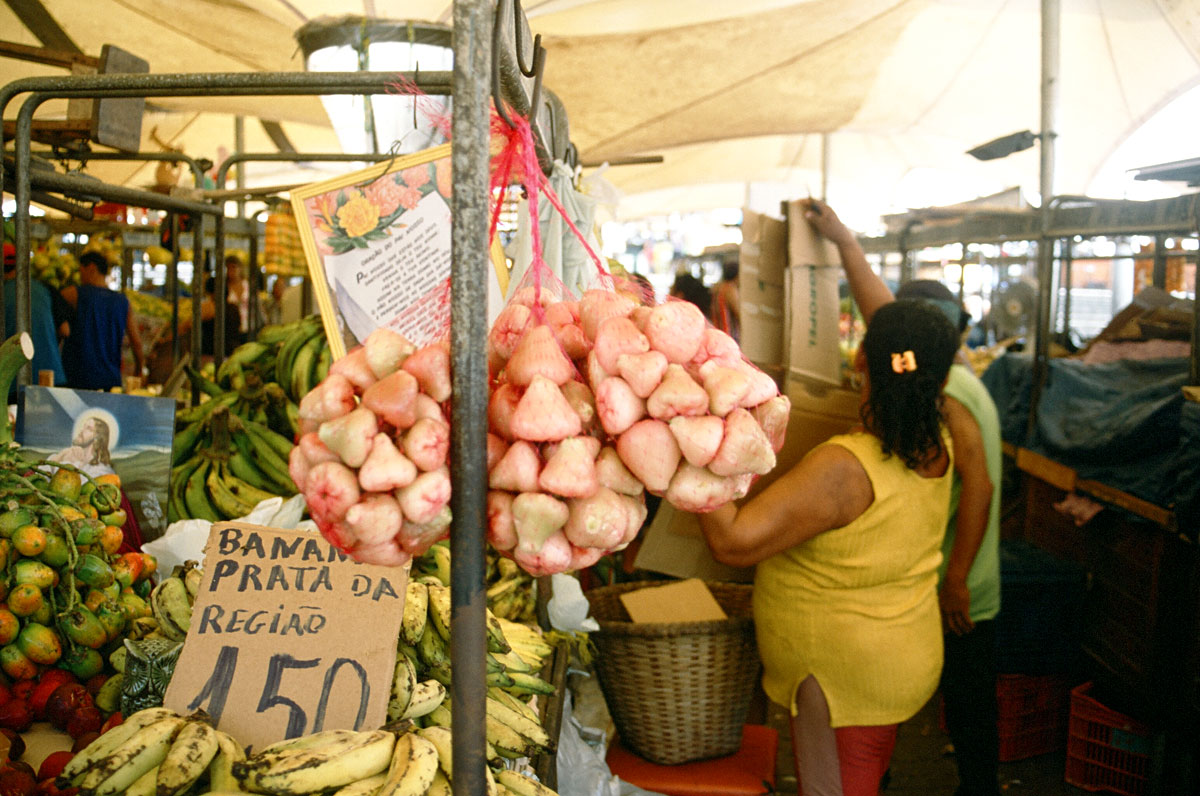

The smell arrives before the sight: a mixture of fresh fish, wild spices, and tropical fruit that fills the air even before crossing the entrance of the market. The Ver-o-Peso stretches along the riverside of the Baia do Guajará in Belém, in the state of Pará, and represents one of the oldest and largest open-air markets in Latin America. Its origins date back to the Portuguese colonial period: the very name derives from the tax control imposed by the crown, the ver o peso, meaning "see the weight" of the goods in transit at the port.

The market occupies an area that includes several distinct pavilions, including the famous Mercado de Ferro, a cast-iron structure built at the end of the 19th century and originally designed in Europe — according to some historical sources, the iron panels were initially intended for a market in Africa before being redirected to Belém. Its green towers and eclectic style decorations make it immediately recognizable among the stalls of the port.
The fish and the fruits of the river
The section dedicated to fish is the beating heart of Ver-o-Peso in the early hours of the morning. Fishermen arrive directly from the river with their boats, unloading species that are not even found in cookbooks in Europe: the tucunaré, the tambaqui, the pirarucu — one of the largest freshwater fish in the world, which can exceed two meters in length. The meats are displayed on wooden counters covered with ice, and the sellers clean them on the spot with a speed that leaves one speechless.
Next to the fish, the stalls of Amazonian fruit offer products that are rarely found outside of Pará. The cupuaçu, a relative of cacao, has a white and creamy pulp with an intense aroma that vaguely resembles white chocolate mixed with passion fruit. The açaí — here consumed in a much denser and less sweet form compared to how it is served in international versions — is available in large plastic containers. The bacaba and the buriti complete a range of flavors that have no equivalents outside of the Amazon.
The spices and medicinal herbs
One of the most fascinating sections of the market is that dedicated to herbs, roots, and traditional preparations of Amazonian folk medicine. Women sitting behind large trays of dried leaves, seeds, and colorful powders offer remedies for every type of ailment, precisely explaining the properties of each product. This is not just simple folklore: many of these plants have active ingredients studied by modern pharmacology.
Among the culinary spices, jambu stands out, a local herb that causes a characteristic tingling and slight numbness on the tongue when eaten. It is a fundamental ingredient of tacacá, a typical soup from Belém served in a pumpkin bowl and made of tucupi broth, tapioca, dried shrimp, and jambu leaves. Tacacá is also sold outside the market by street vendors with their large thermoses.
Eating at the market
Inside and around Ver-o-Peso, it is possible to have breakfast or lunch in an authentic way and at reasonable prices. Some stalls serve pato no tucupi, a dish made with duck cooked in tucupi — the yellow fermented juice of wild cassava — considered one of the symbolic dishes of Paraense cuisine. The flavor is sour, slightly bitter, with a complexity that requires a few tastings to be fully appreciated.
Fresh fruit is sold by weight or already cut into portions, and many vendors prepare juices on the spot with manual juicers. Tasting a juice of graviola or taperebá by the river, with boats passing in the background, is a concrete and memorable experience that requires no special preparation.
Practical Information for the Visit
The best time to visit Ver-o-Peso is in the early morning, between 6 and 9: this is when the fish market is at its busiest, the products are fresher, and the atmosphere is more authentic. As the morning progresses, the heat increases and some stalls begin to close. It is advisable to arrive on foot or by taxi from the center of Belém, as parking nearby is limited and chaotic.
Keeping an eye on your personal belongings is a sensible precaution in any crowded market. Bringing small denomination bills makes purchases easier, as many vendors do not have change for large bills. For those wishing to buy spices or dry goods to take home, it is worth checking the customs regulations of your destination country regarding the importation of food.


