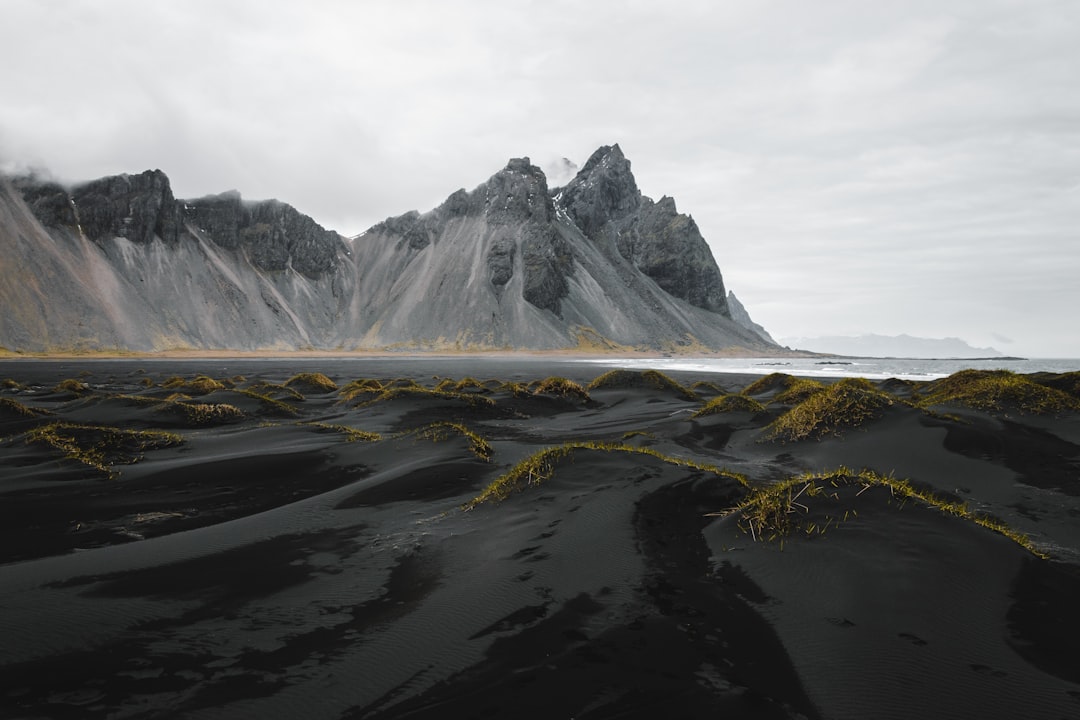
On the rugged southeastern coast of Iceland, the Vestrahorn mountain stands as a testament to the powerful forces of nature. This stunning peak, composed of rare gabbro rock, rises dramatically from the Stokksnes headland, overlooking a mesmerizing black sand beach. It is a place that captures the imagination, where the landscape shifts with each passing hour, making it a haven for photographers and adventurers alike.
### History and Origins
The history of Vestrahorn is as rich as its dramatic scenery. The area has been inhabited since the early 9th century, with evidence of Irish monks arriving before the Viking settlers. According to local lore, these monks sought solitude in the isolation of Iceland’s wild landscapes. The Vikings, led by figures like Flóki Vilgerðarson, arrived later, and the region became integral to their stories of exploration and settlement.
The Stokksnes headland itself was once home to a small fishing village, and remnants of a N.A.T.O. radar station can still be found, a relic from the Cold War era. These sites speak to the evolving narrative of human interaction with this formidable landscape. The wooden shipwreck that rests along the shore serves as a poignant reminder of seafaring ventures that have sought both prosperity and refuge along these treacherous waters.
### Art and Architecture
While Vestrahorn is primarily known for its natural beauty, the area also features intriguing architecture. A Viking village, constructed as a film set for the 2012 movie "The Secret Life of Walter Mitty," offers visitors a glimpse into the past. Though it was built for cinematic purposes, its design reflects the traditional turf houses of the Viking Age, showcasing how early settlers adapted to the harsh Icelandic climate.
The stunning backdrop of Vestrahorn itself has inspired countless artists and photographers. The interplay of shadows and light on the mountain’s rugged face creates an ever-changing canvas that has captured the imagination of many, including renowned photographers who flock to this destination to capture its ethereal beauty.
### Local Culture and Traditions
The culture of the East Fjords is steeped in folklore and tradition. Local customs often revolve around the harsh yet captivating environment, with many community festivals celebrating the changing seasons. One such event is the Þorrablót, a midwinter festival where locals indulge in traditional foods like fermented shark and dried fish, alongside music and storytelling.
You may also encounter tales of elves and hidden people (Huldufólk), which are central to Icelandic folklore. Many locals maintain a deep respect for nature, believing that these mystical beings inhabit the landscapes, including the enchanting surroundings of Vestrahorn. This reverence for nature permeates local traditions and is reflected in their art and music.
### Gastronomy
The cuisine of the East Fjords is heavily influenced by the sea and the land. Local specialties include freshly caught fish, often prepared in traditional styles, and lamb raised in the lush pastures surrounding Vestrahorn. A popular dish to try is skyr, a tangy Icelandic yogurt that has gained international fame for its health benefits.
In the nearby village of Höfn, known as the lobster capital of Iceland, you can savor delicious seafood dishes, particularly the local langoustine. Pairing these culinary delights with a glass of Icelandic beer or Brennivín, a local schnapps, offers an authentic taste of the region.
### Lesser-known Curiosities
While many visitors flock to Vestrahorn for its stunning visuals, few know about the black sand dunes that blanket the beach. These dunes, cloaked in vibrant green grass, not only create a striking contrast against the black sand but also serve a crucial ecological role. They help prevent erosion and protect the delicate ecosystem.
Additionally, the weather in this region can change rapidly, often within minutes. It’s not uncommon to experience sun, rain, and wind all in the same hour. This unpredictability adds to the allure of the landscape, where every moment can yield a new and breathtaking view.
### Practical Visitor Information
The best time to visit Vestrahorn is during the summer months, from June to August, when the days are long and the weather is relatively mild. However, for those seeking the mystical northern lights, a winter visit between November and March can provide spectacular displays against the backdrop of the mountain.
When visiting, tread carefully on the delicate grass of the dunes to preserve this unique environment. Bring a camera to capture the stunning reflections on the wet sand, and don’t forget to explore the remnants of the Viking village and the nearby lighthouse for a glimpse into the area’s rich history.
For a truly personalized experience, consider using the Secret World app to create an itinerary that highlights your interests and ensures you make the most of your visit to this remarkable destination.
