



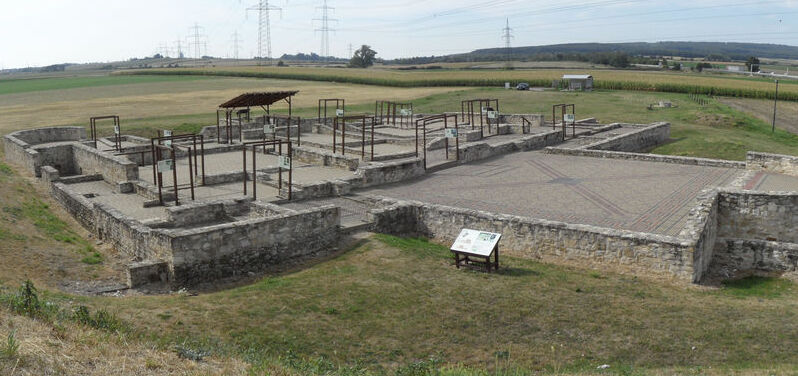
Nestled in the picturesque landscape of Eastern Austria, Villa Bruckneudorf stands as a remarkable testament to the grandeur of the Roman Empire. This ancient site, located just a few kilometers east of the small town of Bruckneudorf, holds immense historical significance, having once served as a residence for the imperial family in the autumn of 375 AD. The area was already densely populated during Roman times, showcasing the importance of this villa in the regional hierarchy of the era.
History and Origins The origins of Villa Bruckneudorf can be traced back to the Roman Empire's expansion into the Danube region. The villa is believed to have been constructed in the 4th century, a time when the Eastern Roman Empire was at its zenith. It is thought that notable historical figures, including members of the imperial family, may have graced its halls, which adds to its intrigue. The villa was strategically positioned along vital trade routes, contributing to the economic prosperity of the surrounding area. Archaeological excavations have revealed a wealth of artifacts, helping historians piece together the daily life and governance of this once-thriving community.
Art and Architecture The architectural style of Villa Bruckneudorf reflects the opulence of Roman design, characterized by spacious rooms adorned with exquisite mosaics and intricate frescoes. Notably, the remnants of over 300 m² of stunning mosaics can be admired today, depicting various mythological and natural themes that offer insight into the artistic sensibilities of the time. These mosaics have since been relocated to the Landesmuseum in Eisenstadt, where they are preserved for future generations. This villa not only served as a luxurious residence but also as a cultural hub, influencing local architecture and artistry in the region.
Local Culture and Traditions The legacy of Villa Bruckneudorf extends beyond its ruins, deeply embedding itself in the local culture. The nearby community celebrates its Roman heritage through various festivals, particularly during the summer months when historical reenactments bring the ancient past to life. The Roman Festival, held annually, invites visitors to experience traditional Roman games, food, and music, creating an immersive atmosphere that honors the villa's history. Additionally, local customs often incorporate elements of ancient Roman traditions, such as agricultural practices and local craftsmanship, which continue to thrive today.
Gastronomy A visit to Bruckneudorf would be incomplete without indulging in the local cuisine that has evolved over centuries. Traditional dishes often feature fresh ingredients sourced from the surrounding countryside. One must-try is Schnitzel, a breaded and fried meat cutlet, usually accompanied by Potato Salad or Sauerkraut. Additionally, the region is known for its Heurigen, a wine tavern where visitors can sample local wines, particularly Grüner Veltliner, alongside seasonal dishes. The culinary offerings reflect a blend of Roman influence and Austrian tradition, making it a delightful journey for food enthusiasts.
Lesser-Known Curiosities While the grandeur of Villa Bruckneudorf is widely recognized, some curious facts remain lesser-known. For instance, the villa's advanced drainage system, an impressive feat of engineering for its time, is a testament to the Romans' ingenuity. Moreover, hidden beneath the villa's ruins are remnants of Roman baths, which illustrate the significance of hygiene and leisure in Roman culture. Visitors may also be surprised to discover that many of the artifacts unearthed at the site have been linked to trade networks extending as far as the Mediterranean, highlighting the villa’s role in the broader economic landscape of the empire.
Practical Visitor Information The best time to visit Villa Bruckneudorf is during the late spring and early autumn months when the weather is mild and conducive for exploration. Those interested in archaeology and history will find guided tours particularly enriching, providing in-depth knowledge about the site's significance. Make sure to allocate time to visit the Landesmuseum in Eisenstadt to view the mosaics and learn more about the Roman presence in the region.
For a more personalized experience, consider using the Secret World app to plan your itinerary and make the most of your visit to this captivating site.
