
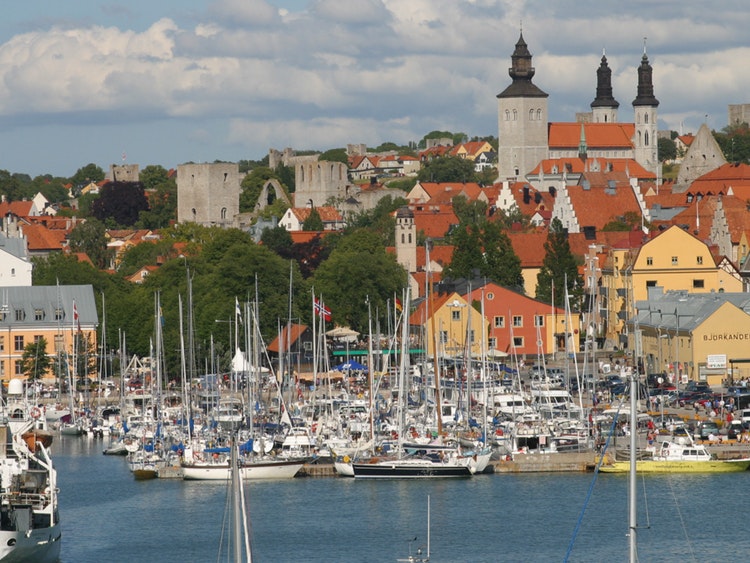

Perched on the western coast of Gotland, Sweden’s largest island, Visby Old Town is a living tapestry of history and culture, where the echoes of medieval life blend seamlessly with the modern world. Walking through Visby is like stepping into a storybook, where cobbled streets lead you on a journey through time.
Founded in the 12th century, Visby quickly became a thriving hub of trade due to its strategic location on the Baltic Sea. It was part of the Hanseatic League, a powerful commercial and defensive confederation of merchant guilds and market towns in Northwestern and Central Europe. This prosperity left a permanent mark, with the city’s medieval walls and ruins offering a fascinating glimpse into its past. The 3.4-kilometer-long Ringmuren, or city wall, built in the 13th century, is one of the best-preserved medieval fortifications in Scandinavia. During the 14th century, Visby was embroiled in conflicts, most notably the Battle of Visby in 1361, when Danish forces attacked, marking a turning point in the city’s history.
The artistic and architectural heritage of Visby is equally compelling. The Old Town is a UNESCO World Heritage site, recognized for its authentic medieval architecture. The St. Mary’s Cathedral, known locally as Sankta Maria Domkyrka, is a striking example of Gothic architecture, completed in 1225, and still serves as a place of worship today. Wandering through the town, you’ll encounter remnants of 13 churches, each with its own story. The ruins of St. Karin’s Church, with its soaring arches, serve as a reminder of the town’s former grandeur and are a favorite backdrop for local festivals and events.
Visby’s cultural fabric is woven with traditions celebrated throughout the year. The Medieval Week in August is a spectacular festival that transforms the town into a vibrant medieval village, complete with knights, jesters, and bustling markets. Locals don period costumes, and the streets come alive with music, dance, and theatrical performances, offering a window into Visby’s storied past. The Gotland Art Week is another highlight, showcasing the island’s rich artistic heritage.
Gastronomy in Visby is a delightful exploration of Gotlandic flavors. The island’s fertile land and surrounding waters offer a bounty of fresh produce and seafood. Saffranspannkaka, a saffron-infused pancake served with dewberry jam and whipped cream, is a local delicacy you must try. The island’s lamb, known for its tenderness, is often featured in traditional dishes. Pair your meal with a glass of Gotlandsdricka, a traditional farmhouse ale with a smoky flavor, embodying the island's rustic charm.
For those curious about lesser-known aspects of Visby, the Botaniska Trädgården is a hidden gem. This botanical garden, tucked away within the city walls, boasts an array of exotic plants and offers a tranquil escape from the bustling streets. Another curiosity is the Almedalen Park, once the site of a Viking harbor, now a serene green space hosting political events like the annual Almedalen Week, where Sweden's political elite gather for debates and speeches.
Practical tips for visiting Visby include timing your visit to coincide with the mild summer months, from June to August, when the weather is perfect for exploring the town and enjoying outdoor festivals. However, spring and early autumn offer fewer crowds and a more intimate experience. Be sure to wear comfortable shoes for navigating the cobblestone streets. While exploring, keep an eye out for the numerous rose gardens that lend Visby its moniker as the "City of Roses,” especially enchanting during the summer bloom.
In Visby Old Town, every corner holds a story, every stone a memory. It is a place where the past is ever-present, inviting you to discover its layers of history, art, and culture. Whether strolling through its ancient streets, savoring its local flavors, or immersing yourself in its vibrant festivals, Visby offers a timeless journey into the heart of Sweden’s medieval heritage.


